Flawed Fashion
Building a clothing range : 1950-1982
By 1940 wartime inflation had made the Woolworth 'Nothing over Sixpence' policy untenable. The Board reluctantly gave in to the inevitable and started to reinvent the brand. Fashion was identified as an area of special potential.
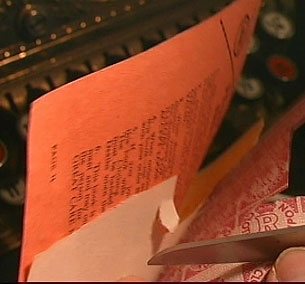
Soon after the outbreak of War the government began to ration clothing in a bid to spread limited stocks fairly. Many factories had switched to war work, either converting to make munitions or dedicating their production lines to making military uniforms. The supply restrictions continued after victory, remaining in force until 1953. This supported an export drive, which sought to earn foreign currency to pay off the debts incurred to fight the war.
Every man, woman and child was issued with a ration book. One or more coupons were needed to buy any garment, and were cut from the book by the sales assistant at the till. The number and type of coupons required varied both according to the size of the item and what it was made from, making the administration complicated in-store and confusing for shoppers.
To make matters worse, having coupons gave no guarantee that the desired item could be bought, with severe shortages continuing everywhere. This forced people to shop around and buy wherever they could. It helped Woolworth to become established during the War, as it used its buying expertise to secure hard-to-find stocks.
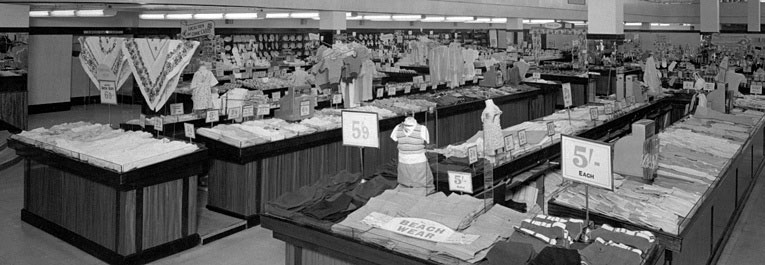
When rationing was finally relaxed in the 1953, the Woolworth management accelerated their move into fashion. The goal was to make modern clothing available to ordinary people at affordable prices. The Buyers put together a wide selection. The larger stores stocked lots of woollen jumpers, cotton blouses and shirts as well as school and casual clothes for children. Their smaller cousins had a more limited range of best sellers. All offered a comprehensive range of underwear and hosiery.
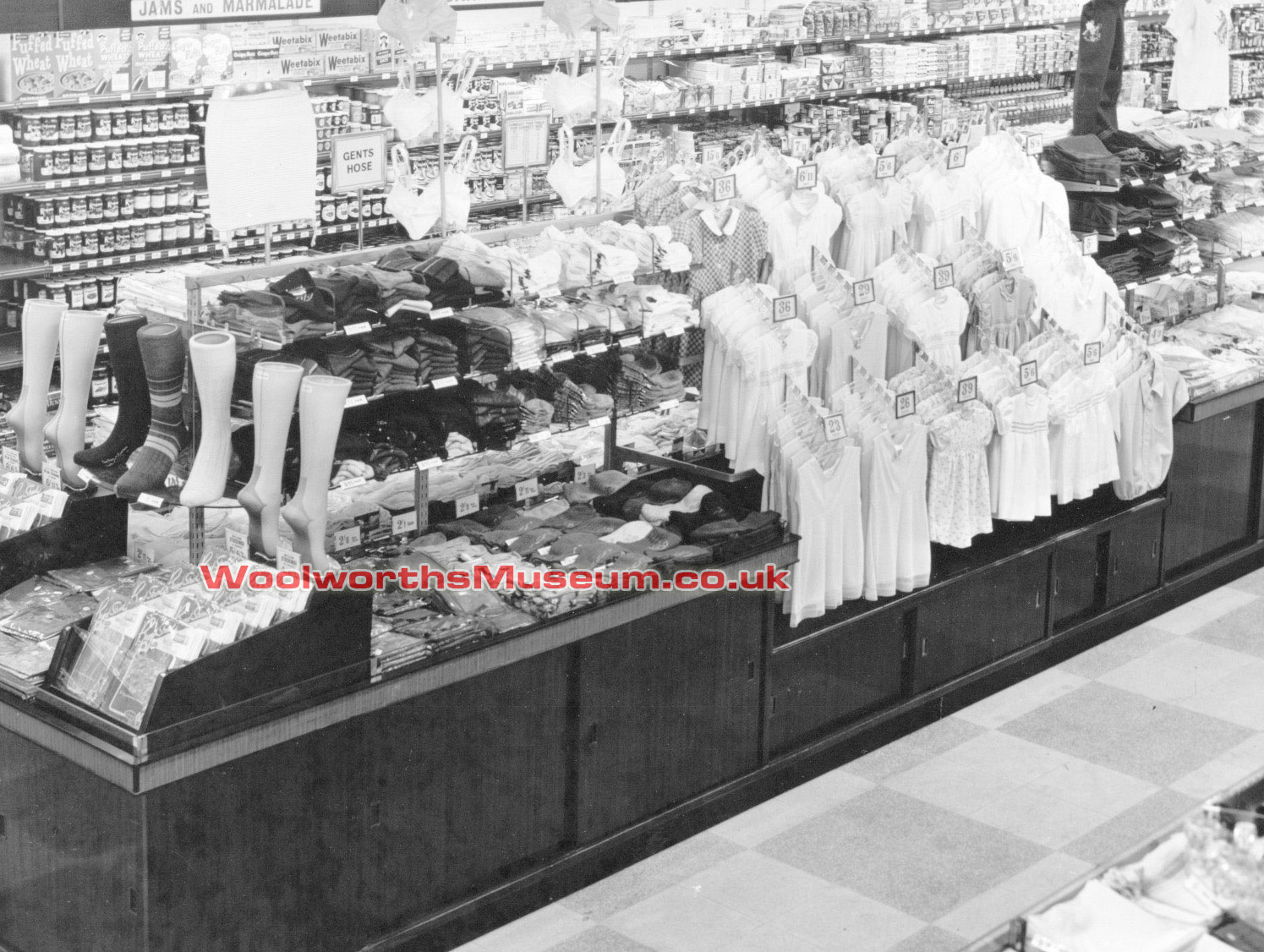
As new stores were opened and older ones were modernised, they were fitted with compact hanging displays for kidswear which looked very modern. The idea had been inspired by the parent company in New York, and was one of a number of examples of the stores pioneering new approaches in Britain that had originated in the USA.
By chance government rules favoured Woolworth. Rival retailers like Marks and Spencer were severely constrained by rules capping imports. But, as the regulations limited the number of garments imported to pre-war levels rather than their value, Woolworth was able to subsitute fancy dresses, jumpers and coats for the sixpenny knickers and socks of the past.
With the competition stifled, Woolworth clothing took hold. The Fifties became a golden era for the chain, which brought more than 300 new stores and a rapid rise in its share price. By 1959 F.W. Woolworth & Co. Ltd. Common Stock had risen to the top of the London market, standing in second position behind the giant ICI (Imperial Chemical Industries) corporation. But it was soon to learn that its fashions had grown by default, in the absence of strong competition, despite rather than because of their design.
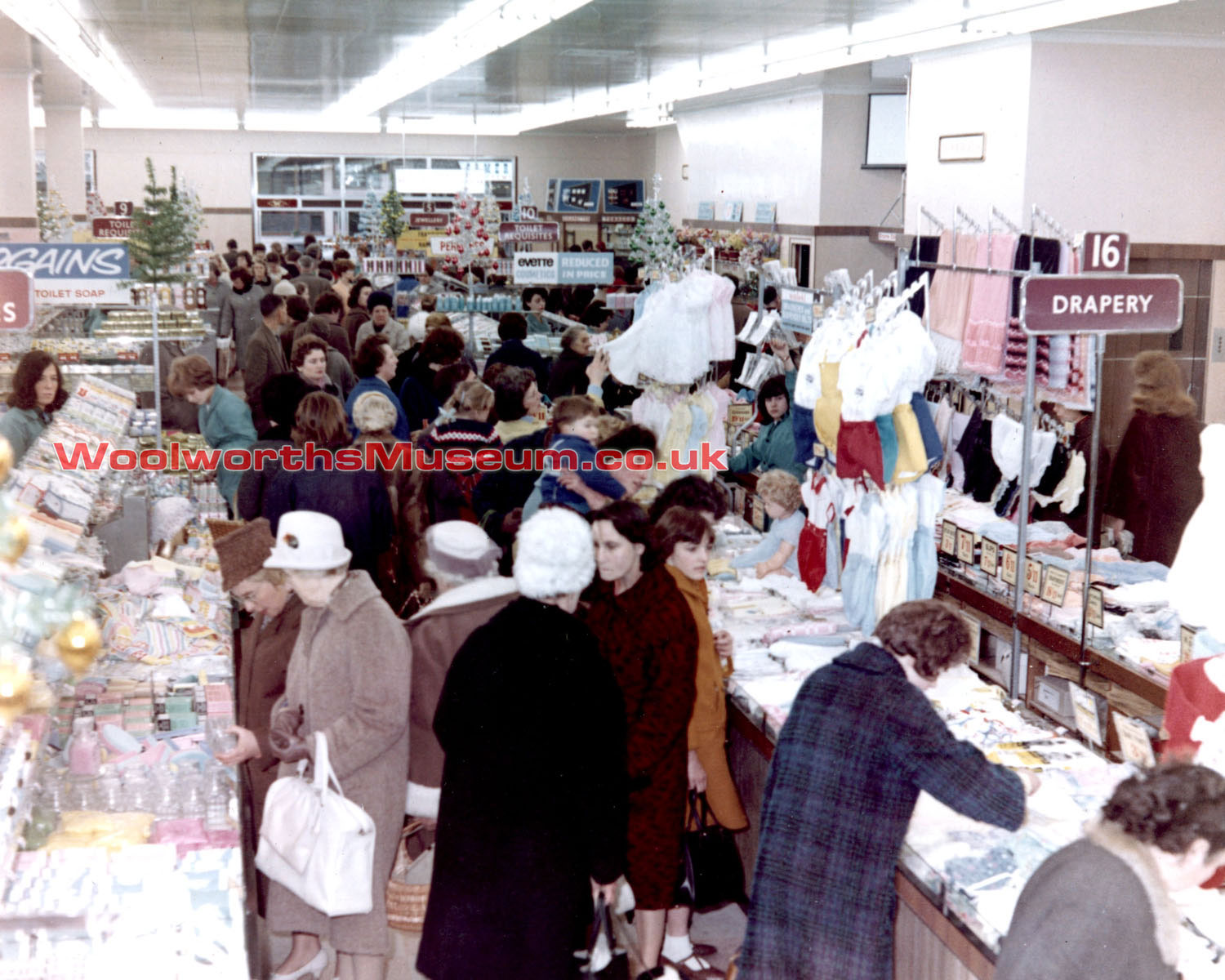
By 1960 the British economy was booming. Import restrictions had been lifted and household incomes were rising rapidly. Woolworth faced increased competition in the High Street, both from the established players and from younger companies with much lower overheads.
Executives demanded that prices be reduced, in a bid to drive further growth, but not at the expense of the margin. Buyers were instructed to seek efficiencies from suppliers and to explore overseas sources of supply with a lower production cost. As a result a new wave of fashion lines were commissioned from the Crown Colony of Hong Kong. These were labelled "Empire-made" The edict from the Board had unplanned consequences. To achieve the desired savings Buyers relaxed their quality criteria, particularly for own-label Winfield lines, in breach of instructions that these must match or beat the quality of the big brands. The consequences took time to show through, as customer trust was lost.
After a decade when Woolworth had appeared unbeatable, its Fashion Buyers had mis-read the market. Customers had become more discerning. Some described the overseas Winfield lines as 'shoddy'. If the chain was to succeed as a clothing brand, it would need to stop treating clothing as a commodity like a dish-mop, and start making garments that were nicer to wear and more aspirational.
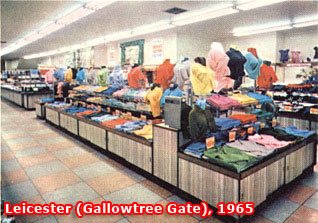
Attempts to address this feedback proved equally disastrous. In a quest for brighter colours and more fashionable styles, the Buyers embraced new man-made materials. Nylon and Courtelle fabrics took the place of wool and cutton. The lines looked smart on display at the Gallowtree Gate store in Leicester, when it opened as a 'store of the future' in Autumn 1965. Its sixty foot (18m) fashion counter featured garments in every colour of the rainbow. But purchasers rarely returned for more, after finding the fabrics itchy and chafing. They were at least grateful that the clothes wore out so quickly!
Unaware of these deep-seated concerns, the drive into fashion continued regardless. A new generation of out-of-town superstores were to quadruple the space allocated to fashion, as the first Woolco, nearby in Oadby revealed when it opened in 1967.
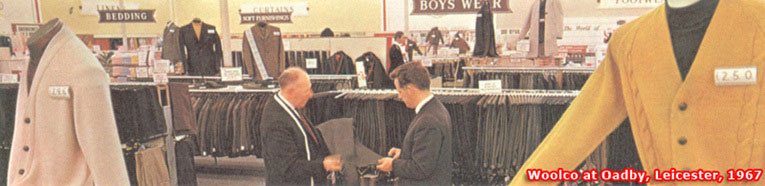
The thinking behind Woolco was born out of the American parent's acquisition of Richman Brothers, a large state-side fashion retailer in 1962. The concept had been tested in Columbus, Ohio. Success had prompted a rapid programme of openings across North America. British bosses expressed severe doubts about whether the country was ready for out-of-town shopping, but were over-ruled. They later had to admit that public reaction to the prototype Woolco in Oadby had far exceeded their expectations. Its large range of men's suits, fashionable ladies dresses and upmarket childrenswear had proved particularly popular. It was no coincidence that, rather than being sourced by the retailer's Buyers, the Fashion Department was stocked and managed by a third-party as a Concession.
Far from being celebrated at headquarters, the success at Woolco brought a spate of in-fighting. The Retail Division resolved to increase space in the High Street, to show the same results could be achieved in-town, while the Buying Office rushed to source their own range to rival the Concessionaire, to be sold in the largest Woolworth outlets. Effectively they were setting up in competition with Woolco. History would show that they did not have the skills to do so.
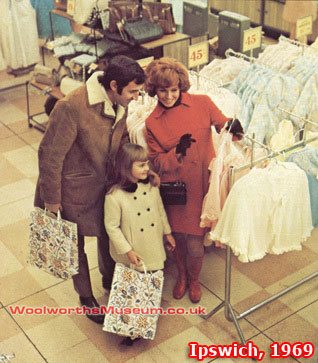
By 1969 every Woolworth store carried fashions. Smaller branches stocked just underwear, hosiery, nightwear and a few special offers. The larger ones had a comprehensive selection of outerwear for all ages. The quality was inconsistent. Woolco grew slowly and continued to enjoy greater success by running the department as a concession.
In the High Street the Buyers persevered with many imported lines in man-made fabrics, which undermined their more limited selection of British-made lines in natural fibres. In 1970 a business review spelt out the shortcomings and finally prompted a rethink. The Company bought in expertise by hiring Buyers with a proven track record, but struggled to make in-roads into the market. A barage of PR and press advertising did little to change public perception.
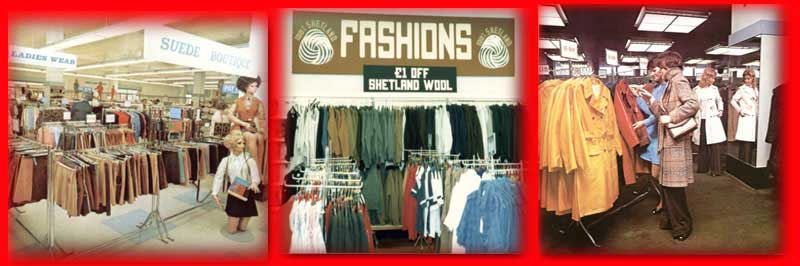
Dedicated followers of fashion (probably shopped somewhere else!)
Top (L to R) : Fashions at Guildford, Surrey (1979), Shetland in Oxford St, W1 (1979), PVC Macs at Basingstoke, Hants (1975)
Bottom: Colchester, Essex, (1975), Selsdon, Surrey (1973), Simulated leopardskin coat £4.99 at Sheffield Haymarket (1979)
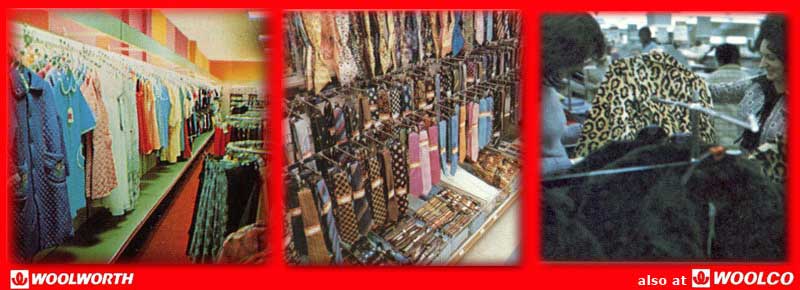
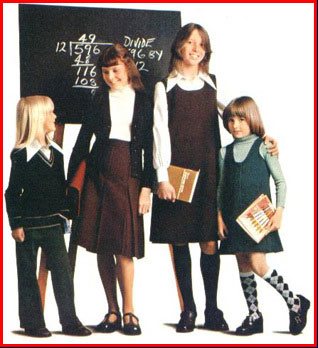
Despite a big push in the 1970s, with very high inflation and little capital to invest, Woolworth proved unable to build a reputation as a fashion retailer. Even when it experimented with an identical range to the offer at sister-chain Woolco in its largest City Centre stores, sales were weak. Research suggested that the shopping environment was a barrier and that discerning shoppers did not feel comfortable choosing clothes in the "squeeze-it-all-in" layout that characterised variety stores of the time.
The best selling products only served to emphasize the down-market image. Every Christmas from 1975 to 1980 simulated leopardskin and fur coats for £4.99 were the most popular lines. These were nicknamed 'the Bet Lynch' by staff, after one of Coronation Street's most celebrated barmaids.
A back-to-school range showed more potential. Gradually M&S, British Home Stores, Littlewoods and F.W. Woolworth took the place of traditional school outfitters. Each offered uniforms at much lower prices. Woolworth stood out with a one-stop shop that also included stationery, lunchboxes and sports.
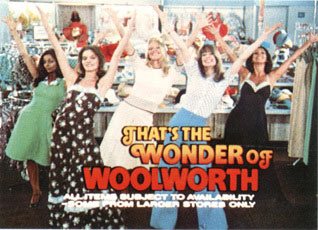
The legendary TV advertising campaign, The Wonder of Woolworth, which aired from 1975 to 1979, regularly featured clothing. Pop sensations The Nolans even did a dance on the clothing counters, while Georgie Fame, Sir Jimmy Young and Sir Harry Secombe each acted as master of ceremonies.
The campaign was successful in attracting shoppers to visit the stores, persuading a few of them to take a second look at the fashion ranges, but many struggled with the idea of buying emulsion paint, sliced meat and nice clothes from the same shop, let alone neighbouring counters. The perception of inferior quality proved hard to break. Somehow Woolworth never managed to achieve the right balance between price and quality which would later bring success to Matalan, T.K. Maxx, Primark and Asos.
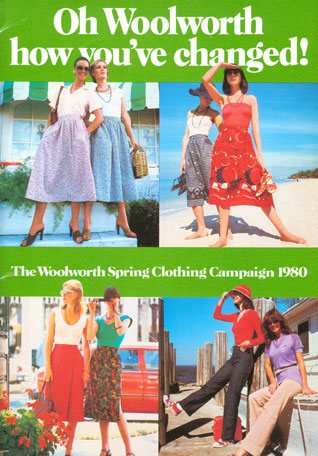
In 1980 the Woolworth Board resolved to have a further push at building the fashion business. To achieve its ambition it hired yet another new Buying team of repute. Despite challenging times financially it also bankrolled the largest ever campaign specifically to promote its adult clothing offer, A rash of advertisements and "advertorials" appeared in the newspapers and glossy magazines under the heading "Oh Woolworth how you've changed". But many readers found that a trip to their local store didn't match up to the aspirational message. It appeared exactly as good, bad or indifferent as it had for some time.
PR executives were proud when editorials appeared in the colour supplements of The Observer and The Sunday Times. Both ranked "Woolworth fashion for pennies" above branded alternatives from the catwalks of Paris and Milan. Their more cynical readers assumed that a dyslexic feature writer had intended to say "from the Dog Track at Catford".
One lady phoned Customer Relations to observe that the clothes were "less à la mode, more à la commode", instantly getting the rejoinder "well, we are a convenience store, madam!" But there was no laughing off the inconvenient truth that Woolworth had lost the battle.
With hindsight, 1982's management buy-in which saw Woolworth change hands and drop its adult clothing range, did at least put the long-suffering Buyers out of their misery. Remarkably, after all the upheavals and personnel changes of the 1970s, much of the work to establish Ladybird Clothing at Woolworths as the market-leading brand was undertaken by the very same people who had tried so hard to shape the adult range. Several excelled under the new regime and kept the children's range popular, stylish and competitive until the last day in the High Street.
Shortcuts to related content
1980s Gallery
Acquisition of B&Q by F.W. Woolworth & Co. Ltd.
'21st Century Shopping', Concept Store
The Cornerstone Business Strategy
Launch of The Video Collection
Launch of exclusive Ladybird licence
The Lighter Side of the Eighties at Woolworths
Fashion Gallery
Make it yourself patterns and thread
The first Ladybird items (from the 1930s Gallery)
History of the Ladybird Company
Building fashion sales (1950-80)
Kids and Celebrations In-Store
Site Navigation