Welcome to the Original Virtual Museum - celebrating Woolworths' century at the heart of British High Street Shopping
 -  -  -  -  -
please click a menu button
please click a menu button Original Virtual Museum Home Page please click a menu button The Woolworth value store concept is born in the USA please click a menu button Laying the foundations as the first British Woolworth store opens in Liverpool in November 1909 please click a menu button Woolworths rapidly open forty-four stores in Britain and Ireland before facing a World War please click a menu button Bigger, brighter and bolder Woolworth stores in the Roaring Twenties please click a menu button Woolworths go to amazing lengths to keep all prices under sixpence in the Thirties please click a menu button Bravery and defiance during World War II in Woolworths' finest hour. We pay tribute to the sacrifices made and look behind the scenes please click a menu button Redefining the Woolworth brand for modern times in the 1950s, as prices go up and stores get bigger and bigger please click a menu button Superstores in and out of town, a new own brand and the opening of overseas Commonwealth stores during the 1960s please click a menu button Woolworth struggles to keep up during the rapid inflation and change of the 1970s please click a menu button Woolworth stores in more recent times, covering the period 1980-2008 please click a menu button
please click a menu button please click a menu button please click a menu button please click a menu button please click a menu button please click a menu button please click a menu button please click a menu button please click a menu button please click a menu button please click a menu button
Background to the Original Virtual Museum and copyright information about the contents Origins of the firm's legendary pic'n'mix and a century of chocolate, candy and confectionery in the High Street A century of music and entertainment in the High Street from sheet music and gramophone records to CDs and blu-ray discs A century of toys, games and fun in the High Street stores of F. W. Woolworth A century of fashion in the High Street, from paper patterns and sixpenny knickers to an extensive range of award-winning Ladybird clothing A century of cards, pens, pads and books from the shelves of F. W. Woolworth stores Pots and pans, paint and brushes, bulbs and compost and even toiletries - all in High Street Woolworth stores for much of the twentieth century Woolworths pioneered Christmas decorations in the 19th century and supplied presents for our parents, grandparents and great grandparents from their High Street stores Working conditions and pay rates at Woolworths over a hundred years and some of the people behind the brand-name Our cinema, quiz and picture gallery features Visit the new look 21st century Woolworths on line, on the site operated by Shop Direct Group
please click a menu button please click a menu button please click a menu button please click a menu button please click a menu button please click a menu button please click a menu button please click a menu button please click a menu button please click a menu button please click a menu button
 
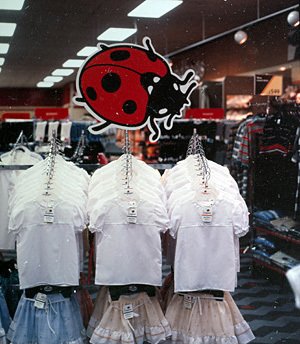
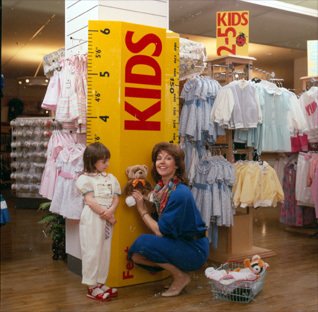
Five foot long banners announced the arrival of Ladybird clothing on the counters at Woolworths in 1985/6
 
Ladybird was also tested in Cornerstone formatted stores, including High Street, MaidenheadThe huge Ladybird logo made its first appearance above prototype displays at 'The Woolworths Mall' - a superstore in Broad Street, Reading, Berkshire in 1985


During 1985 Woolworth executives launched trials to test potential of a new licencing deal for the Ladybird brand.

A pilot was launched in the large superstore in Broad Street, Reading, Berkshire, and in the smaller Cornerstone city centre stores at Maidenhead, Orpington and Bedford.

Soon it was clear that Ladybird was a winner!
 

Ladybird Clothing on sale at the prototype Woolworths Comparison store at Gallowtree Gate in 1986
Sales were excellent. Woolworth signed the licence with Coats Viyella without delay. It was agreed that every store would stock children's clothing. Every garment would be Ladybird-branded.

Coats Viyella provided expertise in quality control as well as design ideas. They were given decision-making authority to approve garment designs. They also trained and accredited factories, and had the final say on the PR and advertising for the launch. Woolworth Buyers developed product proposals for the licensor to approve. They also negotiated the supply terms, picking from a growing list of quality-approved factories.

The new range launched nationally in the Autumn of 1985. In preparation for the big day a member of staff from each store went on a display course. A handful of branches, including the large store at Gallowtree Gate, Leicester, pioneered new lighting, flooring and wooden 'Clothing Tower' fixtures.
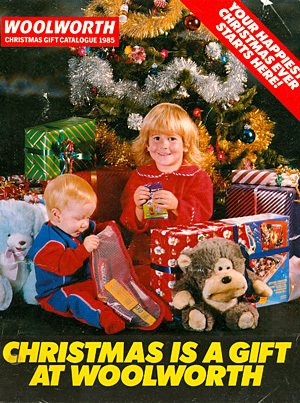
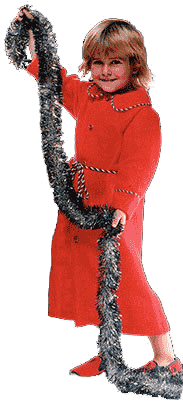
 

Woolworth Christmas Catalogue from 1985, featuring a girl wearing a Dressing Gown from the new Ladybird Range.  This was the last Catalogue to be branded Woolworth - by 1986 an 'S' had been added to the brand name to make the more recent 'WOOLWORTHS' logotype.Ladybird Dressing Gowns like this one proved the most line in the inaugural Ladybird range at Woolworths in the Autumn of 1985


The most popular item in the initial range was a traditional Ladybird Dressing Gown. There were versions for both boys and girls, in a choice of royal blue or bright red. These had Ladybird-shaped buttons and were piped with braided lapels. Many parents had worn the same design as children.

Like many of the items in the first Woolworths range, the Dressing Gowns were British-made. The supplier was Coonen Textiles Ltd., whose factory was in Fivemiletown, County Tyrone, Northern Ireland.

The Dressing Gown was modelled on the front cover and in a centre-spread of the 1985 Christmas Catalogue.
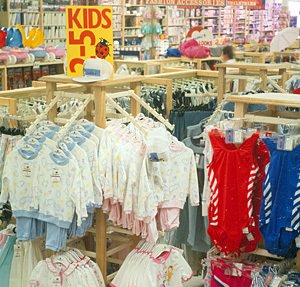
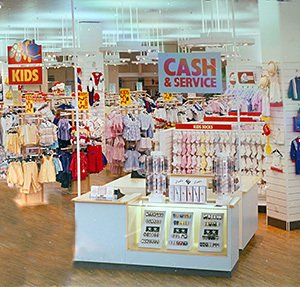
 

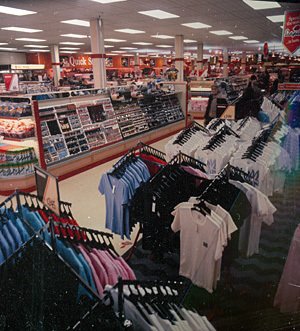
Ladybird Clothing on sale at one of the prototype Comparison format Woolworths stores, St Albans, Hertfordshire in 1986A long view of the Ladybird displays at Gallowtree Gate, Leicester in 1986


The large city-centre store at St. Albans, Hertfordshire, proved a good testing ground for the new ranges.

The shopfit included new lighting and enhanced displays. Garments were presented on new wooden tower fixtures.

The new garments proved very popular with shoppers.


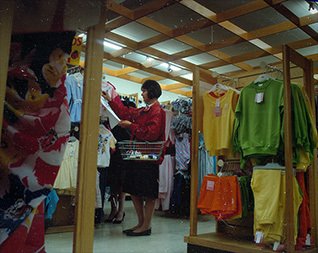
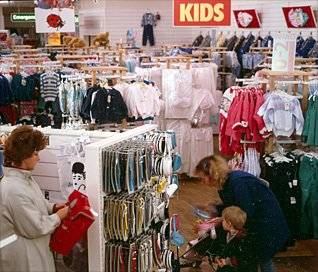
1980s Ladybird Displays in the Woolworths Convenience Concept Store at Camden Town in London


Displays in the smaller Woolworths General Store were distinctly different. Most of the garments were displayed face-on, hanging from tiered crocodile arms. The store design made extensive use of pine, with outriggers on the ends of the counters and lattice frames in the ceiling creating an intimate atmosphere.

In many High Street locations, Ladybird marked a move up-market. The clothes made good on the advertising strapline 'comfortably the best quality clothing in town'.


Ladybird displays in an unrefurbished Main Chain Woolworth store. In this environment the garments had to speak for themselves, without the benefit of fancy shopfittings.


When Ladybird was introduced in 1985 the majority of stores were quite old-fashioned. They had to improvise the clothing displays using traditional fixtures like metal bars and hooks from their creamy pegboard counters.

Despite the constraints, customers quickly recognised the improvement in the quality of the merchandise, and the new pride of the staff. Over time the stores were modernised, introducing new fixtures which allowed garments to be displayed face-on. The upgrade work was completed in 1988.

 
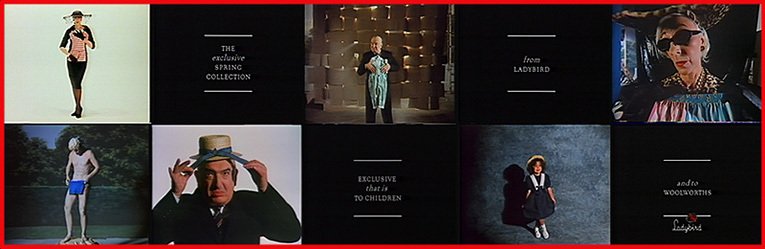
The first Ladybird television advertisement, which launched the range in 1986.  It was produced by Bates Dorland and proved a big hit with the public and the licensor, Coats Viyella.
 
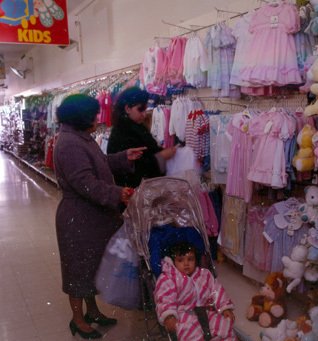
Ladybird Clothing on sale at the Woolworths store in Staines, Middlesex in 1987


The team at Coats Viyella was particularly excited by news that Woolworths planned to advertise Ladybird Clothing on television for the first time. The Pasold family had always wanted to see the brand on ITV, but considered this unviable without a national store-base. Instead they had persevered with small block advertisements in local papers.

Brand gurus from Coats Viyella, Woolworths and the Advertising Agency, Bates Dorland, collaborated on the storyboards. They opted for an elegant ad in which adults tried vainly to fit into the 'exclusive' garments, before finding that the clothes were 'exclusive to Children' ... 'and to Woolworths'. The commercial achieved good ratings and generated a substantial increase in store traffic.


By 1990 customers had become used to seeing Ladybird in their local Woolies. A progressive programme of store upgrades helped to maintain sales momentum. In parallel the Buying Team became more adventurous with their product selections. Gradually the more formal clothes were supplemented by topical character designs linked to the latest movie releases. These balanced traditional quality and competitive prices for garments that children wanted to wear.

A decade later, in December 2000, Coats Viyella invited Woolworths to buy the Ladybird brand name outright for £16.5m.


Shortcuts to Other Exhibits

Ladybird Gallery

Fashion overview (1909-2009)   Make it yourself patterns and thread   The Ladybird Legend is born

Woolworths' first Ladybird items    History of the Ladybird Company    Building fashion sales (1950-80)

 Kids and Celebrations 2002-2009     The Easter Parade

The 1980s

F.W. Woolworth buys B&Q    21st Century Shoping in Bristol    Paternoster Takeover    Leveraging the Property Asset

The Cornerstone Strategy    Dixons Takeover Fails    Launch of The Video Collection   Video Trailer    Operation Focus Strategy

Ladybird launch    Introduction of Chad Valley Toys   Movers and Shakers    The Lighter Side

Original Virtual Museum Navigation

1970s Gallery    1980-2009 Gallery   Museum Home Page
 

If you have enjoyed our Virtual Museum website, why not check out our complete history of Woolworths in a 194 page, richly illustrated paperback book?  A Sixpenny Romance is just £10.99, with free delivery in our on-line shop.
The special DVD, the Wonder of Advertising, is now available in our on-line shop for £7.50 in our on-line shop. A fully illustrated 194 page history of Woolworths, or a selection of professionally authored DVDs in our on-line shop