Store sales fund the acquisition of B&Q


On 11 August 1980 the F. W. Woolworth Chairman Geoffrey Rodgers wrote to every employee in the business to let them know that the Board had just completed its first acquisition. It had purchased B&Q Retail Limited outright. Over twelve years B&Q had built a chain of 33 large Do-It-Yourself stores, before going public recently. The decision to buy had been driven by the Board's aspiration to capitalize on one of Woolworth's key strengths by establishing a DIY Division. The goal was to build a dominant market share in not only hardware, tools and paint, (where the High Street stores were already strong) but also building materials and landscaping. He had been uncomfortable negotiating the deal in secret, but his hands had ben tied. Takeover Panel rules had imposed a vow of secrecy while the two companies were in negotiations. Now he could reveal a deal to be proud of, which would lay the foundations of future growth and job security. B&Q would operate separately rather than integrating with Woolworth, though he hoped the two companies would soon pool resources and ideas.
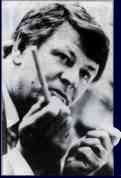
B&Q had been founded by David Quayle (left) and Richard Block. Its first store had opened in 1968 in Portswood Road, Southampton. Block had chosen to move on to new ventures in 1976, while Quayle had continued to lead from the front, with a rapid programme of store openings, and ultimately a listing on the London Stock Exchange in 1979. He had also received and handled the approach from Woolworth's about a possible takeover.
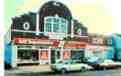
B&Q Supercentres had 39 stores, split between High Street shop premises, former cinemas and edge-of-town storage units. David Quayle had agreed to serve as Chairman of a newly created B&Q Division in the F.W. Woolworth Group, and also on the main Woolworth's Board. He had also accepted a special challenge from his new colleagues. In addition to his main duties he would take the huge Woolworth's in Broadmead, Bristol and transform it into a 'store of the future'. He had been asked to 'think big', applying his design expertise, extensive retail experience and outsider's perspective, to create a radical new look which would illustrate how a vibrant and successful 'Store 9' might look in the Twenty-First Century.

Financial commentators criticised the acquisition. City page editorials argued that Woolworth's move up-market was foolhardy during a recession, and that the Board's inexperience had led them to pay too much. The latest retail wisdom was that Do-It-Yourself would be a flash-in-the-pan and the bubble would soon burst. City Editors recommended that Woolworth Executives should stick with their proven variety formula of earlier years, which had served them well.
Store Managers were critical too. They questioned the wisdom of closing two flagship Central London Woolworth stores in Oxford Street and Kensington High Street to fund the purchase. Geoffrey Rodgers faced them head on. He argued that throughout its life Woolworth had evolved. The Chairman had served the Company for forty years and, like others before him, had risen from the Stockroom to the Board Room. He pointed out that Frank Woolworth had updated his range and tactics regularly to stay ahead. Were he alive he would still be doing so. Keen to keep his management team on-side, Rodgers offered to do an extended interview with the chain's Management Quarterly magazine, and to answer questions from the floor. His response, which was given four pages, is at odds with the perceived wisdom of historians that by 1980 Woolworth lacked leadership and vision for the future, as illustrated by the extracts below.
Rodgers: Obviously you have to pay a premium to get into something that someone else has built ... We have made a decisive and confident purchase. The pundits may not agree, but I feel strongly that DIY, which is really the basis of a much broader home improvement market, is in many ways only in its infancy. In ten years' time, long after I've retired, I believe Woolworth will have more than 100 big B&Q outlets, and we'll be very glad we got in when we did.
Interviewer: How much integration will there be between Woolworth and B&Q?
Rodgers:
We will offer them any sites we have in mind for out-of-town home improvement centres ... but at the moment I am anxious not to interfere. They have a good team... I see the home improvement business being dominated by two or three out-of-town giants in much the way that food has been taken over by the Tescos and the Asdas.
(From WOOLWORTH MANAGEMENT QUARTERLY, Autumn 1980)
Rodgers later backed up his words with action. He closed and sold two further flagship stores to finance the purchase of the Scottish DIY chain Dodge City. This was added to B&Q. The Chairman also curtailed the Woolworth refurbishment programme, diverting the funds to the DIY Division. This allowed ten supercentres to join the chain by the end of 1981, with a further two acquired from a third-party in the Channel Islands of Jersey and Guernsey. By 1989, the ten year horizon mentioned in the interview, B&Q's annual profits had risen to £76.4m. It had built an enviable 7% share of the huge UK market for repair, maintenance and improvement products. B&Q had taken and held the number one market position as the runaway leader, with over 100 stores. It continues to dwarf the competition and deliver good returns to this day.
Geoff Rodgers had a strong personal commitment to open, straightforward dealings with the City and the media. He actively engaged them about the potential of the new DIY business and F.W. Woolworth & Company's other strategies. Some people listened, others did not. He certainly impressed one group of entrepreneurs, who set up the Paternoster consortium that took control of the chain in 1982. The owners, later renamed Kingfisher plc, invested heavily to expand B&Q, realising its full potential and making it the UK's biggest and best.