The British Woolworth's American recruits
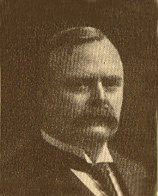
In a letter in 1909 Carson Peck, Frank Woolworth's American General Manager, expressed concern that the opening of a British subsidiary would impact the smooth running of F. W. Woolworth in the USA. Initially Frank's request for volunteers had fallen of deaf ears. But the second time he asked the New York HQ was inundanted with applications. It seemed most Store Managers were prepared to make a leap of faith.
In fact, beyond the original founders, relatively few Americans made the switch, with only half a dozen moving into Store Management up to 1920. A few others saw the opportunity to get on, moving into Buying or Executive jobs by crossing the Atlantic. Most settled and stayed in Britain, only returning after retirement. They had a big impact in shaping the company in the UK and helping the new baby to come of age remarkably quickly.
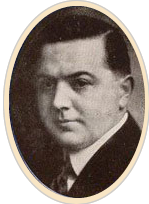
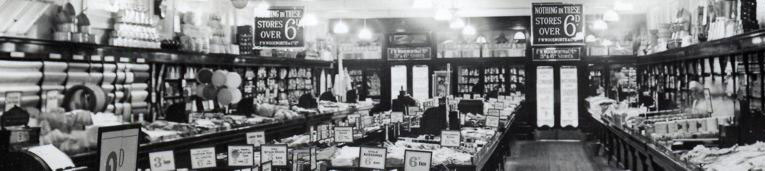
Charles Heiman Hubbard was the first Americant to join the British Company. A friend of MD Fred Woolworth he was head-hunted to manage the first store. He set a high standard and was a good teacher. Between 1909 and 1912 every "learner" was taught the ropes, learnt about display, staff management, merchandising,and financial control from Hubbard. Trainees were only given stores of their own once he classified them as "readymen".
Once he had established a pipeline, Hubbard was elected a Director and District Manager. His area covered the whole of Ireland and all of the mainland that is North of Birmingham. In 1923 he was appointed Deputy MD and headed the influential Investment Committee and Investor Relations. Over the next fifteen years he oversaw the opening of almost 600 stores, and got Woolworth off to a good start when its shares listed on the London Exchange in 1931. He declined the Chairmanship, surprising his workmates by announcing plans to retire at the age of fifty. He returned to the USA in 1938, and realised his dream by marrying and travelling the world. He is fondly remembered as a gentleman who got his best deals on real estate from the greens of the golf course!
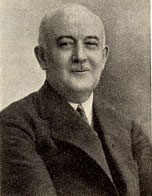
Arthur A. White was one of very few Americans to join the British Woolworth's as a store manager during World War I. During the first two years of the Great War fifty-seven Woolworth managers and learners had volunteered for service, leaving quite a hole in the recruitment process. Fortuitously Arthur White had asked his District Office if he might be permitted to transfer to England. His request was accepted.
White was proud to have been recruited personally by Frank Woolworth, and celebrated his American roots. He was a popular and successful Store Manager who took a pride in all aspects of his work. In 1935 the embryonic staff magazine "Metropolitan News and Views" approached Arthur to ask him if he would write a brief synopsis of his 30 year career-to-date with the Company. He obliged. This is what he had to say (verbatim from the October 1935 edition - Vol. 2, No.6):
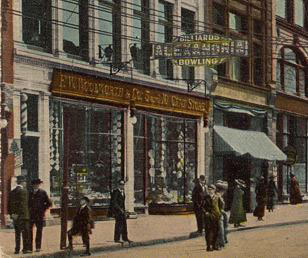 It was in the year 1903 that I had the pleasure of joining the Company, receiving the opportunity from the late F. W. Woolworth, the founder of the business. I was sent to Gloucester, Mass. under the management of Mr Minard, who is now the manager of our 5th Avenue Store, New York City. My earliest remembrance of my first day was that of unpacking crates.
After spending a year there I was sent to Pittsburgh, PA, under the management of the late Mr Allbright. There I stayed a year on the floor, after which I was offered my first management, that of South Pittsburgh Store, where my friend and neighbouring manager was Mr. F. W. Seaman, now of the Co-operative Warehouse. After two years I was transferred to 86th Street, New York City, where I first met Mr Denempont, now of the Executive Office. I then moved to Bushwick, Brooklyn, which is the brand which always remains in my memory as my ideal store. Here I stayed for four years. About that time the consolidation of the Woolworth, Knox, Kirby and Charlton stores took place, bringing them under the title of F. W. Woolworth Co. .....
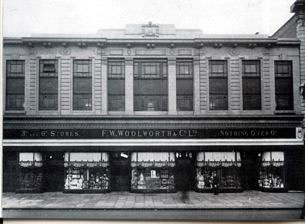 ..... I was chosen to open the first store in Nashville, Tennessee. This was the most hectic opening I have ever witnessed, the crowd breaking the door, windows and at one time even bodily pushing some of the counters, which unfortunately the workmen had not had time to fasten securely.
After 1½ years there I went to St Louis, Missouri, and from there to Topeka, Kansas, from which I travelled to England to take up my first location at Nottingham 36 under the Superintendency of Mr Roland Parker. From there I followed Mr. E. C. Prescott at Newcastle 27, then came to Kensington 162 and finally to Clapham Junction 34.
These moves cover quite a few years and many miles, but it seems only yesterday that I had my first interview with that wonderful and widely respected man, whose name has become a household word - Mr. F. W. Woolworth.
To complete the story, Arthur White retired from Clapham Junction in 1938, choosing to remain in the UK. Less than two years later he was persuaded out of retirement to return to store management, covering for a younger man away at war, first at Clapham Junction and later in Sutton High Street, both in South London. By the time that he retired the second time in 1946 he had completed 43 years' service - 11 in the USA and 31 in Britain. He retired back home. His son, Arthur A. White Jr., who was born in Britain and took dual American and British citizenship, volunteered for service in the RAF and served with distinction as his father manned the fort at home. When White Sr. retired for the second time, rather than return to Store Management in South East England, his son transferred to take the helm of a branch in the USA. He was the only Store Manager ever to do this, completing an unmatched family contribution to FWW UK.
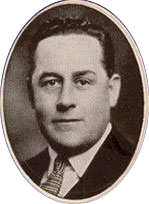
John Ben Snow, first came to the attention of Frank Woolworth when he was managing the Five and Ten Cent Store in Port Jervis, New York. At the time Store Managers were allowed to top up the company range with items that they had bought for themselves. Snow excelled. Many of his 'try-out' lines were adopted nationally. Frank Woolworth encouraged Snow to join his new British Company, luring him across the Atlantic with the promise of a Buying Job at Headquarters and a Directorship immediately.
Because of his immense contribution, in the Woolworths Museum we have shown John Snow with the founding fathers even though he did not join until 1910, six months after the original opening.
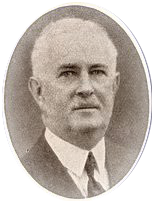
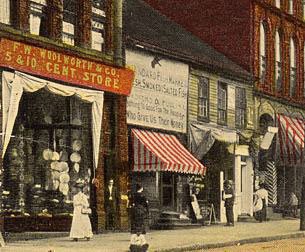
Fred Seaman rose rapidly in the 5 & 10¢ managing Butler, Pennsylvania before taking control of the reshipping warehouse adjacent to the 6th Avenue, New York. There he reported to Fred Woolworth. He emigrated to Britain during World War I, managing the store in Newcastle-upon-Tyne and shaping plans for a British Warehouse, in work sponsored by his old boss.
Sadly the Founding MD had passed away by the time the work came to fruition. In 1924 Woolworth's took a lease on the Granary Warehouse at St Pancras Station. Seaman took charge and made it highly-effective.
Seaman secured favourable terms with each of the big four steam railway companies. The 'permanent way' provided an ideal way of shipping goods to branches right across the British Isles. The firm's goods were carried at a discount on the Great West Railway, London and North East Railway, London Midland Steam and Southern Electric.
The infrastructure and concessionary terms remained the primary method of distribution for almost fifty years. Woolworth stayed loyal to the railway until 1971, when it began to switch to road transport. The Railway companies adapted the schedule to accommodate special trains to handle their largest shipments of goods. The peak volumes were despatched during the fortnight after Christmas, across the New Year, as the rail freight network carried vast numbers of Easter Eggs out to the stores. Lorries from Carter Paterson, (later renamed British Road Services,) unloaded the eggs at the nearest railway station and carried them the final few miles to the store, where staff squirreled them away until they were needed.
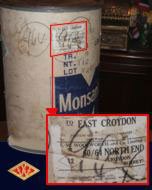
The set up of the St Pancras depot followed a successful pattern that had been established in the USA. It was treated as a "co-operative", jointly owned by each of the stores and operated for their benefit. It provided each branch with a service rather like an overflow stockroom. Officially it broke nothing, it suffered no shrinkage and its products never went out of date, because any problems were passed straight on to the stores.
The Warehouse was an important part of the success of the Woolworth formula. At the time goods were consigned in huge recyclable cartons to the local train station. By special arrangement the Store Managers could have one special pick over the products in the Left Luggage Office for anything they needed urgently; the rest would arrive a day or two later by Carter Paterson.
Fred Seaman ran the warehouse with skill and diplomacy from 1924 until his retirement in January 1938. A modest man he never boasted or bragged, neither did he complain about the peaks and troughs of supplying a highly seasonal business. Under his guidance the depot built its capacity from a standing start to a throughput of more than ten million individual items per week, supplying seventy hundred and twenty stores across the length and breadth of the United Kingdom and the Irish Free State.
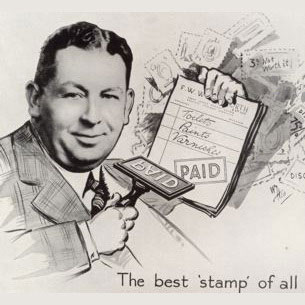
George S. Roblin was born in Watertown, New York, the birthplace of the Five-and-Ten. He began in upstate New York, before taking control of the iconic 5 & 10¢ Store on the Boardwalk at Atlantic City, New Jersey in 1909. He was lured to England to manage Oldham Street, Manchester (No. 4) from its opening in 1910. Next he succeeded Charles Hubbard at the helm of the Church Street, Liverpool flagship. He later managed the stores in Leeds (No. 5), Newcastle-upon-Tyne (No. 27), Victoria Street, Wolverhampton (No. 13), Union Street, Glasgow (No. 39) and Nottingham (No. 36). In January 1922 he was appointed Superintendent of the Cardiff area.
Colleagues joked that Roblin had spent the latter part of his career "on the toilet". This was their nickname for the Toiletries Department. Roblin became Buyer for this range, along with Paints and Polish at the Headquarters in Kingsway, London. in 1924. Sales grew rapidly as he stole market share from Boots the Chemist by stocking toiletries and cosmetics in smaller sizes that could be sold within the Woolworth sixpenny limit. He also pioneered a range for the home handyman. He forewent his retirement to help the firm through the darkest days of World War II, and is fondly remembered as one of the finest salesmen who ever worked at FWW.
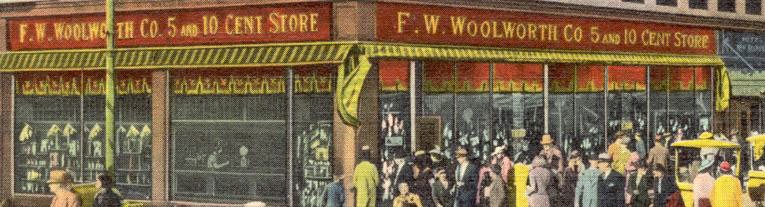
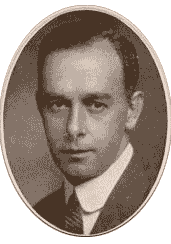
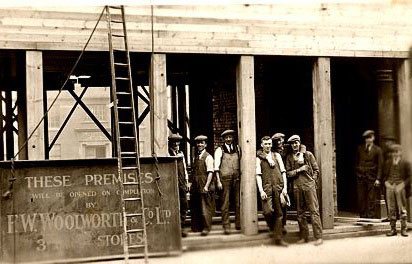
Louis Denempont managed 86th Ave, New York. The chief scout, E.J. Smith, taught him how to pick store locations, making him an ideal candidate to join the new British company.
He chose almost every location from Putney (No. 45) to Crawley (No. 768).
Louis Denempont was headhunted to join the British Company in 1910. It had set an ambitious target to build its store-base to fifty branches within five years. He encouraged shoppers to nominate towns for future openings. Most sent details about the local catchment population, the competitors and the property or land available. Denempont's task was to advise the District (Regional) Managers about which locations to consider. Although officially District Managers had the final choice, Louis retained a veto on which proposals were presented to the Board. He also controlled the purse strings, deciding how much investment capital could be employed to build a store or convert existing premises. As a result he was much in demand for long lunches and social occasions.
Denempont also controlled the look and feel of the interior of the stores. Fixtures and layout templates were updated regularly. Bulk buying helped to achieve the best price for everything from tills and counters to store supplies. He worked closely with William Priddle and his team of Company Architects on new exterior designs and experimental fixtures. He also built a strong rapport with B.C. Donaldson, the firm's Construction Superintendent. His goal was to make it easy to open stores quickly, while maintaining a consistent standard of presentation.
Louis was elected to the Board in the 1930s. He was appointed Managing Director in 1938, and served in the role with great distinction until his untimely death in 1944. If you see a former Woolworths building in the High Street (whether the cream coloured 'Cinema Front' variety or the red brick-type with a distinctive parapet wall at roof level), there's a good chance that Louis Denempont put it there!