"They also serve
who only stand and wait"
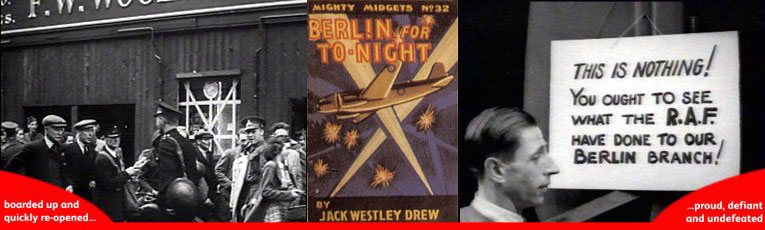
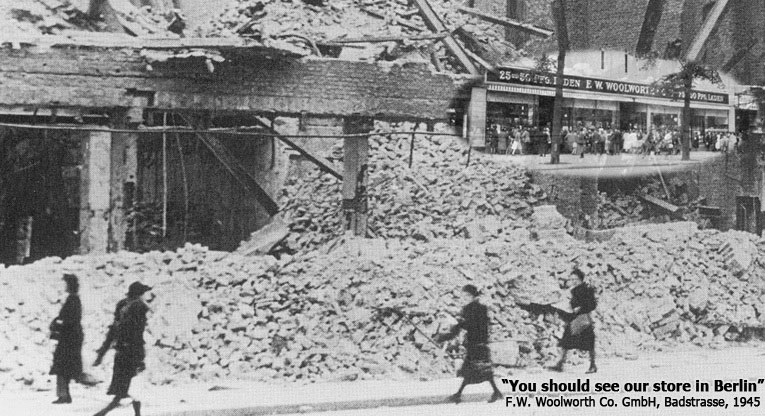
One of our favourite Pathé Newsreels of World War II (Home Front Blitz Reel 2, 1940) highlights one of the issues of becoming a global retail brand. During the conflict F.W. Woolworth had stores in the countries of both the Allied and Axis powers, and even a couple in the invaded territory of the Channel Islands. Although the film doesn't say so, it shows a Woolworth employee pointing to a handwritten sign that summed up the spirit of the Home Front..."you ought to see what the RAF have done to our Berlin branch!"
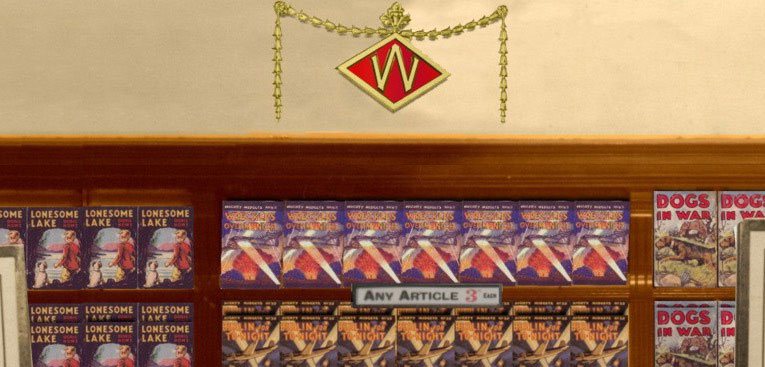
As they dusted down the display of best-selling threepenny Mighty Midget books, staff were reassured by the titles, which included "Wreckers over Munich", "Berlin for Tonight" and "I captured a U-boat". But as you read this page and think of the people of Coventry, spare a thought for Dresden, and for Berlin as well as London, Hamburg and Hull and the suffering of the Ruhr Valley as well as Merseyside. Indiscriminate bombing was not only the hallmark of the Hun.
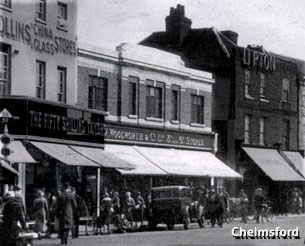
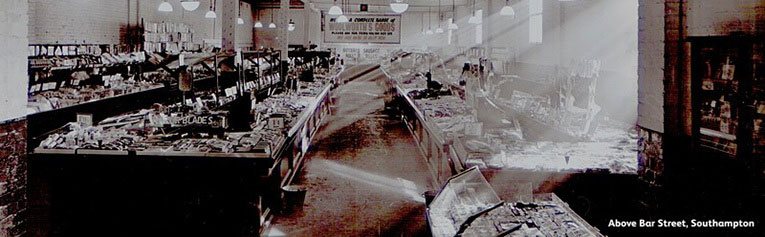
Just when the Germans might have won the Battle of Britain by completely destroying the country's air defences, Goëring ordered a change of tactics. The Luftwaffe was sent to bomb industrial cities and the coastal ports. The bombers returned night after night. And day after day staff and their Managers swept up, picked up the pieces and got right back to work.
For example the branch in Chelmsford, Essex, was hit by an incendiary bomb. The store's own firewatchers put the fire out, cordoned off the affected area and re-opened for business! Customers remember the terrible smell of scorched mahogany, and how they admired the fighting spirit of the staff.
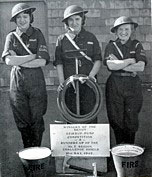
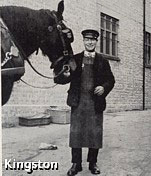 Staff proved adept in manning the defences. Every store was issued with a Stirrup Pump (left), a simple handheld device with a length of hose, used to spray water from a bucket, creating an improvised fire extinguisher. With fuel rationed, London stores acquired shire horses due to retire, and hauled crates from the Warehouse at St Pancras Goods Station to the suburbs by horse and cart. Further afield some managers, like Miss Frome of 673 Camberley, rode in on horse-back each day. Her young office clerk had to give the trusty steed its nosebag each lunchtime!
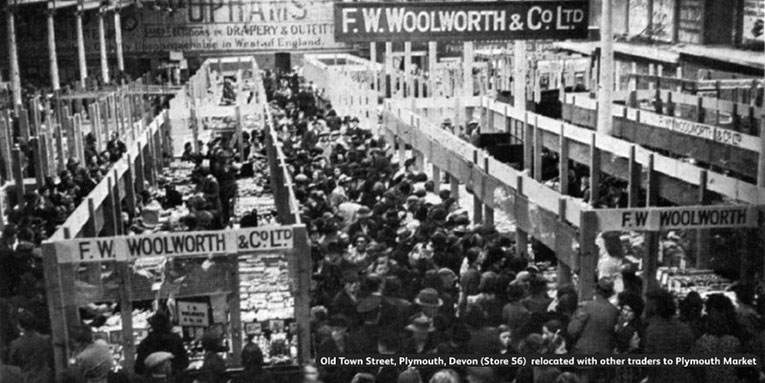
Despite everyone's best endeavours, a number of stores suffered severe damage from incendiaries or lost their rooves to bombs. Wherever possible steps were taken to get them back open quickly. Executives considered this as much a public service as an attempt to make profit. When the branches in Devonport, Plymouth, Coventry, Canterbury and Spalding were bombed, each was quickly transferred to a temporary shop improvised by the Construction Department.
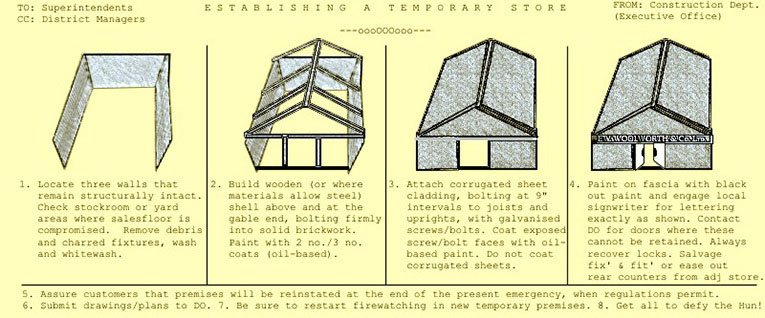
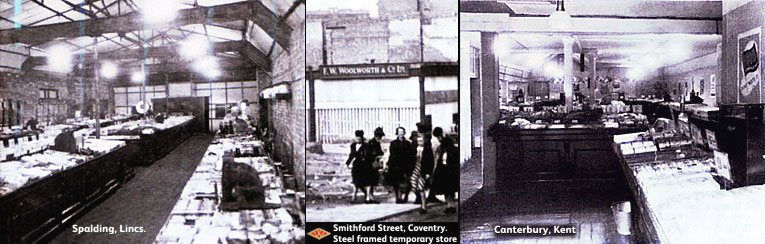
A key challenge during World War II was to maintain morale on the Home Front. Woolworth Buyers worked extensively with Government to find ways in which the stores could help, in a dialogue that really took hold when store colleagues bought Spitfires for the RAF. Prompted by Lord Beaverbrook the Government made a series of remarkable concessions:
- At the request of Bill Lacey, the Head of Buying responsible for Food and Restaurants, ice cream was kept out of rationing. More remarkable was that Beaverbrook gave the replacement of the refrigeration plant equal priority with the building of Spitfires, on the condition that Woolworth would target all available ice-cream stocks at the cities and towns facing the worst bombardment.
- Also at Lacey's request tinned fruit and peaches were kept out of rationing, on the condition that Woolworths packaging experts worked with the Ministry on "tins without tin", experimenting with various bakelite, composition and cardboard combinations to come up with packaging rather like a modern tetra-brick milk carton.
- To complete his hat-trick Lacey also persuaded the authorities to keep food in restaurants, include those at Woolworth, outside rationing, subject to the proviso that customers were not allowed to buy fish and meat in the same meal.
- Woolworth was allocated big supplies of paper for the production of Mighty Midgets (illustrated towards the top of this page) which were tiny (10cm x 6cm) little war stories in a comic-like format. They had titles like "Girls in Wartime" and "The Dogs of War". Many millions of these books were sold at threepence (about 1½p), with prices maintained throughout the war.
- Paper was also provided to continue production of "The New Bond", the Woolworths Staff Magazine which was distributed to colleagues serving in H.M. Forces or their families. The Company maintained a picture library of everyone serving and updated the gallery to show promotions and decorations (medals). It also printed lists and addresses for prisoners of war. The magazine actively encouraged store colleagues to write to prisoners, and to raise money both for the war effort and for relief purposes.
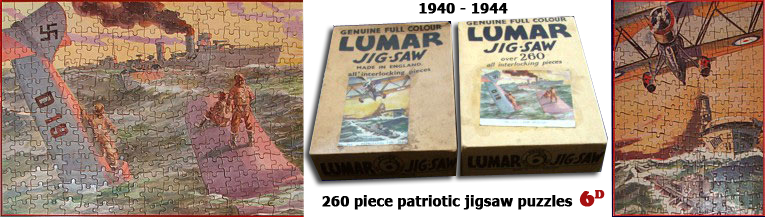
- Throughout the conflict, thanks to intervention from the Ministry, supplies of Cardboard were maintained to allow jigsaws of patriotic scenes to be produced. The Lumar collection of 260-piece fully interlocking piece puzzles (illustrated below) was very popular. The firm accepted a loss to sell for sixpence as a morale-booster. Many youngsters were distracted from bombs falling overhead as they attempted the devilishly difficult puzzles in an Anderson shelter at the bottom of the garden, or on a London Undergound Platform.
After 1941 the nightly bombardment started to ease. For a while the main hardships were shortages and rationing, and the prolonged absence of loved-ones fighting overseas. Colleagues focused on raising money for the war effort. A popular approach was to display captured armaments or plane wings in a window and to collect donations in a bucket.
But in 1944 the blitz returned with a vengeance. Highly explosive doodlebugs (pilotless planes) fell from the sky in heavily populated areas. Sadly the rocket-driven super doodlebug, the V2, caused the worst civilian losses of World War II when the Woolworth store at New Cross Road, Deptford was destroyed at lunchtime on Saturday 25 November 1944. Find out more in our special tribute and memorial features here in the Woolworths Museum.
Links to related content
1940s War, Austerity and Recovery Gallery
Wartime history pages with HTML5 media content averaging 1.5mb
Museum Navigation