Christmas Cards and Wrapping Paper
A history of one of Woolworth's most popular ranges
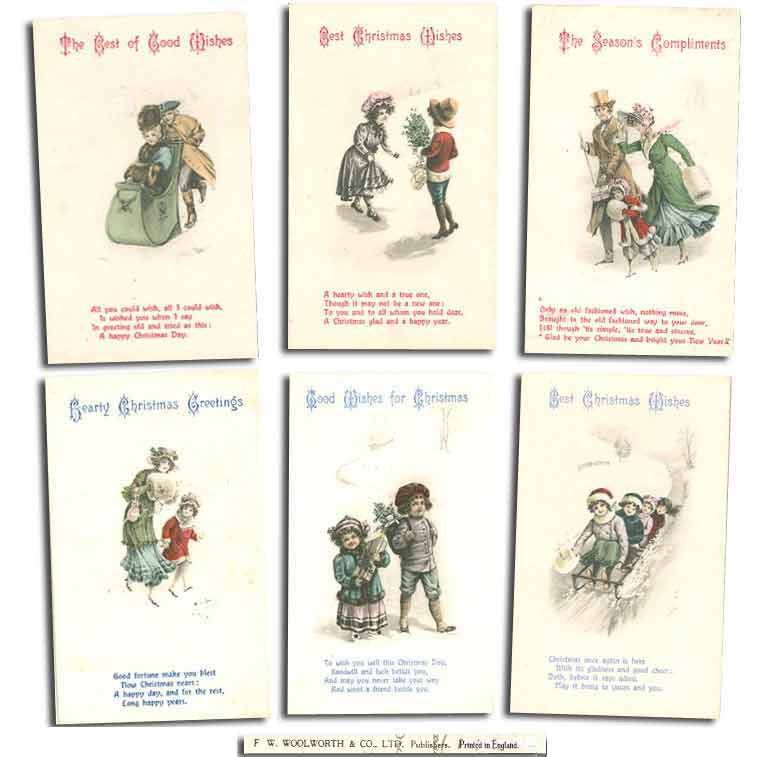
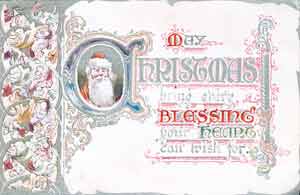
Woolworth stores first stocked Christmas Cards in Lancaster, Pennsylvania, USA in 1879, and by the turn of the twentieth century the 5 & 10¢ had established itself as the market leader. This gave the stores a head-start when the brand leapt the Atlantic in 1909.
The first Christmas Cards had a simple, postcard layout, with a colour drawing or lettering on the front, and a divided back with space for a handwritten greeting on the left, and the address and stamp on the right. In 1909 the price of a penny each, (0.5p), matched the cost of stamp.
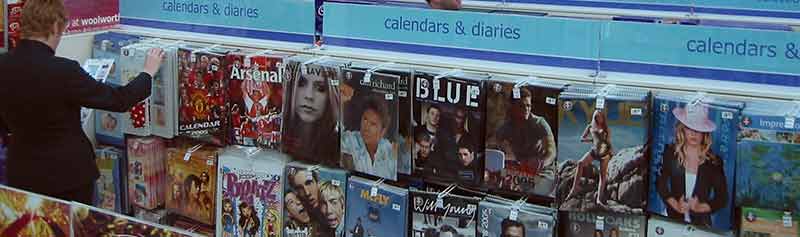
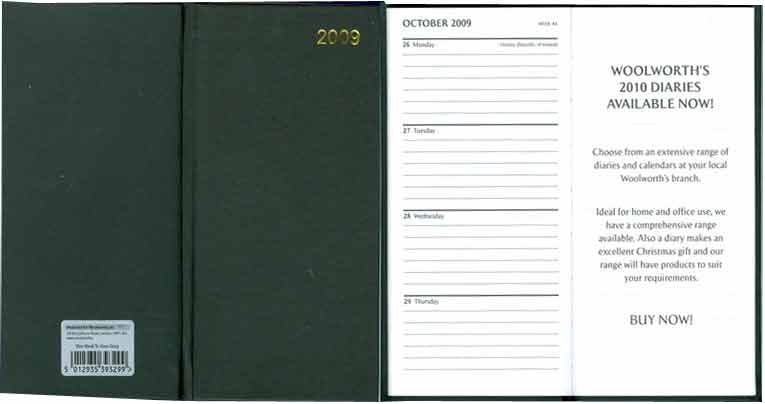
The range became established quickly. Over the following ninety-nine years the High Street stores went on to sell more cards, wrapping paper, calendars and diaries than anyone else. But, despite that success, their 2009 diaries went on to become highly-prized collectables, for all the wrong reasons.
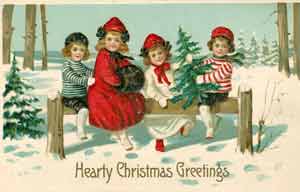
Frank Woolworth was quick to spot the potential for Christmas products. He carried cards, wrapping paper and decorations in his very first store. As it grew he allocated up to a quarter of the 5 & 10¢'s selling space to 'seasonables' from October until New Year. The displays were adjusted each week as the focus turned from Thanksgiving to Christmas and then parties to New Year celebrations. Before long His products built a reputation for innovative design at an ultra-low price.
Initially he bought from local wholesalers, but a buying trip to Europe in 1890 proved inspirational. He discovered that printers in London and Berlin had mastered a technique called 'photogravure'. They had used this to mass-produce cards in full colour, setting them apart from the dull black and white cards sold in the USA. For the next thirty years they helped the Syndicate's displays to outshine the competition, glistening in a riot of reds, greens and golds.
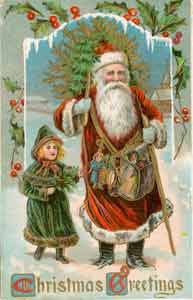
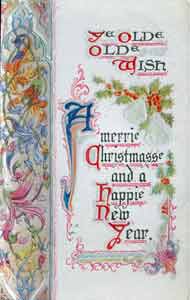
As the years passed, Woolworth hired a team of Buyers to handle day-to-day ranging, but continued to handle the main annual purchases of Cards, Decorations and Toys in Europe personally. He showed the same commitment as he prepared to launch his first British Stores, defining the first festive ranges.
Faced with fiercer competition he resolved to make the displays extra special. To achieve this he commissioned new designs to appeal to English tastes. On opening day a new "quaint and traditional theme" nestled alongside popular favourites from the USA like his best selling "Saint Nick" cards. They featured brightly lettered wording in an Olde English typeface.
Liverpudlians took to the cards. Many traded up to seven fox sixpence (2½p) rather than buying singles at an old penny (0.5p) each. To gauge demand for the future, extra stocks were ordered to keep the range on sale right up to Christmas Eve. Sales far exceeded expectations.
Frank had a great passion for England. He invested heavily in genealogical research to trace his lineage back to the Pilgrim Fathers. This revealed English-descent and a possible 500 year old link to a family from Woolley in Cambridgeshire in the Sixteenth Century. He assumed that this explained why the limeys called his store "Woolley's"!
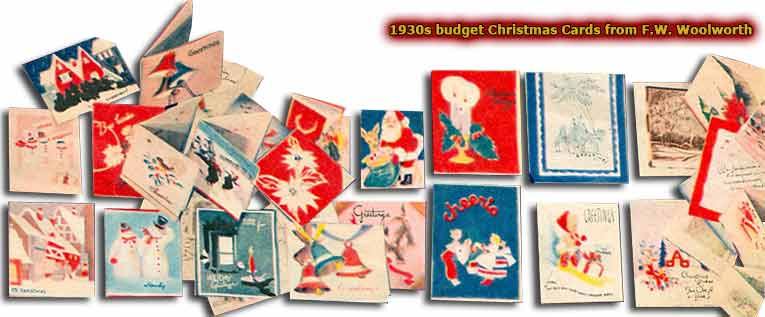
On his return to the USA, Woolworth left Buying in the capable hands of an Englishman, William Stephenson, and one his best salesmen from the USA, John Ben Snow. The two expanded the range with more contemporary cards. The set shown at the top of the page were the best sellers in the first ten years of trading.
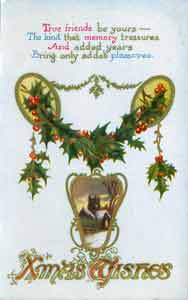
Other early winners included bright, floral sheet-wrap, brown paper for parcels sent by post, simple calendars, miniature gift tags, and a selection of desk and pocket diaries. Drawing on his experience in the USA, Snow suggested adding a glossy varnish coat to the picture side of the best cards to create a de-luxe tuppeny range. The simple measure proved highly effective.
The Buyers' determination to outperform their arch-rivals, the Marks and Spencer Penny Bazaar, lay behind the decision to hold the price of the budget card range at a penny each for a full twenty years after the first opening, and to offer multibuys at the start of the season and to clear any surplus before the last posting day. When folded cards with envelopes were introduced in 1919, they were treated as tuppeny luxuries. The following year miniature versions were added to the penny range. They proved particularly popular with children.
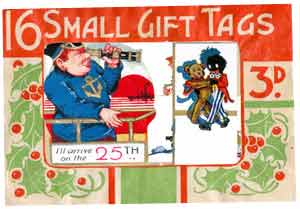
The early cards showed F.W. Woolworth & Co. Ltd. as the publisher, but were all made by one of four prime suppliers, Raphael Tuck & Sons, Alf Cooke & Sons of Leeds, Valentine's of Dundee, or Thomas Hope, Sankey Hudson of Manchester. In keeping with the policies of the era, each supplied staple as well as seasonable ranges. Cooke's were the makers of a best-selling range of playing cards, Hope's made much of the everyday stationery and a popular range of kids books, while both Tucks and Valentines supplied an ever-changing array of appealing local view cards, which were perennial best sellers.
By 1930, as the four hundredth store opened in the Lancashire resort of Southport, clever marketing had established Woolworth as Britain and Ireland's largest retailer. Its stores bustled throughout the year, but were exceptionally busy at Christmas as the run-away market leader. After sending half of its profit to the parent in the USA, it divided the remainder equally between dividends for shareholders and investing in opening new stores and upgrading the existing outlets.
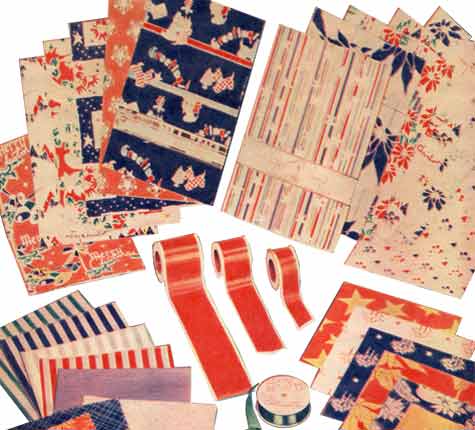
Every branch followed the same layout, and offered an even mix of budget ranges, including up to a dozen cards or sheets of wrapping paper for sixpence, and more aspirational lines like fancy ribbons and leather look diaries lettered in gold leaf for sixpence a piece.
Every item in the luxury range had a margin of over 50%, generating at least threepence profit if sold for full price. Even the threepenny budget range items had a minimum margin of 33%, contributing a penny or more to the bottom line.

The assortment packs of cards proved particularly popular. As volumes grew the suppliers were able to hire big name artists to create up-to-the-minute designs in the popular art-deco style alongside more traditional rustic scenes and floral designs. Many of the packet cards of the era, which were under a penny each, would not look out of place on a mantelpiece today.
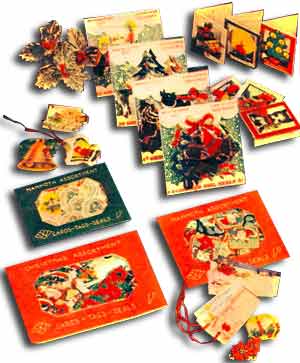
Another innovation was the sixpenny all-in-one box. These contained a selection of cards, gift tags and 'seals', which were short lengths of sticky tape. These appealed to time-starved office workers in the large city centre stores, and some single, young beaus considered them a perfect way to impress their belles.
With sales volumes off-the-clock, great care was taken with the logistics of distributing the products. As summer broke the retailer chartered whole railway trains to convey its Christmas cards and wrappings to the stores to take advantage of the lower freight charges levied by the Britain's four big railway companies. On arrival the cartons were squirreled away in the stockrooms for up to six months, before finally making it the counters. The move had other advantages. Suppliers appreciated early payment and gave extra discounts. They also gave the chain first-pick of anything new, before moving on to other clients.
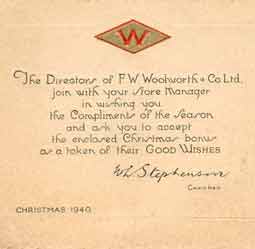
Despite months of sabre-rattling, many retailers were caught on the hop when Britain declared war on Germany on 3 September 1939. Their supply lines were interrupted as the movement of troops and munitions clogged the railways. By contrast, Woolworth's had stocked up in the summer, and was able to present a full range. As the registers jangled in-store, the Directors forged a plan to maintain the momentum in 1940.
This built on a new-found relationship with the Government. The Woolworth Chairman, William Stephenson, had been co-opted to head production for the Air Ministry. In the role he reported to Lord Beaverbrook, the Canadian press baron. His new boss agreed to supply paper and card from his newspaper empire on the proviso that Woolworth would keep prices low. It was hoped that the move would boost public morale on the Home Front in the difficult times that lay ahead.
Stephenson's efforts in speeding the production of Spitfires for the Battle of Britain, and in serving the public through the long conflict, won admiration and acclaim . Not only did it boost sales and profit by over thirty percent each year between 1940 and 1943, but it won over a generation of loyal customers. Many of them continued to favour the stores into old age.
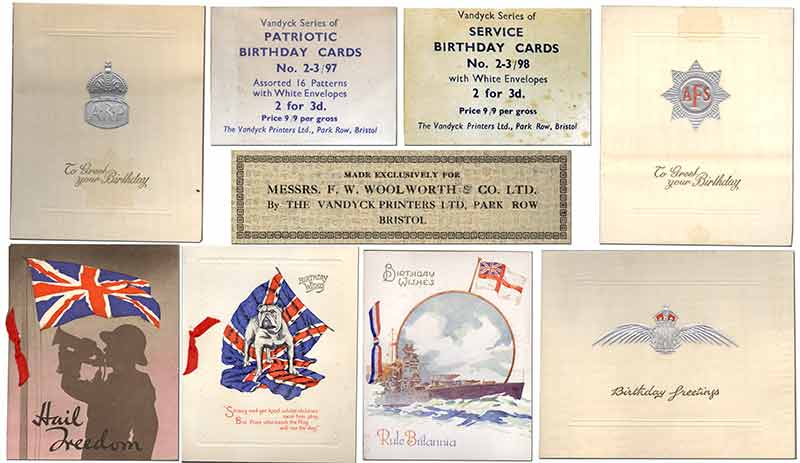
Woolworth recovered much more rapidly from the ravages of the long conflict than its rivals. The Company used its buying power to work around the austerity measures imposed by the Government. Competitor displays were severely depleted as the quantities they could order were constrained by an export drive which sought to earn foreign exchange to pay down the national debt. Woolworth was able to play the system, which was based around the number of items that had been imported before the War rather than their value. By sourcing fancy lines in place of the threepenny and sixpenny products of bygone days, it was able to fill spectacular displays and watch the sales roll in.
While the advantage was shortlived, it gave the High Street chain a head start. As the 1950s beckoned the rules were relaxed. Competitors spent much of the decade catching up, as Woolworth surged ahead.
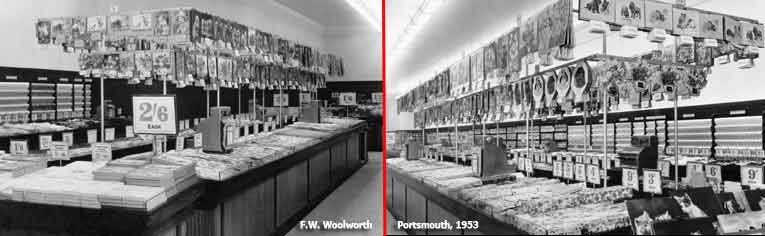
The stores opened after World War II were larger and brighter than their predecessors. Displays were less cluttered and more eye-catching as Executives drew on the last innovations from the USA. For the first time some products were brought up to eye level, while others were given VIP treatment with hanging displays above the main single-tiered counters. For example at Christmas lampshades were removed from their canopies above the lighting counter to make way for a spectacular show of callendars, wrappings and bows, which acted as a beacon, drawing customers in.
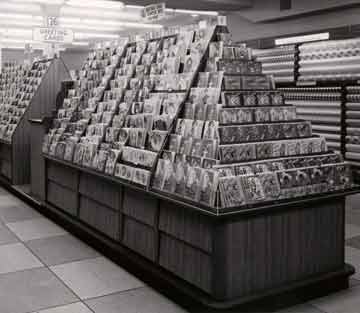
After many years of arranging the merchandise between glass dividers on flat-top counters, the chain began to develop bespoke fixtures for its key lines. For example in 1957 saw the Buyer struck on a new way to sell greeting cards. New tiered display racks tooks the cards up to eye level, giving each design a row of its own. The approach is standard today, but at the time it was revolutionary. Sales rocketed.
The US parent's insistence that executives explore self-service lay behind many of the innovations. It forced them to find a new way of handling any item that had previously been served to the customer. So, as well as looking diffferent, the envelopes were hidden behind the cards on the display. Shoppers had to help themselves, rather than being handed an envelope at the till. This met with customer resistance. The Board exploited such concerns to delay rolling out self-service for the next ten years.
By 1960 Woolworth had quadrupled its sales of cards. The year also marked a major breakthrough as sales of boxes of twelve Christmas Cards, at prices from a shilling (5p) to two shillings and sixpence (12½p) broke the million mark. Put differently, the average store sold over a thousand packs in the six weeks before Christmas.
The Sixties brought increased competition from new entrants to the market. They had lower overheads, operating self-service from day one, and offered cheaper imported goods at rock bottom prices. Woolworth had faced a similar threat in the USA since 1950, pushing profits into freefall. It had been forced to adapt, embracing self-service and relocating many of its stores into Shopping Malls. British Executives were unwilling to follow these tactics, instead sharpening their sales promotions and reworking their approach to buying. In 1964 they unveiled a radical solution.
This was a store-wide range of ultra-low priced value items, all sold under a new umbrella brand called Winfield. This owed a lot to the Founder of the business. It used both his middle name, and the tactics he had used to build 5&10¢. In the 1890s Frank Winfield Woolworth had scoured the world for suppliers that were able to mass-produce basic lines cheaply. In parallel he had established a cheap, effective supply chain to get the goods to his stores.
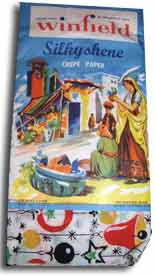
The first steps in the Christmas Stationery range were quite tentative. In the first year the Buyer imported a few lines like the 'Silkyshene' Crepe Paper shown under the Winfield name. Public reaction was good, confirming the decision to use the brand right across the range in 1965. Half of the items were sourced overseas, with the balance made locally.
To sell under the Winfield marque suppliers were expected to keep their designs up-to-date, while also finding ways to drive down production costs. They excelled, helping Woolworth to maintain its lead across the range. Sales continued to grow, contributing an increasing proportion of the chain's overall annual profit. The popularity of the Winfield Christmas ranges was in marked contrast to the public reaction to many of the other products that carried the name. Shoppers struggled to understand how items as diverse as fancy perfume, weedkiller and British Sherry could all belong to the same brand, revealing one of the shortcomings of using a pervading umbrella label. This was compounded as suppliers cut corners to reduce costs. As a result some Winfield ranges became known for their shoddy workmanship and the inferior materials used to make them.
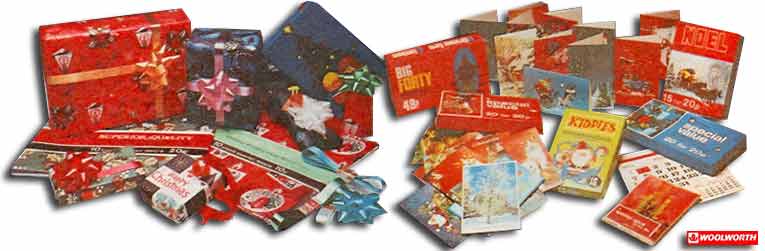
During the 1970s sales volumes were maintained by a heavyweight advertising campaign, which attracted over a million shoppers each week throughout the year. Turnover on the Christmas seasonal ranges was bolstered by the extra traffic generated and continued to grow.
Efforts to develop new ranges and to renew the wider store proposition were much less successful. Saturation point had been reached, with a store in virtually every significant shopping zone of the British Isles, yet the Board remained keen to expand. This was achieved by making the existing stores larger, with a series of schemes to transform the City Centre branches into huge department stores with a broader offer. But finding new ranges to fill the space proved problematic. They struggled to establish an adult fashion offer, or to make money from furniture or large food halls
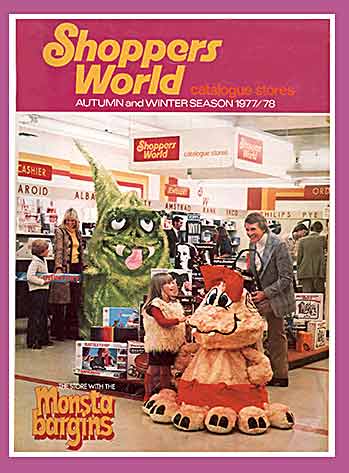
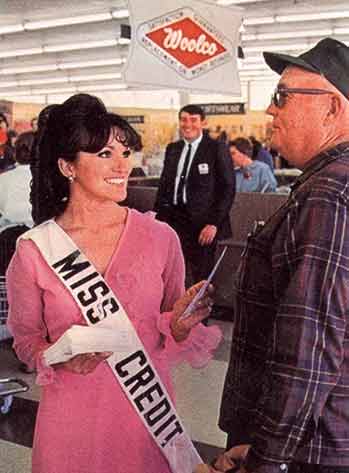
New shops trading under different names fared better. The first out-of-town superstores, operating as Woolco, achieved much higher sales and profit than the same offer at a city centre Woolworth's, helped by a large, free car park and a clearer layout and proposition. A chain of Shoppers World Catalogue Stores, launched slightly before Green Shield Stamps morphed into Argos, also showed potential, as did new branches in the Commonwealth. But the Board lacked the funds and the know-how to overcome planning barriers and translate the promise into profit.
 In North America the parent company had taken a more gung-ho approach to diversification, with disastrous results. A spate of acquisitions and new openings had been financed on credit in the optimistic days of the 1960s. But, twenty years later, it was clear that the returns from these ventures had fallen far short of what had been hoped. Bonds had been issued to finance the diversification. One-by-one these would fall due for redemption in the early 1980s.
F.W. Woolworth Co. was known as slow but steady with a reliable dividend, but its reserves were running low. The Board would soon have to face up to unpalatable decisions that had been put off for too long.
A potential solution popped up unexpectedly, when the parent received an approach from a consortium of investors. They offered to buy their controlling stake in the British subsidiary. The entrepreneurs had no connection to the business, but had spotted its potential. The well-timed bid valued the stake at over $500,000,000. A deal was hatched in secret. In September 1982 F.W. Woolworth Co. described the arrangement as a management buyout, when in reality it was a hostile buy-in. The UK operation was sold above the heads of its Board, without any locally-traded shares changing hands. The money was used to shut down and write off Woolco in the USA once and for all.
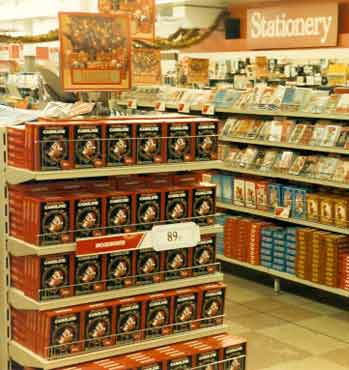
Undervalued freehold properties had inspired the acquisition by the newly-named Paternoster Stores Ltd., which had also seen potential in the recently acquired, small B & Q DIY chain. It was only after the takeover that a review identified opportunities in the High Street. This highlighted the chain's dominance at Christmas, and the potential to build this further. As a revival strategy took shape, Christmas Cards, Wrapping Paper and Decorations all had a key part to play. The ranges were given a major makeover. A wider and more aspirational product selection was given more space and the displays were beefed up.
The move up-market shone through on TV. 1983's guerrish ad "The latest, greatest, ever more spectactular Woolworth Xmas Show" featuring Joe Brown, made way for gentle views of a posh family buying soft toys, cards and heart-shaped chocolate tins under the theme "Christmas is a gift at Woolworths" in 1984. As well as gaining an 's' in their name, the retailer managed to attract home builders in the middle market, boosting overall sales despite the closure of almost 200 of its largest branches.
Geoff Mulcahy, the Finance and Systems Director behind the turnaround in the High Street, went on to become CEO at the parent company, which was rebranded as Kingfisher. Sir Geoffrey encouraged his 'OpCos' to nurture their home-grown talent, injecting new ideas and strategy suggestions to long-servers like the Woolies Xmas Buyer, Roger Stafford.
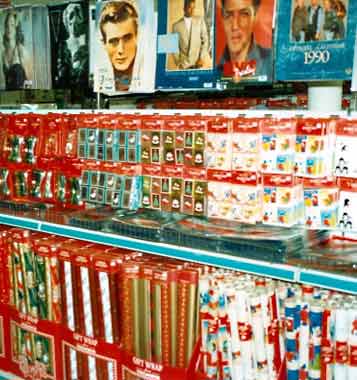
He responded quickly to shopper demand for rolls rather than sheets of wrapping paper. His new cards, papers and self-adhesive gift tags featured characters from the best toys, videos and Ladybird fashions. And new pop calendars drew younger shoppers to the displays.
Woolworths gladly shared its expertise with sister companies B&Q, the jewel in the Group's crown, and Superdrug. Both built new Christmas ranges sourced from the established suppliers, boosting overall buying power. The move did not threaten Woolworths' market leadership. With profits rising, it was able to pass on all profits made on a new charity card range.
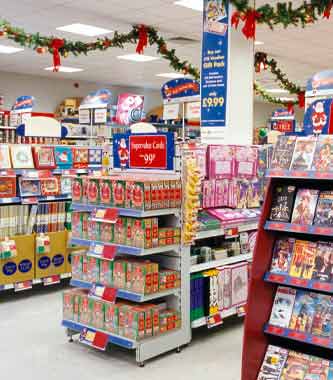
The British retail scene became increasingly competitive during the 1990s. Supermarkets targeted the seasonal ranges of High Street stalwarts like Woolworths, Marks and Spencer, Boots and BhS. The Grocers wanted a share of the higher margins on non-food, and sought to leverage their abundant car parking out of town and the convenience of picking up cards and crackers while doing the weekly shop. In parallel many Garden Cenres began to follow B&Q's lead in devoting space to Christmas displays during the frosty, winter low season for plants.
Rather than simply cut prices, Woolworths was able to play its aces. The Buyer secured exclusive tie-ups with movies and character brands, working hand-in-glove with his opposite numbers behind the entertainment, toys and clothing ranges. By working collectively they were able to boost sales by promoting themes like Thunderbirds in cross-store promotions. Targeting children's pester-power proved highly effective in keeping the stores on-top, albeit with a narrower lead. As one Executive observed, "when did you last hear a child saying 'Go on, Dad. P-l-e-a-s-e can we go to Tesco?' Never!"
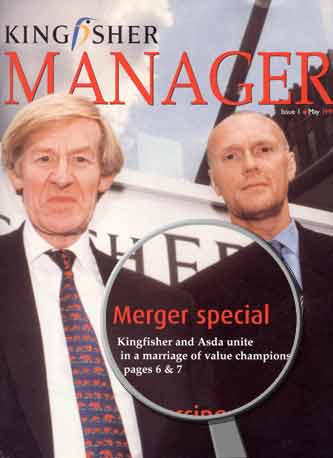
In 1999 Kingfisher, hatched a plan to deal decisely with the supermarket threat, entering into negotiations with Asda, the UK's thid largest supermarket chain. Had the planned merger succeeded, the enlarged Group would have become a major player in the grocery market. Each Company told its investors that this would be a win-win. Growth at Asda would accelerate as it leveraged Kingfisher's wholesale music division, market leadership in DIY and kid appeal with Ladybird Clothing and Chad Valley toys, while Woolworths would be able to offer a broad range of groceries in a new generation of out-of-town stores and in a convenience drugstore format, which it was planning jointly with Superdrug.
Investors overwhelming endorsed the plan, as the share prices of both companies rocketed. But, at the eleventh hour, Asda caused consternation when it withdrew from the deal. It was revealed that its Board had been in parallel discussions with Walmart, the world's largest retailer, which was keen to gain a foothold in the UK. They had agreed terms.
Angry shareholders forced Kingfisher to dispose of its non-DIY assets and sacrifice the CEO who had built the ailing Woolworth into a world class retail group. Superdrug was sold to Kruidvat, while Woolworths, EUK, MVC and VCI were saddled with debt and 'set free' to fend for themselves.
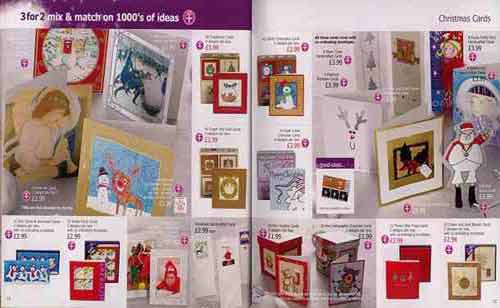 By the end of 2002 two-thirds of the retailer's top brass had left for pastures new, and new Directors, hired from outside, were at the helm. They brought very different ideas about how to face the third millennium, which had been formed from an outsider's perspective.
The CEO, Trevor Bish-Jones from Dixons The Link, launched a radical strategy within weeks of taking up his appointment. This introduced steps to make the Christmas offer much more stylish and aspirational, and to target it to children and their families. This formed part of a move to become a specialist retailer of 'Kids and Celebrations'.
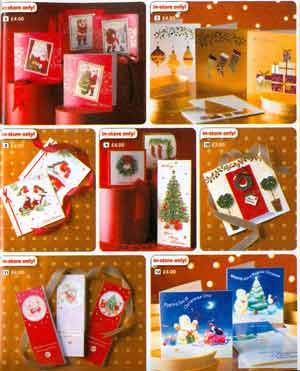
Kingfisher had intervened when the previous management pushed up-market, reminding them of the value heritage. By doing so it had staved off competition from the grocers and a new wave of discounters, which had began to undercut the stores. The new CEO considered this a mistake, believing passionately that the stores had lost their way and needed to smarten up and sell larger and more expensive items, pitched firmly at families with young children.
The strategy also sought to reduce complexity by cutting the number of counter moves undertaken in-store each year to accommodate the Christmas ranges. Over its ninety years in the High Street, Woolworths had established a template which rotated the ranges around the store in each of six key shopping seasons. New layouts introduced fixed seasonal areas. The same counter might be used for Gardening in the Spring, Deck Chairs in the Summer, Flowering Bulbs and Shrubs in the Autumn and an extended display of toys in the Winter, for example. This achieved a considerable labour saving, but at the expense of weaker adjacencies, fewer impulse salesand a less coherent offer to the public.
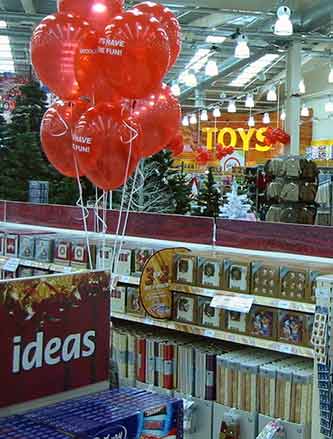
City Analysts loved the new look stores, feting the new CEO for his vision. Shoppers in the early stores also seemed impressed. But both groups were made up of cash-rich, time-starved people, quite unlike the shoppers at many of the small local stores. If the researchers had delved deeper both groups perceived that the prices had gone up to fund the enhanced store environment, and few said that they would shop at Woolworths more regularly after the changes.
Time would show that the new formula was much less appealing to older shoppers and to single men, who abandonned the High Street stores in increasing numbers. Two million fewer people visited each week in 2007 than they had in 2002. Research revealed that they had switched to somewhere that was "not just for kids".
Mums also proved quite fickle. When funds were tight, rather than stay loyal to one brand, they shopped around to make their budgets go further. Increasingly they chose Woolworths for 'big presents' for close family, but opted for budget lines for distant relatives, and their children's classmates. Without a value range, they were forced to buy these at the pound shop, or on-line.
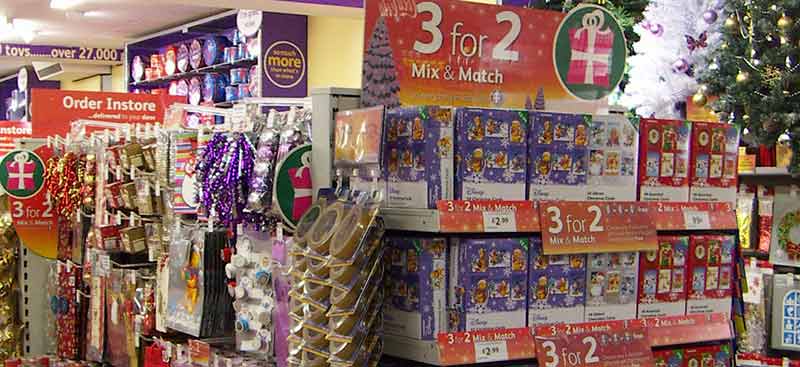
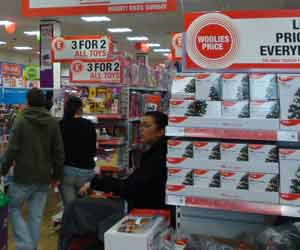
Such lessons were ignored until it was too late. Declining profits finally forced a rethink in 2006, as Gerald Corbett prepared to hand over the reins at the end of his tenure as Chairman. Throughout his time at the top he had publicly given the CEO that he had chosen unqualified support. Fresh talent was hired to stop the rot. A new Commercial MD, Tony Page, quickly diagnosed the problem, identified a solution and gained traction in rolling it out at a speed which the venerable retailer had rarely seen since its heyday. From a standing start in 2006 Page was able to build sales of over £1 million a week and a higher than average margin on a new, exceptional value low-priced range called WorthIt!, without impacting on existing sales. Stock soon began to run out, prompting much larger buys for the following year, which met with the same success, with plenty of potential remaining for 2008-9.
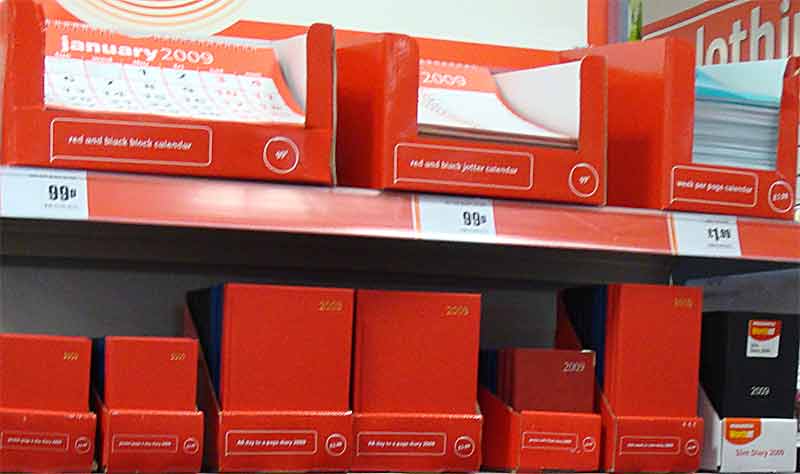
But it was too late, as the damage had already been done. The coffers were empty and the lion's share of cash was required to finance the Group's wholesale entertainment division. So, despite offering the best-ever range at Christmas 2008, with style and design at lower prices than the pound shops, mounting debts and an international economic crisis forced the chain into Administration at the start of its peak trading period. Efforts to rescue it came to nothing, as turmoil gripped the markets and Deloitte as Administrator took the cruel decision to shut down before the next quarter's rent fell due, just forty days after they were called in.
In the aftermath Page made a valiant effort to resurrect the stores in the High Street, but was confounded when the Administrator secured a sale of the brand to Shop Direct Group Ltd, claiming that Woolworths had been saved and would shortly be re-opened on-line The web offer proved popular as part of the new owners' enviable array of Internet brands, but did not perform as well as some of its other marques, particularly its star performing Very.co.uk site. After persevering for a while, Shop Direct Group ultimately decided to retire the Woolworths brand and encourage its shoppers to switch to Very.
Ironically, during the Administration period, a wave of public emotion helped the stores to sell every Christmas Card, packet and roll of wrapping paper, calendar and diary at full price, which in normal times would have been enough to secure a bumper year's profits. One entry in the 2009 diary made particularly sad reading for lovers of the High Street stores. Many would have liked to follow its advice to pop to Woolies to stock up on a new diary, but would have had to travel to Germany, Mexico or the Caribbean to buy one today.
Shortcuts to related content
Christmas Gallery
Site Navigation
An ideal Christmas gift for Woolworth lovers