2000's Overview:
another one bites the dust
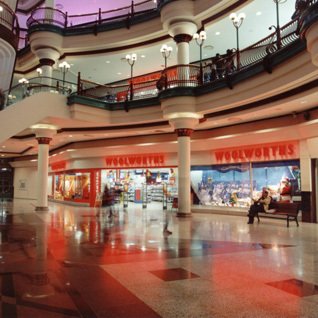
Woolworths went into the third millennium profitable and confident. The parent company, Kingfisher, had drawn on the chain's management expertise to oversee a series of Group initiatives.
Big W realised a longstanding ambition for the CEO, Sir Geoffrey Mulcahy. For the first time all of the Group's major UK retail brands appeared under one roof in a chain of huge out-of-town superstores.
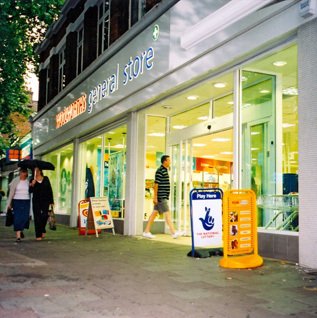
Woolworths General Store drew general merchandise from Woolworths and health and beauty from Superdrug, topped up with food, wines and cigarettes from Booker, creating an American-style convenience drugstore like Walgreen.
Kingstore was a new EPOS till system developed for the Group. In parallel the chain was also leading e-Kingfisher's move into e-commerce, with a comprehensive multi-channel offer, backed by an alliance with Freemans.

But all was not well at Kingfisher. A planned merger with Asda had collapsed, leaving the management looking inept. The expensive, high profile failure had led analysts to question the Group's acquisitive strategy, as a long spell of rapid profit growth slowed down.They demanded change.
To quell the criticism the CEO had reluctantly agreed to split the in-town and out-of-town divisions of the Group. The break-up was ugly as Kingfisher sought to maximise its revenue. It hoped to find a buyer for 'GM plc', but ultimately sold Superdrug privately and demerged the rest. To turn a profit, the new Group was stripped of its property assets, saddled with debt at short-term rates, and tied into unfavourable long-term leases for its stores.
By the time Woolworths Group plc emerged, it had endured a year in limbo and was on its second Chairman, Finance Director and CEO. At the helm was Gerald Corbett, who had stood his ground throughout the acrimonious separation process, and had warned the City that the Group would need time to recover before returning to profit.
The first year after demerger was spent undoing many of the initiatives inherited from Kingfisher. Corbett did not agree with the move into new channels. He severed the partnership with Freemans, closed the warehouse and laid off the staff, writing everything off with a £10m exceptional charge.
He felt the out-of-town Big W chain was unviable without the rest of the former parent company. B&Q had other priorities and Superdrug had been sold to Kruidvat. Opening plans were scaled back.
General Store also seemed untenable without Superdrug. Temporary arrangements were made to source toiletries, but in the long term the stores would have to be closed or return to the traditional format.
Corbett had to select a CEO. The demerger prospectus had highlighted the strength of the established management and particularly the three MDs at Woolworths. None was deemed suitable. Instead an outsider, Trevor Bish-Jones, was hired. Within a year the three MDs had departed, along witih forty of the top fifty senior executives.

Despite the exodus, and the withdrawal of virtually every initiative mentioned in the demerger prospectus, the new management team got a friendly reception from the City. The Chairman, Gerald Corbett, and Group FD, Christopher Rogers, were able to renegotiate the new Group's financing, while the new CEO Trevor Bish-Jones developed a strategy for his new empire.
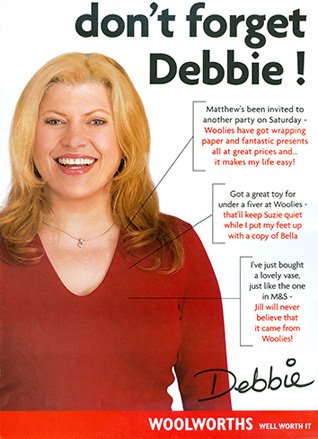
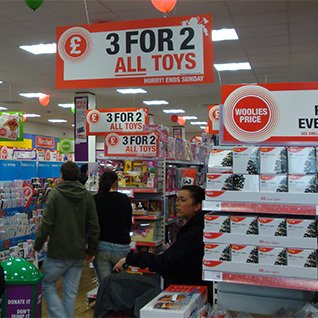
The CEO instituted the most radical changes in 93 years. He targeted young families, dropping the 'everday store for everyone' approach. He called the new formula 'Kids and Celebrations'. It gave more space to Toys, Clothing, Cards and Entertainment and scaled back the offer for the Home and Garden. Products were more aspirational, as prices and margins rose. Rather than follow the wisdom of the 90s, he began with the largest stores.
Christopher Rogers was appointed Chairman of the Entertainment Division, tasked with increasing the profit generated by the wholesale and publishing subsidiaries. He also sought a strategy for the 88 MVC music shops.
Early trading results in trials of the new large Woolworths stores were good. Sales rose by over 10% and the profit margin rose by 1.5%. A roll-out was agreed. Almost 200 of the largest branches were upgraded over three years. The Board also continued to invest in new tills and an initiative to switch to the SAP Retail enterprise system. Spend topped £200m, building a strong foundation to sustain the High Street stores for twenty years to come.
By 2004 results looked good. The Group FD had hit the headlines after facilitating a joint venture between the VCI Group publishing subsidiary and BBC Worldwide. 2|Entertain was considered a true win-win and became a big profit generator. Rogers was later headhunted by Whitbread.
In Spring 2005, Apax Partners explored a buyout. The tentative bid was double the firm's share value at demerger, but was inexplicably withdrawn at the eleventh hour. The full reasoning was never explained.
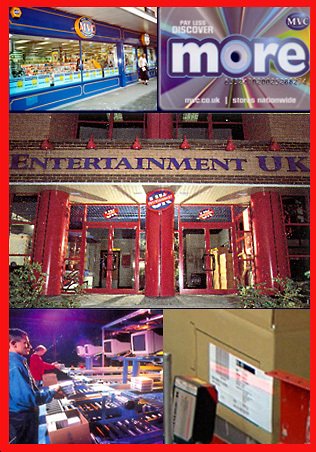
Bish-Jones assumed direct control of the Entertainment Division, seeking to release untapped potential.
A winning formula for MVC proved elusive, so it was sold. The purchaser collapsed just weeks later, leaving debt in its wake that had to be written off.
EUK's wholesale distribution was a key profit contributor. Its success mirrored that of its biggest client, Tesco. The supermarket kept squeezing margins, ultimately deciding to take CD and DVD distribution in-house. Investors expressed concern when the news broke, demanding that the gap be plugged. The CEO duly wooed new big names, by offering competitive terms and a line of credit. This put pressure on Group cash flow.
Despite the rapid decline of the music market, as retailers dropped prices in an attempt to maintain share, Bish-Jones kept faith. He assured critics that the Division was 'world class', and would be bolstered with new ranges of Console Games, Software and Books. To achieve this he bought two leading players, Bertrams Books Ltd and Total Home Entertainment, depleting the cash reserves further.
With hindsight it seems the Group became too dependent on the Entertainment market. While 2|Entertain built new markets overseas for its publications, Woolworths had long relied on £300m a year of CD and DVD sales for survival, which in turn had boosted EUK.
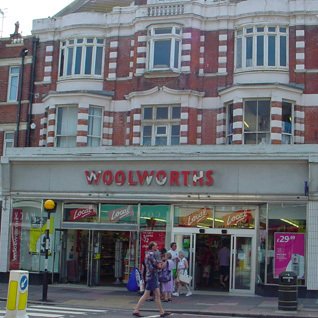
There were also problems closer to home. The move upmarket opened the door for discounters including the pound shops and Wilkinsons to undercut Woolworths' reputation for value. It also narrowed the appeal of the brand, as shoppers could no longer rely on the High Street stores for cheap homewares, DIY and repair products, or basic essentials like Dish Mops and Tights. Between 2002 and 2007 the number of weekly visitors to the stores fell by two million.
Trade was also lost to the big supermarkets. They were attracted to the higher margins of general merchandise, and targeted the same markets that Woolworths had chosen. They competed strongly on price, forcing the High Street chain to accept lower margins on many core ranges, including school clothing, stationery, entertainment and even pic'n'mix.
As sales and traffic numbers fell, a package of economy measures was pushed through. Maintenance budgets in the stores were cut, meaning that the more profitable, smaller stores, which had not received attention since the 1990s, started to look shabby and unloved.

The CEO's solution for small stores was fashionable and met with approval from analysts and Fund Managers. He planned a major move on-line, backed by a big book catalogue, which would make a much wider range available to order in every store. He believed that the chain's geographic spread gave it the potential to offer a unique in-store collection service, which would be handy for customers, saving them a trip into town.
The strategy was costly, requiring investment in similar systems and infrastructure to those written off after the demerger from Kingfisher. It had good prospects in the medium to long term, but did little to arrest the immediate decline. The product range proved appealing, generating sales of over £70m in 2007. But it was not profitable. The costs of multi-channel retailing contributed to the first full year loss in almost a century.
Changes to the cost-base, as the Group expanded its wholesale division and sought to reposition its High Street stores, prompted the Board to negotiate for new financing. The CEO led discussions with the banks. He found plenty of takers for an innovative asset-based lending approach. In Spring 2008 he thought that he had bought the Group four years to sort itself out, and was briefly hailed as a hero, before the full consequences of the move came back to haunt the Board.
The share price tumbled between 2005 and 2008. This prompted a shake-up in the Board Room. In 2007 the Chairman, Gerald Corbett, appointed Tony Page from Asda as Commercial MD. The press rated Page as "quite a catch". He worked hard to re-establish the brand's value credentials and to improve product availability. His strategy centred on a low entry price point range called WorthIt!, which quickly won back large numbers of shoppers. In the first year sales grew to £1m a week.

Corbett stepped down after seven years. He was replaced by Richard North of Intercontinental Hotels, who initiated a strategic review which prompted a major change in direction. It concluded that the Bish-Jones strategy had failed, and the Big Red Book should be dropped to release funds to improve the smaller stores and move down-market. Despite the failure, the CEO was paid to leave, bringing an end to his six and a half years at the helm.
Steve Johnson was chosen as the new CEO. He had made his name at Focus DIY. After two years turning it around, he had sold the business, which was saddled with debt, to a private equity group for £1. Some considered this a remarkable achievement, while others wondered whether his move to Woolworths Group was an omen of what North was planning.
City Analysts had held Bish-Jones in high regard, accepting verbatim that he had "tried everything" to revive an ailing brand.
The moves angered investors and the asset-based lenders, who felt mis-led. Bish-Jones had sold the finance deal by articulating his strategy, which they had endorsed. Now it would be abandonned as the Group turned in a completely different, unproven direction. Word of these fears soon reached the credit insurers who underwrote the Group's purchases. Alarm bells began to ring just as the credit crunch started to bite.
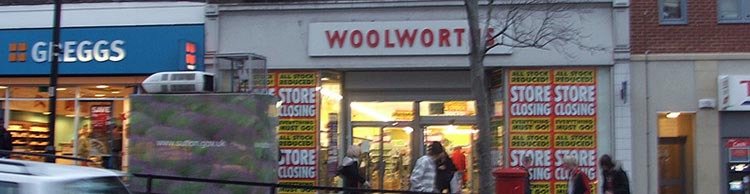
Credit cover was withdrawn, and the bankers refused to authorise further loans, insisting on repayment. Frantic negotiations failed to find a solution. Forty-one days after Steve Johnson took over, the Group collapsed into Administration. Despite many expressions of interest in the High Street Stores and the Entertainment Division, no bidder could find the required funds quickly. After just four weeks an orderly shutdown began. By 9 January 2009 every store in the ninety-nine year old chain had closed.
Just when it seemed that Woolworths was gone for good, and after the Chad Valley Toy Brand had been sold to the Argos parent Home Retail Group for £5m, the Administrator, Deloitte LLP, announced that it had found a purchaser for both the Ladybird clothing name and the Woolworths brand. The industry-leading Shop Direct Group, the name behind many of Britain's best web brands, including Littlewoods, Empire Stores and Marshall Ward, planned to take Woolworths on-line and to revive the name with a world-class website.

By the hundredth anniversary in Britain, Woolworth was up and running again on-line. As at the start of the story, Woolies was based in Liverpool, with an ultra-low cost base and a dynamic management team. All believed that Shop Direct Group had the skills and the resolve to make the second century of trading every bit as exciting as the first. But even that revival was short-lived, as the on-line group chose to migrate Woolworths shoppers to its popular on-line very.co.uk brand, which has been tagged as a successor to the High Street stores. Click a Woolies hyperlink and you'll find a Very good website, but no sign of Woolworths!
Perhaps someday someone will licence the brand and chance their arm in the High Street once again!
Shortcuts to related content
2000s Gallery
New values and a new direction
Visit a new-look Woolworths Out-of-Town, as it opened in 2005
Navigation