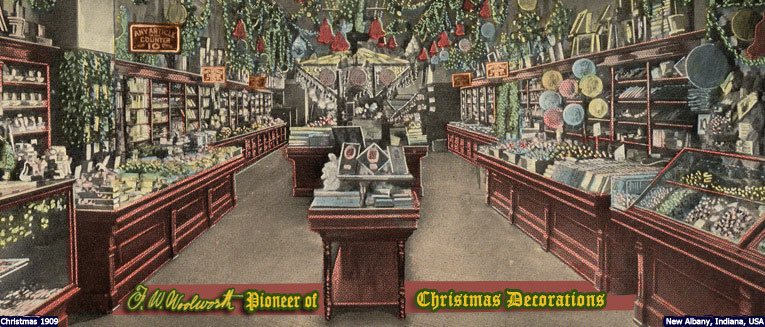
Christmas Decorations for seven generations
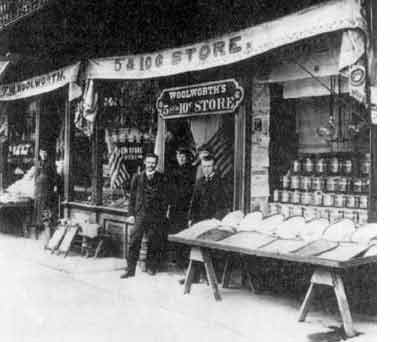
One day in Autumn 1880 a travelling salesman called at Frank Woolworth's store in Lancaster, Pennsylvania, USA. The Great 5¢ Store had been trading for a year. 28 year-old Frank had earnt a reputation as a canny buyer who drove a hard bargain and could spot a good product.
The salesman wanted to sell German glass ornaments for people to decorate their homes at Christmas. Woolworth responded that Americans would not waste money on them because they didn't 'do' anything. In the end he bought one case of 144 decorations, insisting on sale or return terms.
Much to his surprise, the decorations sold out in under a day, at an overall profit of $4.32 (3¢ a piece). The next year he doubled the order, and sold out again. He had found a winner. Shoppers loved his silver baubles, which were individually blown by craftsmen in an area that is now part of Russia.
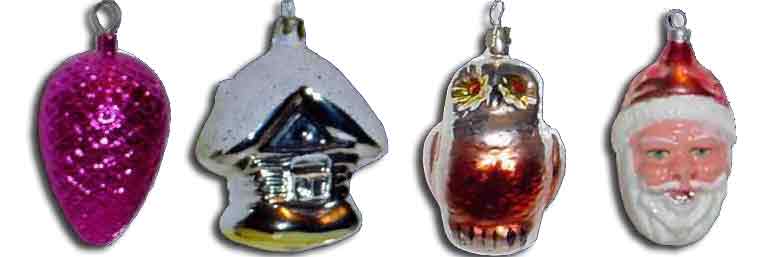
To push home the advantage Frank Woolworth placed most of his orders with a single supplier, the main importer in New York City, who was a gentleman by the name of Mr Wilmsem. It is estimated that total sales between 1880 and 1939 exceeded a staggering five hundred million individual baubles! In 1939, at the age of 81 Mr Wilmsem recalled his first meeting with Frank in the early 1880s, saying:
"Mr Woolworth had at that time only a few stores. But I grew with Woolworth. I have sold them at least $25,000,000 worth of Christmas tree ornaments, in one year $800,000 worth. At first we imported tinsel from Germany. Since the war I make it myself. To-day, at the corner of Haegert and Jasper Streets I have a big factory. I have 255 people working to fill Woolworth orders. We sell to all, but Woolworth was the first.I am the oldest Woolworth supplier."
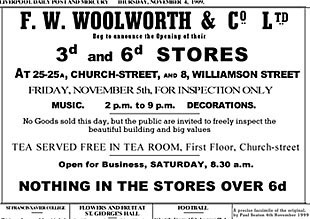
By the time Frank went international with a store in Liverpool, England, the decorations were such an important part of the offer that they featured in the advertisement for the store's opening on 5 November 1909.
Although fancy decorations for the Christmas tree were already fashionable in Edwardian high society, they were too expensive for ordinary people. Woolworth's changed that overnight, bringing the price down from two to five shillings (10-25p) to just one old penny each (the equivalent of ½p at the time, or about 35p today. The ornaments became best sellers.
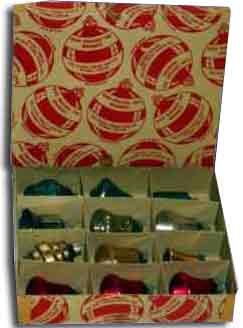
Naturally the British stores chose the same German manufacturers for their decorations. The Buyer hatched a plan to increase efficiency. William Stephenson, an Englishman, suggested that ships bound for New York should be re-routed via Hull where the goods could follow the Lancashire and Yorkshire Railway to the Liverpool docks for onward transfer across the Atlantic. Fierce competition in the docks of the North West seaport had seen shipping costs fall sharply, achieving a significant saving while also allowing the newly-founded chain to cherry-pick their requirements.
Most of the decorations weren't made in factories, but at home by family groups. Such was the demand that they worked all year round, filling wicker baskets with baubles before taking them to a Woolworth warenhausen (warehouse) in Sonneberg or a similar facility in Fuerth near Nurermberg, Germany. Both locations inspected the goods and, if they met the standard, paid cash at once. Contract staff emptied the baskets before packing and wrapping the contents ready to be sent to the shops.
Some Edwardian designs, like the bells and bulbs, remain fashionable today. But other classics did not survive the automation of manufacture during the twentieth century. For example intricate miniature glass trumpets and guitars, whose penny prices had once made them the firm favourite of American children, were dropped in the 1920s in favour of machine-friendly designs.
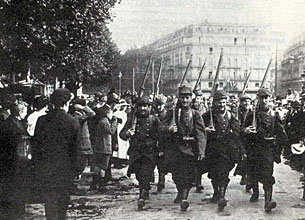
In 1914 Frank Woolworth got trapped behind enemy lines. He had planned a family road trip holiday with stops in Paris and Geneva to mark the conclusion of another season's buying, and ignored warnings of a possible conflict. Days later German stormtroopers were marching into Paris and could be seen from the window of his hotel. Great ingenuity and deep pockets were required to secure a passage back to New York.
The 5 & 10¢ needed their leader more than ever. With the supply line to Europe cut-off by Kaiser Wilhelm's U-Boats, their European lines would soon run out. Frank leapt into action. His hands-on approach meant that he had inspected every factory at home and abroad, and had studied how his lines were made. He hand-picked local suppliers, kitted them out, and showed them how to make the goods he needed. Today is admired in the USA as a Merchant Prince not because of his stores in Main Street, but because of his extraordinary work in accelerating American mass-production during the Great War.
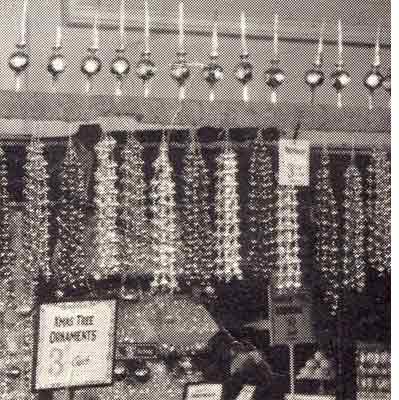
In 1919, as F.W. Woolworth Co. marked its fortieth anniversary in Main Street, German baubles made a welcome return to the shelves, featuring alongside locally-made designs.
The American factories had devised a new addition to the range. Their 'finial baubles', for the top of the tree, proved to be a smash hit on both sides of the Atlantic. Made from brightly-decorated glass, they clipped over the top branch, allowing a candle to illuminate the tree. Before homes had electricity they gave a magic touch ... and sometimes burnt the house down !
During the 1920s elaborate paper decorations became popular. These unfolded into bells, fancy pom-pom balls or stars. The stores also sold individual metre-long lengths of tinsel, with a thin design for a penny and a 'plush garland' for threepence (about 1¼p then, about £1.05 each today).
Eye-catching displays were placed at the front of each store, laid out to follow photographs despatched by the Buyer.
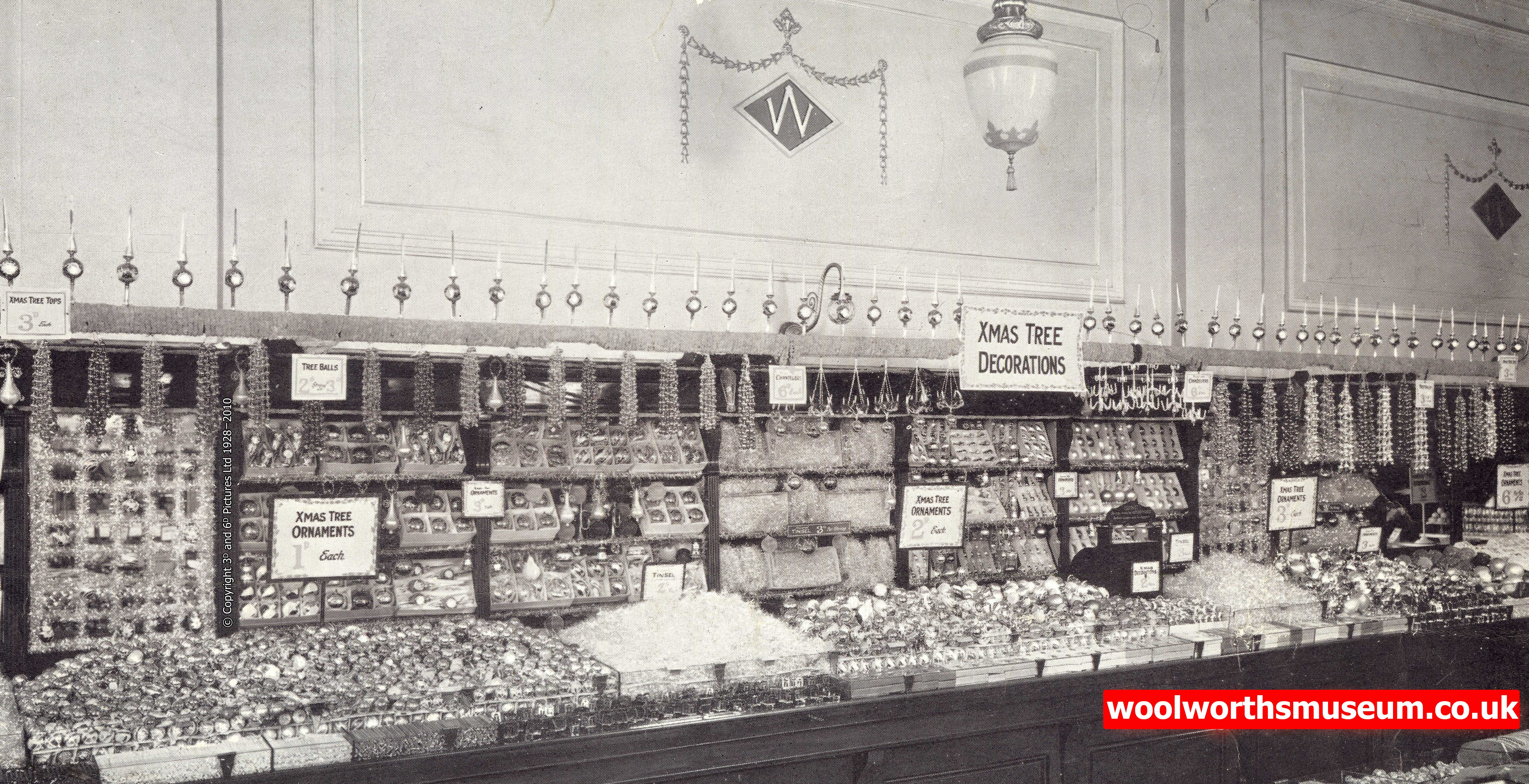
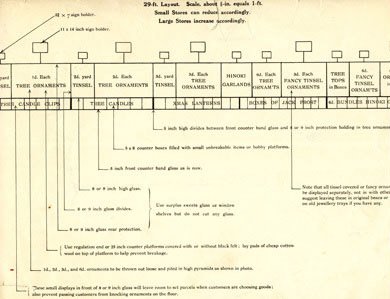
As the British chain grew, it cherished consistency between its stores. A growing army of executives issued layout instructions, with local District Office staff reinforcing the Buyer's suggestions. Compliance was verified by a Superintendent (Area Manager) who visited regularly. He had to check that the staff's maroon uniforms were clean and pressed, the counters were full, tidy and dust-free, and that floors were swept and polished.
This rigour, which most big chains still follow, was pioneered by Woolworth's and lay behind its rapid expansion. Whether a shopper visited a store on the West Coast of Ireland or in Central London, they would find a similar layout, ambience and quality of service, adapted only to account size of the salesfloor.
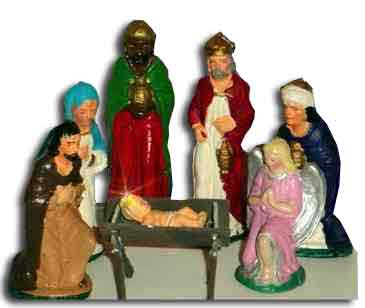
'Chalkware' became the smash hit of the 1930s. Gypsum plaster was moulded into elegant nativity sets. These were brightly coloured with water-based paint and finished with a glossy varnish. Each figure was sixpence, or shoppers could trade up to an eight-piece set including a dark-stained plywood crib for three shillings (15p at the time, equivalent to about £12.60 today). The pieces were heavy and quite brittle, but the glaze has helped many to survive without fading, giving a snapshot on a bygone age today.
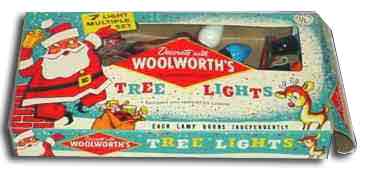
During the 1930s the Woolworth range diverged between its North American and British stores. New US labour laws, setting a minimum wage and a maximum working week, forced it to relax and then abandon its upper price limit. This paved the way for new, more expensive lines. By 1939 the best seller state-side was a string of nine electric bakelite tree lights for 85¢, seventeen times the old limit !
In Britain the sixpenny limit was considered sacroscant. Suppliers were forced to boost efficiency to retain the 600-strong chain's huge orders.
As a concession most were able to generate profit through new lines that were cheaper to make, which were given pride-of-place in-store. For example every branch was festooned with paper decorations. As well as boosting sales this created an 'olde-worlde' festive atmosphere that was very different from the ultra-modern styling adopted in North America.
In 1939 the gap widened dramatically. By Christmas Britain was at war with Germany. Displays at Woolworth were a little depleted. Stores were issuing pamphlets showing how to 'make do and mend', spot an enemy plane, and interpret military insignia. In contrast the USA was enjoying a period of prosperity after the dark days of the great depression. Sentiment was strongly anti-war, keeping the country neutral. Woolworth shoppers were offered free copies of the first full-colour catalogue featuring its latest innovations and notions for all the family.
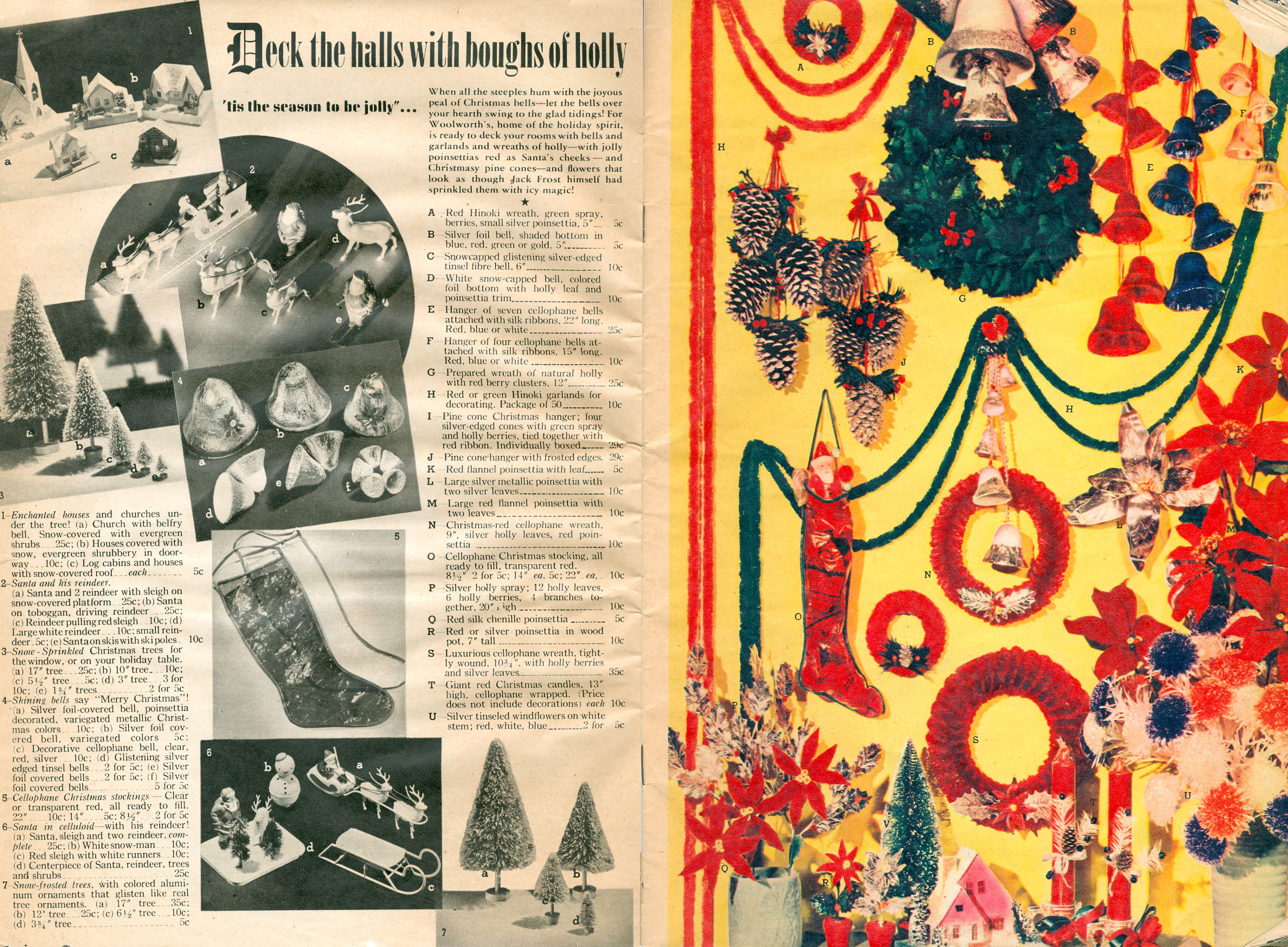
Throughout the war British stores made a point of stocking Decorations to boost morale. These were made from paper and cardboard rather than precious metal or glass. Crepe Paper was the best seller. The pack explained how to make garlands and paper flowers. Woolworth also sold packs of gummed, coloured paper to make paper chains. People remember that the wartime cow gum glue tasted horrible!
Rapid inflation made the sixpenny limit untenable in 1940. Hopes that this would be temporary were soon abandonned.
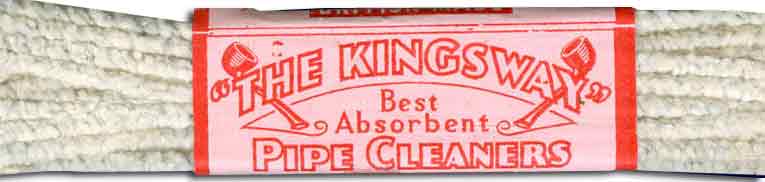
As staff were conscripted into the Armed Forces, pensioners were recalled to work. Shoppers recall these old-timers gathering a crowd as they showed how to improvise simple Christmas trees and decorations from sixpenny packs of pipe cleaners.
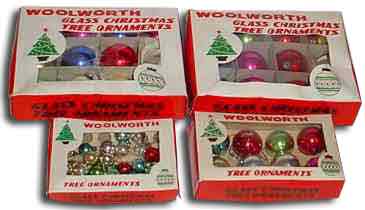
In an ironic twist, shortly after entering the war, American bombers annihilated the Woolworth warenhausen in Sonneberg, which had been commandeered to prepare munitions for the Luftwaffe. Never again would it collate blown glass decorations. A new world order after the long conflict stranded the makers behind the iron curtain in the Soviet Union. Factories in occupied Japan took up the slack.
From 1946 until 1955 the British, German and North American stores all carried these new decorations in the same packaging. In ordinary times each country would have insisted on its own look.
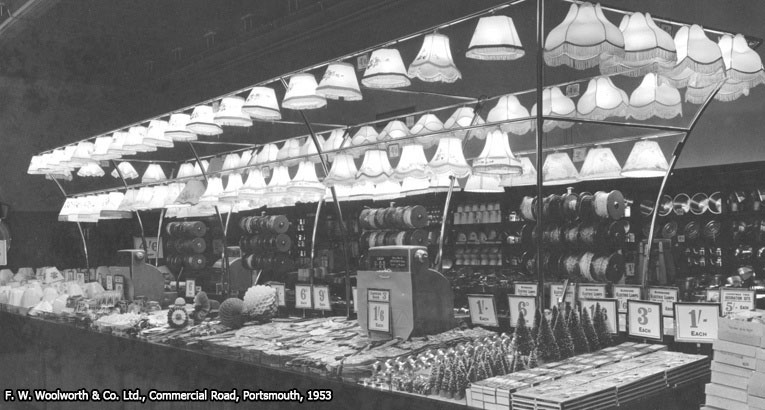
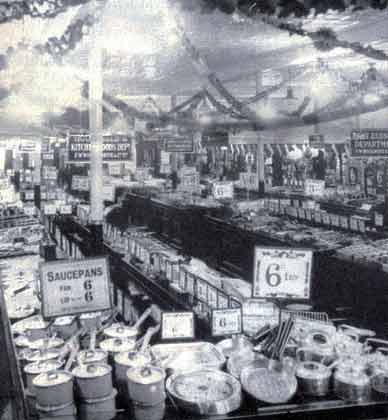
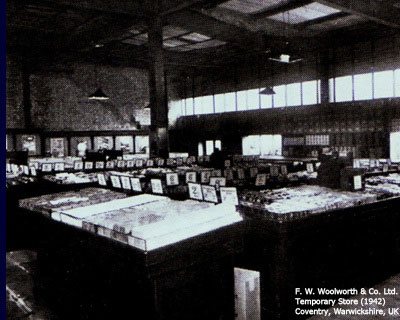
As life returned to normal in the early 1950s after post-war austerity measures were relaxed, UK sales and profit rocketed as the stores went from strength to strength. Without an upper price limit the Buyers were free to build more elaborate ranges. But they made a particular point of pricing their seasonal ranges competitively, including a few lines that could still be sold for the traditional prices of threepence and sixpence. The display from the new superstore in Commercial Road, Portsmouth (above) shows the breadth of items available, with snow globes, paper and foil decorations still sixpence each and miniature nine inch Christmas Trees for one shilling and sixpence (7½p). Such was the appeal of the assortment of decorations, cards, wrapping paper and calendars that, a week after the picture was taken, the shades were removed from the lighting canopy to make way for hanging decorations matching the flat-pack lines on the counters below.
The success in Britain and Ireland came at a good time for the American parent. Across the pond sales were in freefall as the giant corporation faced increased competition from a resurgent Kresge, forcing it to embark on a major programme of refurbishments and relocations.
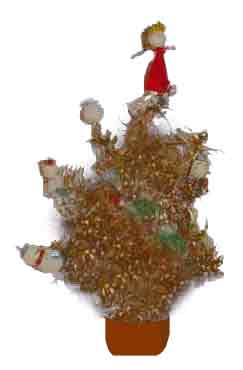
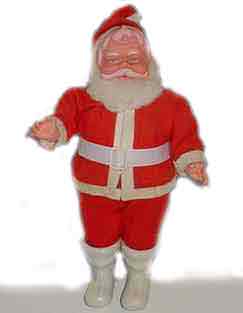
The materials used to make decorations changed in the 1950s. Plastic and nylon took the place of glass and paper became less popular. Hong Kong became a key source. Clever marketing of these 'Empire-made' baubles as 'shatterproof', gave them a price premium. A surprising number have survived and remain in use.
As disposable incomes rose the Company responded by adding larger items to its range, pushing prices upwards. For example, where once Woolworth had been limited to selling miniature trees, it introduced artificial 'Noel Pine' firs as tall as eight feet (2.4m). Only a few shoppers spotted that the same nylon fabric was used to make them as for a popular range of lavatory brushes, which were sold on an adjacent counter.

In the late 1950s and early 1960s one of the surprise winners out of the plastic novelties made in Hong Kong was 'Santa's Candy Flyer' (above), consisting of two reindeer pulling santa and his sleigh. According to the box the kit contained a Jolly Santa, 4 Plastic Toys, 2 Prancing Reindeer and a sleigh with a container of candy pops. This type of item, which could be made and transported from the factory to the stores cheaply, offered a good margin and generated strong sales.
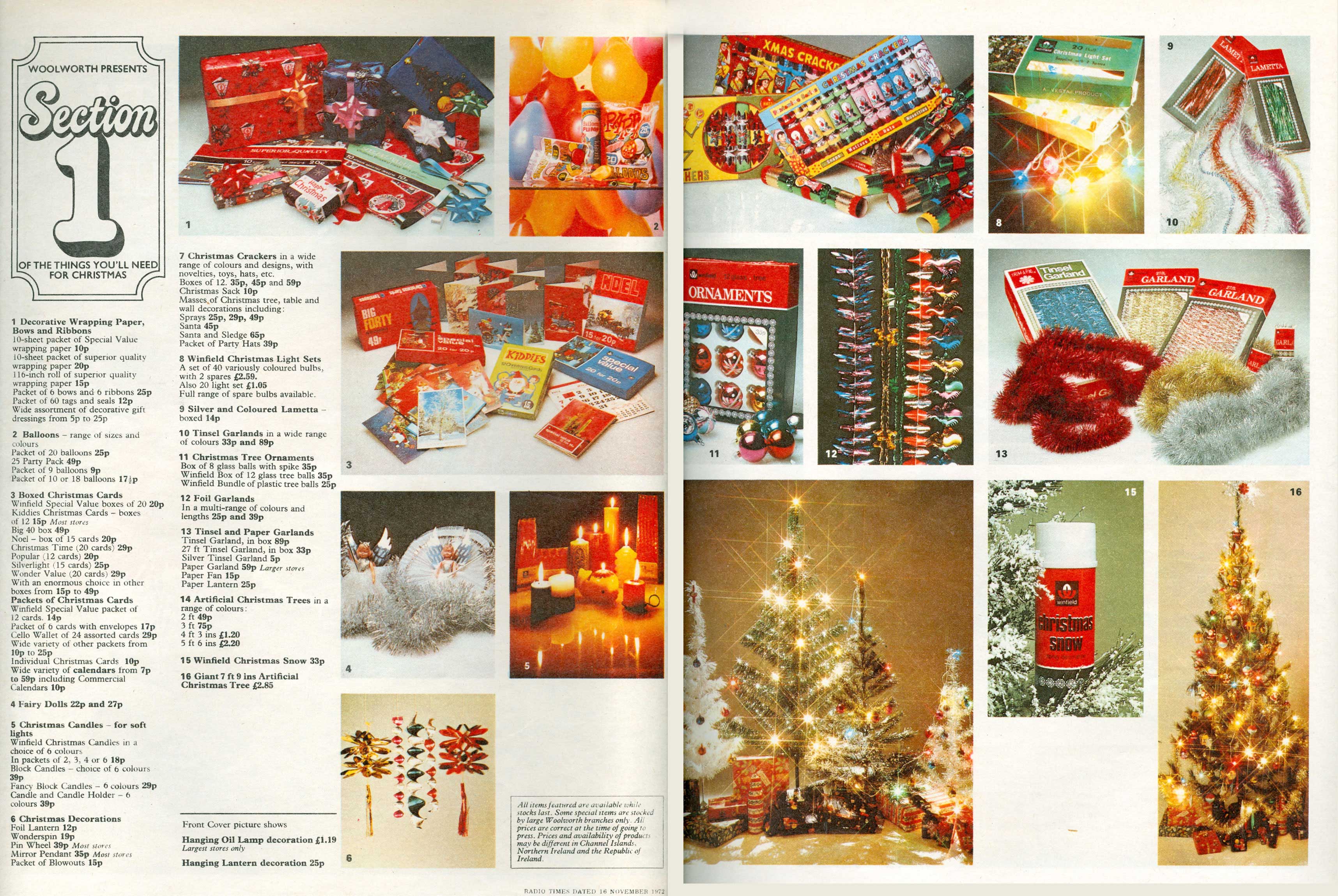
By the late 1970s Woolworths had assembled a spectacular range of Christmas decorations, with plastic shatterproof ornaments alongside traditional glass models, corsages, foil decorations, paper chains, crackers, lights and garlands. While other areas of the store struggled against increasing competition, Christmas sales rocketed, boosted by wall-to-wall television advertising.
It wasn't until Paternoster (Kingfisher) bought the business in 1982 and used learning from Woolworths to develop a range of Christmas decorations at B&Q, that the High Street stores faced very much competition at the budget end of the market. During the 1980s, following B&Q's example, most DIY stores and Garden Centres launched more substantial Christmas ranges.
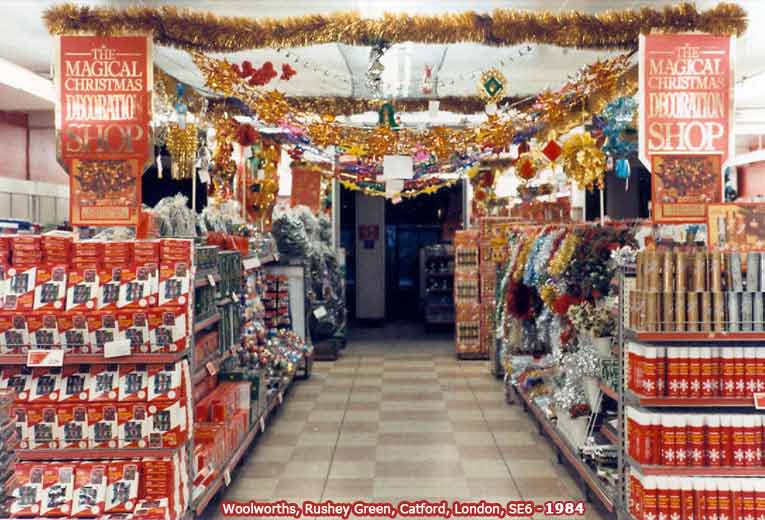
Under the new owners the Christmas range was enhanced. New display principles and garland canopies added a spectacular finishing touch and established a strong Christmas atmosphere in the stores. The product range was updated but kept price-competitive. The moves helped to fend off increased competition from out of town. Sales volumes continued to grow despite the closure of the two hundred largest branches, which were sold off piecemeal for redevelopment. Over the following nineteen years the display principles remained largely unchanged. It was considered a proven formula that helped to exhibit the foil decorations, baubles and garlands to advantage. It also provided a highly visible beacon to guide customers to the Christmas Decorations counter at the back of the store. The product selection was adjusted each year, with a major refresh and new packaging every third or fourth year.
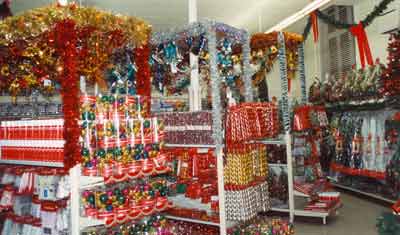
Restyling of the offer in the 1980s under the banner 'Operation Focus' provided effective in restoring the chain's fortunes in the UK. It boosted customer traffic, particularly at Christmas. By 1990 annual profits had become dependent on the six weeks trading leading up to Christmas. Privately Directors noted that if they ever 'messed up' Christmas a healthy return could become a hefty loss for the year.
From 1990 to 1994 there was a concerted campaign to become less dependent on Christmas. This also afforded the chance to tackle emerging threats from discounters like Wilkinson, which had prospered by undercutting the High Street stores. Staple lines were reduced in price, boosting sales volumes throughout the year. This did not extend to the Christmas ranges, which were deemed to be competitive enough.
As part of a shake-up the Board redeployed Roger Stafford, its long-serving Cards and Decorations Buyer, who was a second generation Woolworth Man. Like his father before him, he had started in the stores and worked his way up. His talents became a key enabler for the adoption of EPOS tills, which would give Executives real-time item level sales data for the first time, and would drive increased efficiency throughout the supply chain. Stafford proved highly effective in getting suppliers to barcode their products, and the Buying teams to adapt their ways of working to exploit the new information.
But removing the guiding hand had unforeseen consequences. Personnel changes and inexperience led to a series of unforced errors in the Supply Chain and a sharp dip in profits, bringing disquiet at the parent company's Annual General Meeting. Investors demanded a shake-up in the Woolworth Board Room.
To stop the rot, a much loved former Director Roger Jones was recalled from retirement to take the helm. He put Stafford in charge of Christmas planning for the business as a whole. The two men drove a remarkable recovery with profits topping £100m for the first time in 1997.
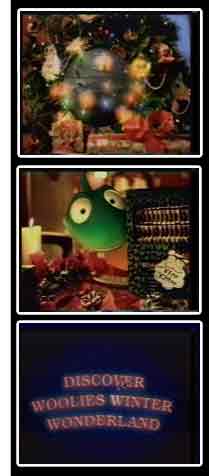
But while better retail disciplines behind the scenes and a catchy new television campaign featuring 'Keith the Alien' searching presents from the store on the night before Christmas and dressing his spaceship with Woolworths' popular tree lights was able to improve the fortunes of the brand as a whole, the traditional Christmas range was now under threat.
Increased competition had begun to challenge the retailer's supremacy on budget decorations. DIY stores and Garden Centres found the ranges a useful space-filler in their low season, while supermarkets wanted a share of the lucrative market. The response from a succession of new Buyers at Woolworths was to make their ranges more fashionable, enhancing the designs, improving the packaging and featuring colour themes and the same popular character brands that appeared on Ladybird Clothing, Chad Valley Toys and the latest video releases.
New higher-priced items like giant snow globes and packs of 200 'chasing' lights that flashed in complex sequences proved a big hit in the chain's out-of-town Big W stores which emerged in 1999 and in the more affluent High Street and City Centre locations. The approach avoided a head-to-head confrontation with the supermarkets, but did little to tackle the increased competition from Wilkinson, Argos and Poundstretcher.
Following the chain's demerger from Kingfisher in 2002, the move up-market accelerated. After fifty years the garland canopies which had been used to show off the foil decorations, baubles and garlands were abandonned. Santa's elves were blamed. The new management claimed the move had been forced by "elf and safety", while admitting privately that it was a cost cutting measure and that they felt that the 'booths' had looked "naff". Old hands lamented the loss of what they considered to be a key element of the stores' Christmas magic, and bit their tongues when a subsequent decline in sales was explained away as the result of displaying the range at the back of the stores. Their naive top brass had failed to grasp the important role of the canopies as beacons to draw customers in. One old-timer observed that "the lunatics have taken over the assylum".
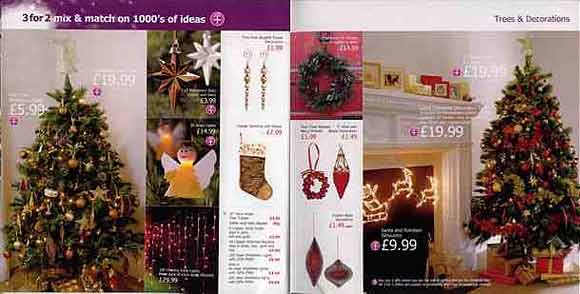
To the credit of the 21st Century Buyers, despite their relative inexperience, they built a fashionable and elegant new range of trees and decorations. These innovations continue to brighten homes across the UK to this day.
Reindeer and sleigh lights to hang outdoors from window sills and chimneys were particularly popular. But they were a far cry from the budget lines of earlier times.
Declining profit performance finally forced the Board to challenge the Kids and Celebrations approach pursued by Trevor Bish-Jones throughout his tenure. They endorsed a view from Consultants that the chain had moved too far upmarket and a rethink was overdue. An in-depth review concluded that the new ranges weren't the problem - it was just that they were not the whole solution. There was no reason why the chain could not stock fashionable upmarket lines AND a budget range to face-off the supermarkets and the growing threat from emerging Pound Shop chains. A new Commercial Managing Director was engaged to spearhead this. Tony Page, who joined from Asda, evangelised a new value range called WorthIt! In 2007 he tested the idea on basic Christmas Decorations, comprising updated versions of the foil designs, tinsel and plastic baubles of earlier times. The range was a sell-out. Stores were cock-a-hoop when they were shown a preview of the much larger WorthIt! range that Page had sourced for the chain's hundredth Christmas.
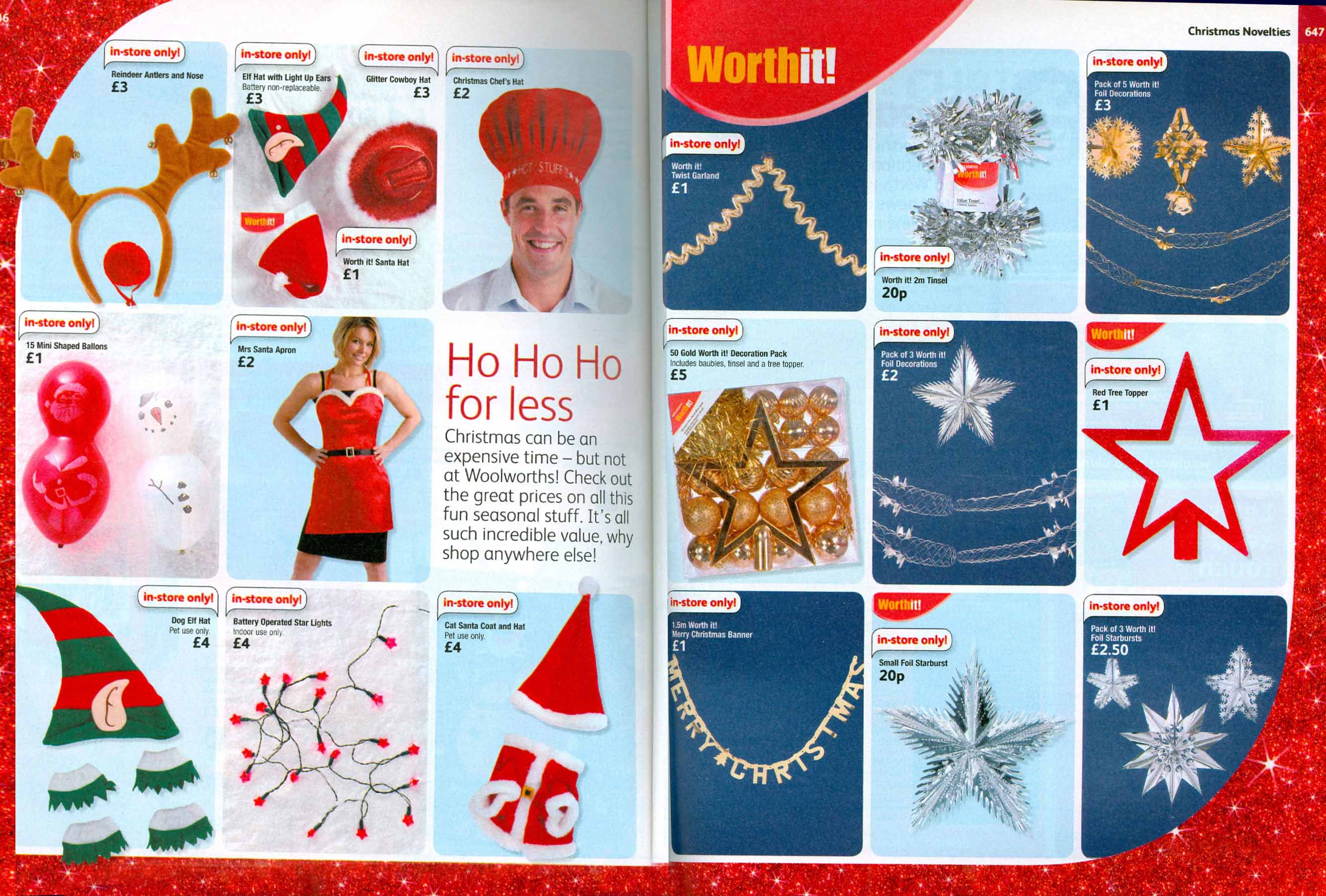
As the sample pages from the Woolworths Big Red Book catalogue show, the High Street chain had finally come full circle, offering a three foot (0.85m) Christmas Tree for £2, a little under the original price of a three inch (7.5cm) model in 1909 and a twist garland for 20p, in equivalent terms about half of the penny price when the doors first opened in 1909.
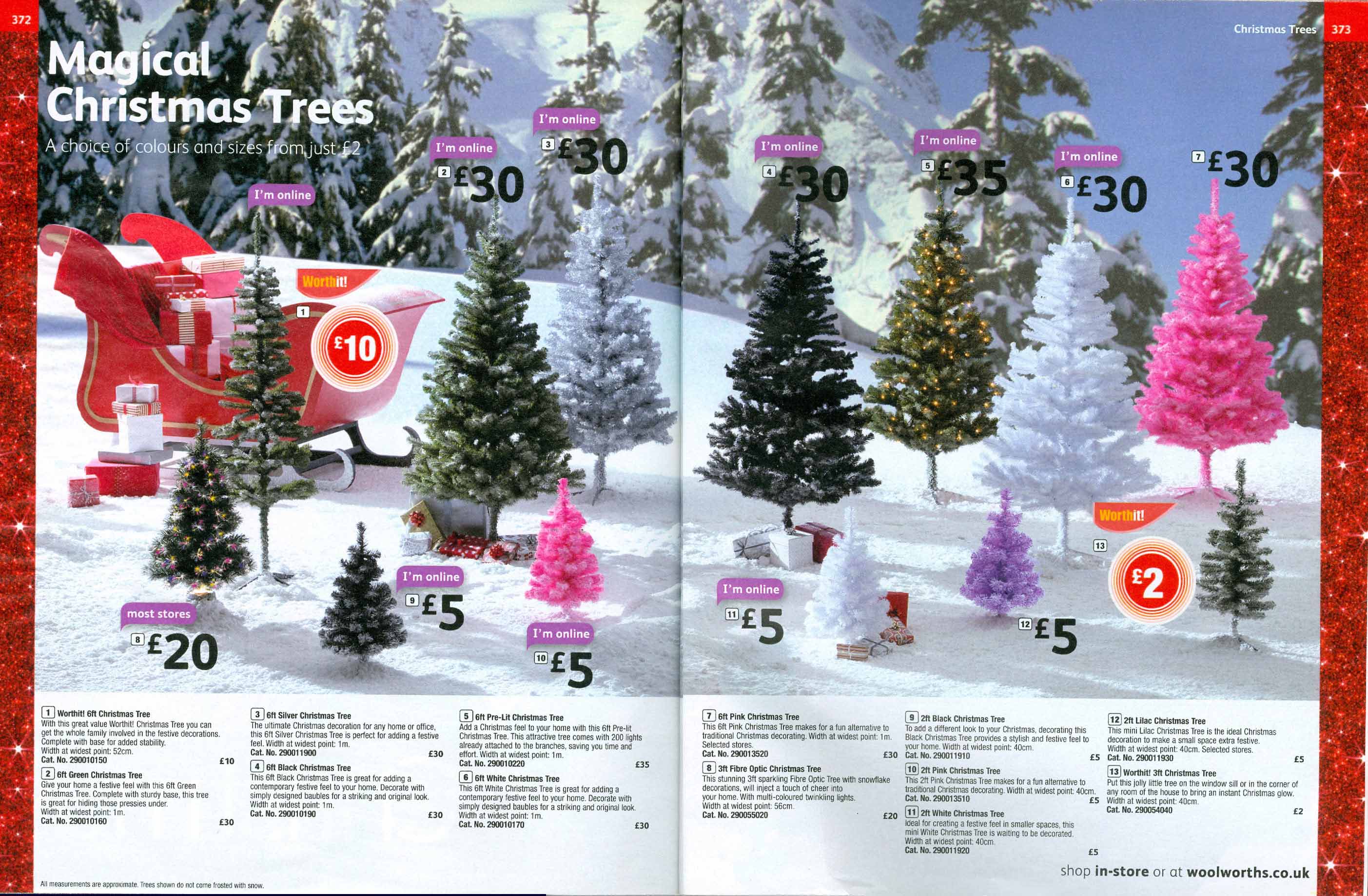
In October 2008 the optimism of the stores was reinforced as customers began to snap-up the new value range as fast as they could put it on sale. The WorthIt! products barely featured in what was always intended to be the last issue of the Big Red Book catalogue, as they were intended for sale in-store rather than on-line. Despite the huge quantities that had been ordered, within days they began to sell out.
Just weeks later, as the business prepared for the peak month's trading in December, news broke that the chain's bankers had refused to extend their credit amidst the turmoil of a global economic crisis later called the 'credit crunch'. Customers flocked to the stores in huge numbers, giving the busiest day's trading ever the following morning. Within hours they had stripped every tree, decoration, card, calendar and diary that the stores could muster - cheap or expensive, elegant or down-right naff. All were sold at full price. But it was too late.
Sadly WorthIt! and the revival of interest in the High Street brand couldn't save the venerable 99 year old retailer's stores. Less than forty days after going into Administration the shutters fell in the High Street for the last time. The brand itself 'ascended' to the Internet, after being rescued by respected Shop Direct Group. For a while it continued to offer a great selection of decorations and Christmas goodies on-line, building on a tradition that all started with a single glass decoration in Lancaster, Pennsylvania, USA more than 130 years ago. But, as the spotlight turned away, even that was unceremoniously ditched in favour of the new owners' more popular very.co.uk website. Today a trip to Germany, Mexico or the Caribbean, or a visit to eBay, is required to buy genuine Woolworth Decorations.
Shortcuts to related content
Christmas Gallery
Site Navigation
An ideal Christmas gift for Woolworth lovers