A multi-national wartime Christmas
(1939/40)
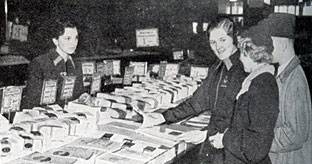
Britain declared war on Germany on 3 September 1939. Store staff were surprised that initially very little changed. Life carried on much the same as usual. The tinned foods department was very busy as 'canny' customers stocked up 'just in case', but at the adjacent counter shoppers chose cards, decorations and stocking fillers just as previous generations had done before them.
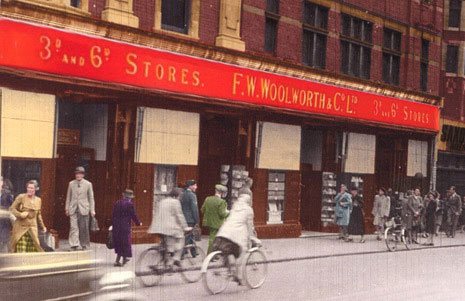
In the streets of the big cities there were some signs of war. Shops were instructed to board over large plate glass windows and affix sticky tape to the exposed area. The measure helped to reduce injuries should the glass shatter, preventing large, sharp shards from falling. It would also black out the windows to avoid light attracting enemy planes on winter evenings.
Many towns held fund-raising events and encouraged young men to enlist for war service. Meanwhile new regulations required that everyone, even children, must carry a gas mask at all times.
Behind the scenes the firm had an approach from the Government. They wanted its Chairman, William Stephenson, to bring his logistics knowledge and people management skills to bear in a high profile job as head of Aircraft Production for the RAF. He accepted. He hand-picked twenty store managers to join him, commandeering the smaller of the two Woolworth stores in Croydon on the southern edge of London (No. 234 in Church Street) to become his production office. A number of other consultations followed as executives were invited to make suggestions about rationing, air raid precautions and the maintenance of morale. This gave the firm a preview of planned regulations that later applied to the sale of food, fuel and clothing. In-store Air Raid Precautions and Drills took on a new urgency as buildings were examined to identify basements that would make suitable air raid shelters. Store staff were encouraged to sign up as volunteers outside trading hours. Many became ARP Wardens, Special Constables, joined the Women's Voluntary Service or took instruction from the Auxiliary Nursing Service.
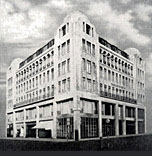
The outbreak of war presented a particular challenge for executives at headquarters in New Bond Street, Mayfair. Many regular suppliers dropped out after switching to produce items to support the war effort. Shortages started to push prices upwards. The Bureau of Staff Relations ('HR') had problems too, as an increasing number of patriotic employees volunteered for military service, leaving the stores where they worked undermanned or undermanaged. The Real Estate Department was asked to work with District Managers to prepare detailed instructions of what Store Managers should do in the event of an air raid and the steps that they should take to protect both the customers and the buildings from enemy action.
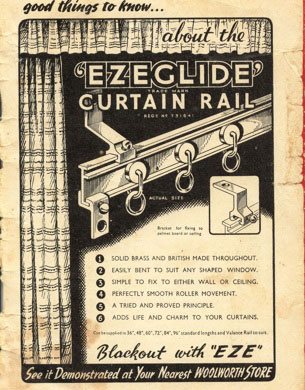
The Buyers decided to amend the layout of the store to condense the ranges which were in short supply and to give extra space to items that would support the war effort. The space allocated to haberdashery was extended to support the Government's 'make do and mend' campaign. Displays of stick-on soles and heels were also expanded.
They also developed ranges intended to help people pass the time in air raid shelters. New story and picture books for children were commissioned, mostly with wartime themes. There were also jigsaw puzzles and patriotic playing cards.
Displays of tinned food were extended, bolstered by large quantities of basics acquired on the spot market, and new experimental products including canned snook and whale meat at sixpence a tin. Customers were encouraged to put some tins away, though some later suggested that the foul-tasting 'luxuries' should be dropped on the enemy, who would have soon surrendered!
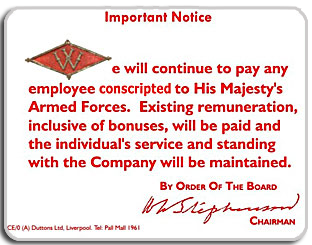
To stem the tide of patriotic workers volunteering for war service, the company introduced a new policy that seemed very generous. If an employee was conscripted , then after the call-up their salary would still be paid to the families, and they would continue to build a pension. But if a Manager volunteered before he was conscripted he would not get these benefits. Instead he would have to make do with his Forces pay and his right to return to work after the war was over.
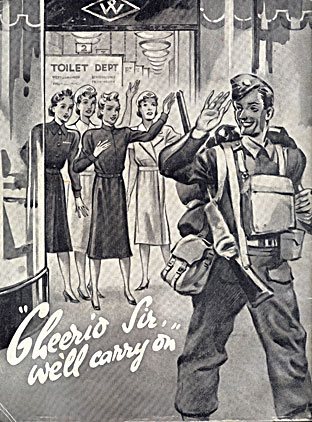
The company considered the policy essential. Conscripts were given time to sort out their affairs before their service began. This gave Woolworth time to find a replacement, either by training a new person, or in a number of cases by persuading retired employees to return to work "for the duration of the present emergency". By contrast, volunteers left their posts at once.
Seventy years after the decision was taken, our postbag shows that it remains highly contentious. Despite strong protests at the end of long conflict, the Board stuck to its guns and refused to reinstate the volunteers' benefits. The Directors' only comment was "c'est la guerre".
In retirement the patriots' pensions were up to six years short of their peers. But none would have acted any differently if they had their time over again.
An international dilemma
When war broke out in Europe, the American government was determined that the USA should not to get dragged in. This was consistent with public opinion across the Atlantic, which was overwhelmingly anti-war. Businesses were told to stay neutral.
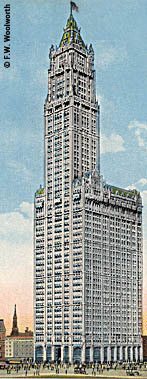
F.W. Woolworth Co. was the first major international retail business. It operated overseas subsidiaries in five countries - Canada, Cuba, Germany, the Irish Republic and the United Kingdom. The USA, Cuba and Ireland were each neutral. The United Kingdom declared war on Germany of 3 September 1939. A week later the Dominion of Canada also declared war on Germany.
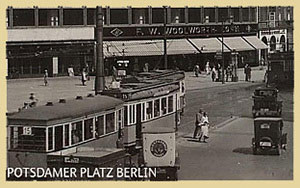
Draconian anti-foreign controls had prevented the parent company from realising profits totalling almost $2m from a successful chain of 82 F. W. Woolworth Co. GmbH stores in Germany since 1934, but it still operated a major sourcing operation in Sonneberg, and had a giant purpose-built freehold warehouse there which prepared goods for export to North America. The war put the entire operation in jeopardy.
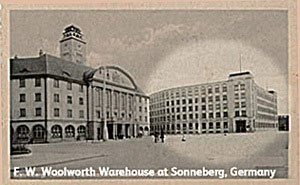
The parent company's first action was to advise the remaining American Directors on the British Board to return home to safety in New York. By this time Louis Denempont had been appointed Managing Director in the UK. He declined the invitation. To show their neutrality the parent company Board made generous contributions to war relief in both Germany and Great Britain, which pleased no-one. The policy continued until America joined the war after Pearl Harbor.
Where possible production of items that had previously been bought in Germany and Continental Europe was switched to Japan, where the firm had a large Buying Office.
In May 1940 Germany invaded and over-ran France and the Low Countries, forcing Allied forces out of Continental Europe. Throughout the Summer and Autumn it mounted a major aerial attack on the United Kingdom which was intended to establish air superiority ahead of an invasion, unless the government sought a negotiated peace. Initially the focus of bombardment was on London's East End but the attacks spread to other major cities and coastal ports. The RAF fought back with attacks on Berlin and other German cities. By Christmas many families were resigned to spending nights in air raid shelters, but morale remained remarkably high.
At Woolworth stores in Britain many counters were running on empty, but a special effort was made to get a selection of Christmas items on sale in November 1940. Lightweight Christmas Cards, paper decorations and a selection of small toys were available. Food, sweets and clothing were all rationed.
Meanwhile 3,000 miles away the USA was at peace. The country was enjoying a period of prosperity. The shelves of the five-and-ten were crammed with treats for Christmas. The wonders included a selection of electrical goods, including sets of twelve flashing tree lights, brightly coloured fashions and candy counters full to overflowing. The firm also had a secret weapon which they hoped would help them to beat off fierce competition from their rivals at Kresge, Kress and Newberry. In great secrecy executives had prepared a full-colour Christmas Catalogue, which was to be distributed free-of-charge to all-comers. It made no mention of 'the European War' or the Battle of Britain, though a double page spread of toys did offer selection of planes, warships and submarines arranged around a miniature harbour.
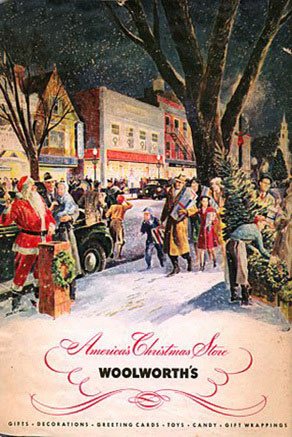
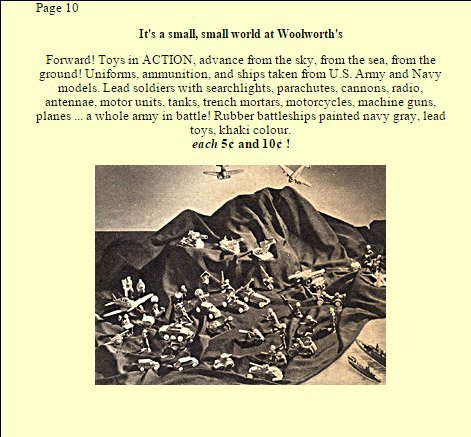
Most of the toys, including the metal aeroplanes and the rubber ships were manufactured ... in Japan! Truly putting the iron into irony.
Links to related content
1940s War, Austerity and Recovery Gallery
Wartime history pages with HTML5 media content averaging 1.5mb
Museum Navigation