Establishing Woolworth's Northern Powerhouse

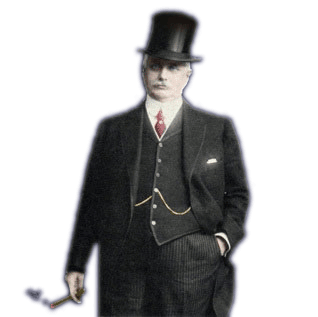 Frank Woolworth was relieved at he success of his his first store in Liverpool, which had exceeded its sales target. He booked the next available crossing to return to the UK, inviting his store location expert, E. J. Smith from Buffalo, New York, to join him. They landed in February 1910.
A year earlier he had scoured the entire country with his cousin Fred in search of 'ground zero'. They had noted a dozen widely-spread towns that appeared ideal. But their first British recruit, William Stephenson, had evangelized an alternative opening plan, which clustered the first branches together so that they could share a common supply line. Frank agreed that the Lancashire and Yorkshire Railway could expedite the transfer of stocks from Continental Europe back to North America. As a result he and Smith set to work building a northern powerhouse along the line, which broadly followed today's M62 motorway from the West to the East Coast.
 They had to overcome resistance from potential landlords following a poor press in the Daily Mail. It had reported that the Woolworth cowboys sold tomahawks, like those that Red Indians used to scalp people!
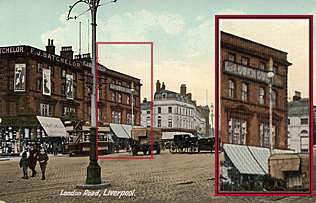
Fortunately the Church Street venture had impressed one influential local businessman. Owen Owen, the founder of a popular department store chain, had admired the breadth of the product offer and had expressed surprise that 'the bazaar business' could be raised to such a level. He had offered to lease a property in Liverpool's London Road at a low rent, for a second store in the City. The endorsement helped to turn the tide of opinion.
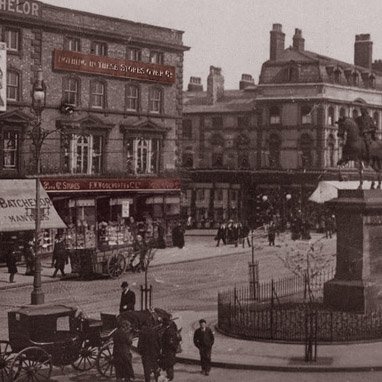
London Road is about two miles away from Church Street. Then as now it was a distinct shopping area. In 1910 it attracted a fashionable clientele, as well as students and academics from the neighbouring red brick Victoria University of Liverpool, which had recently been established. Woolworth and E.J. Smith liked both the building and its location and were quick to ratify the deal.
Liverpudlians may recognise the site, on the edge of Monument Place, which is now home to a Tesco Express store, which opened in around 2010, adjacent to the surviving T.J. Hughes store which once headquartered a much larger chain.
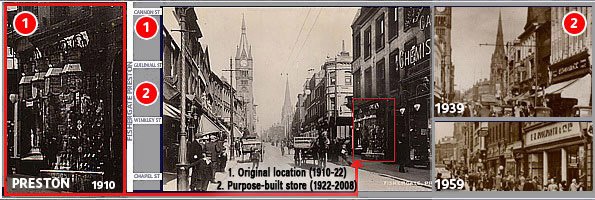
In parallel plans were also agreed to open in Preston, about twelve miles to the North East of Liverpool. Frank considered this market town to be ideal. He noted the fine buildings and the affluence of the factory workers from Horrockses Cotton Mill.
Preston had a track-record of "giving it a go". The forward-looking Council embraced the arrival of a threepenny and sixpenny store. Woolworth demanded that the London Road and Fishergate branches in the same week, figuring that it would be necessary to open several in stores in parallel if the chain was to expand at pace. He engineered a rivalry between the teams working on the two buildings. Fishergate was first past the post, opening its doors five days before London Road. New Director John Ben Snow planned elaborate entertainment to drum up support for both events. The Preston ceremony drew a very large crowd. There was nearly a riot as people surged through the doors. Counters were knocked over in the rush. The timely arrival of the Lancashire Constabulary saved the day. As a precaution, Snow wisely invited 'the busies' to take tea upstairs in the hour before curtain-up at his next openings!
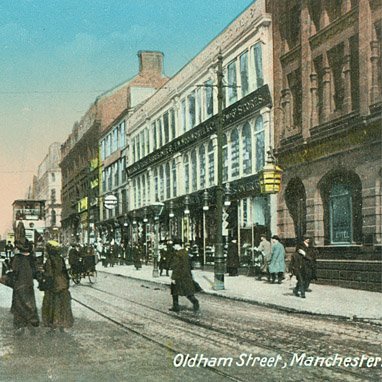
Next to open was Oldham Street, Manchester, which was managed by George Roblin. Frank Woolworth had concerns about this store selection. He told colleagues that, despite its larger population, he feared that shoppers might not be sufficiently 'go ahead' to appreciate his store. But he noted a quite different concern in his diary. Manchester would be the first Woolworth's to open close to a Marks and Spencer Penny Bazaar. He feared that customers might see his threepenny and sixpenny fascia and opt to shop at M&S, without realising that he too offered a full selection of penny items. Lord Asa Briggs speculates in his book Marks & Spencer: A Centenary History (ISBN 0 906320 05 4) that M&S bosses were also concerned at the arrival of Woolworth's, but for quite different reasons. He believes the new arrival may have encouraged the Board of the Penny Bazaar to accelerate their programme to enclose their open shop fronts and install heating on the salesfloor.
Woolworth's reservations proved ill-founded. New shoppers flocked to Oldham Street to shop both of the value stores. Throughout the early twentieth century there was a friendly rivalry between the two chains, but this was seen as much on the football pitch as in the High Street. At a local level staff teams regularly competed for sports trophies, just as their managers fought to attract shoppers.
It is said that in the 1930s M&S changed their store look at street-side to rival Woolworth's. The distinctive green and gold fascia certainly had distinct similarities to the red and gold Woolworth equivalent. According to Briggs M&S executives wished that they had the cash to buy freehold buildings in the Thirties, and instructed their Construction Department to pitch new stores next door to Woolworth's, or opposite if that was not possible. Meanwhile Woolworth bosses wished for the sales and profit per foot of an M&S.
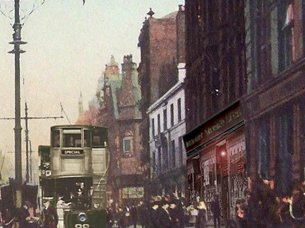
The spread eastwards saw the chain cross the Pennines with its first branch in Yorkshire. Small but very well-appointed premises were chosen in fashionable Exchange Buildings in Leeds. The small frontage, which is highlighted in red in the image, was dwarfed by the scale and grandeur of the Victorian-gothic building. Woolworth and Smith hoped to attract society people as they passed on their way into the banking halls around the corner.
Trading was buoyant from the opening day, with the salesfloor packed to overflowing at peak times. Within months the firm started to search for larger premises. Woolworth later moved to Briggate.
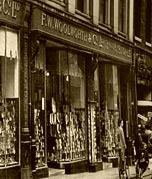
Woolworth and Smith's tour of northern railway towns identified two further locations where the company could open at a later date. A site in Whitefriargate, Kingston-upon-Hull was earmarked for Spring 1911, and another in Linthorpe Road, Middlesbrough was noted for a return visit and further negotiations. The men considered that Hull had particularly high potential. The building was in a busy thoroughfare in the City Centre. The area had substantial docks, major freight and fishing industries and a number of large factories, all employing lots of people.
By Easter 1911 the chain had grown to six. Each store was profitable. Learners had been hired to prepare to manage the next wave of stores. The scouts felt ready to tackle the metropolis.
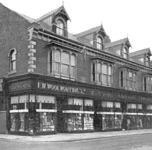
On their next visit Woolworth and Smith focused on South East England. John Snow and Charles Hubbard were left to complete negotiations in Middlesborough. Building works were required to create a shallow, wide-fronted shop in Linthorpe Road. The new premises opened to much acclaim in the early Autumn, fulfilling the original vision of a line of stores across the North that shared a single supply line via the Lancashire and Yorkshire Railway.
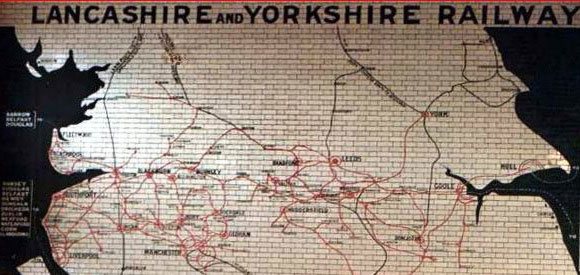
The railway also became a hidden weapon for the US Five-and-Ten chain.
Its European supply line was adapted. Goods made a shorter crossing from the Continent to Hull. They were hauled into railway wagons and whisked to the docks in Liverpool. There they were despatched to New York on board steamships on the cheaper and faster Blue Riband route.
Shortcuts to related content