Music on a Budget in the 1970s
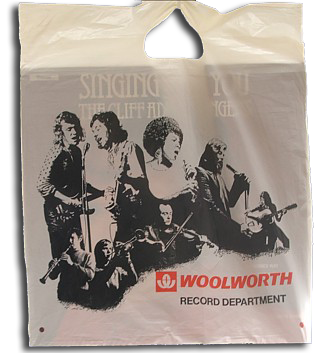
During the 1970s F.W. Woolworth built a substantial music business, switching the emphasis from own label budget records into the mainstream. Over the decade the company established a strong share of the chart singles market and particularly strong sales of compilation albums and cassettes.
The firm exploited the skills of Record Merchandisers Ltd., a music wholesaler that had established a niche in helping non-specialists to enter the market. Its reps trained store staff, placed orders and uplifted any surplus stock on regular visits. It helped to shape the offer, measuring the effect of price cuts, and tuning each store's product selection to fill local demand.
Instrumentals, Irish and Scottish Music proved particularly successful, as well as the mainstream charts and a new branded budget ranges. In parallel a Woolworth Buyer built a complementary range of blank tapes, record cases and storage accessories, all at competitive prices. These sold well and helped to keep profits high, despite the lower margins on the Top 40.

At the time a large Woolworth's offered as many as ten different budget music labels. It also carried the 'mid-price' deals favoured by the specialists. Many customers had a favourite label and bought regularly. Hallmark, Camden, Contour, Pickwick and Marble Arch are all fondly remembered, alongside the favourite, EMI's Music for Pleasure (MFP) and Classics For Pleasure (CFP) ranges. In-store they could choose from:
- Pickwick Camden, Contour, Hallmark and Marble Arch Albums, each targeting a different demographic
- Pickwick own brand lines for younger children, on singles, LPs and tapes, along with its popular big-name licences, "Disneyland Records" and "Ladybird Tell-a-Tales" (cassette tapes supplied with a story book for reading along)
- Spin-racks of Music for Pleasure and Classics for Pleasure records and tapes, which were managed by EMI
- Television-advertised titles from Multiple Sounds Distributors on the Warwick label, as well as Chevron LPs, tapes and cartridges which were developed specially for Woolworth
- Bold features of popular albums licenced from the American K-Tel label. Many of their daring television commercials had first aired Stateside, with the best sellers re-released in the British Isles
Of all of these ranges, only Chevron was a Woolworth exclusive. Huge quantities were sold, at a price of just 99p when on promotion or £1.25. Some were by the original artists, while others were cover versions by 'Parade of Pops' and were often sold on brightly coloured red or yellow translucent vinyl. The label also carried celebrity albums, like the very popular Henry Cooper Knockout Party, and a strong range of classical by leading British Orchestras like Manchester's Hallé. There are examples of some of the variety on the Chevron label - both good and bad - in our Juke Box Feature.
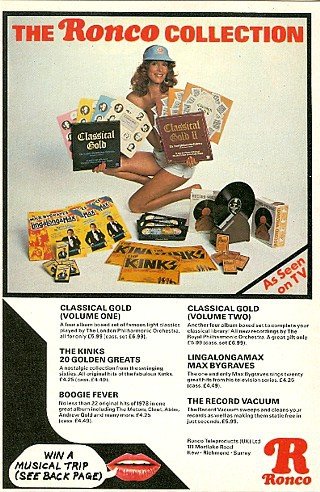
The labels built up a strong following, with some customers collecting all of the titles released by Ronco, K-Tel or Warwick. They were great value, particularly if the variety of artists and tracks appealed. Such was Woolworth's market share that the suppliers agreed to underwrite three-for-two offers at sale time (when lots of old, slower sellers were re-introduced for clearance) and special Christmas discounts which were promoted on television. The suppliers knew that whoever offered the best deal would get the best space in-store and the strongest feature in the commercials.
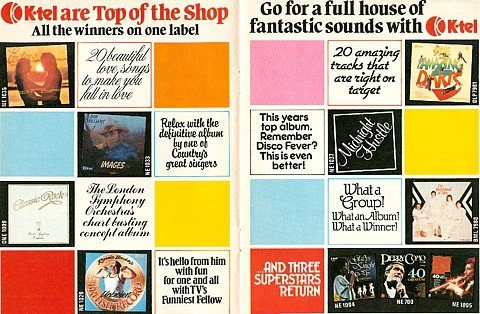
Catalogues and magazines were introduced to promote the music offer. These were jam-packed with adverts placed by the record labels. The suppliers were unfamiliar with the medium, appearing to target Store Managers and Record Supervisors rather the shoppers. For example K-Tel, renowned masters of TV advertising for their wide range of title called themselves 'top of the shop' rather than boasting of Britain's best value on the nation's favourite songs as they would have done in a TV or Radio Commercial.
Despite the missed steps, almost every K-Tel album was a hit, with most selling in huge quantities as safe gifts for teenagers.
The quantities sold were huge. By the late Seventies more than a million K-Tel LPs were sold each year at Woolworth and Woolco, with almost as many again on the Ronco and Warwick labels. Sales of the chain's exclusive Chevron Cassettes and LPs exceeded all of the others put together, thanks to cover prices between 99p and £ £1.99, well under half of the big name compilation labels.
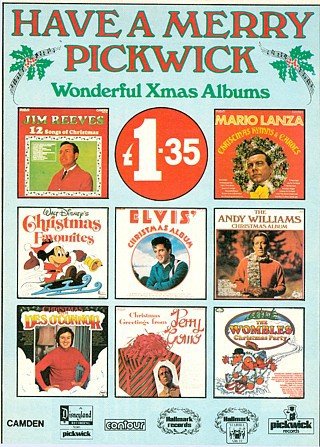
Pickwick built a strong catalogue of all-time favourite artists, licencing the library from RCA and working with Disney to develop soundtracks and sing-along albums. They relied on store signage and bright, modern spin-racks to sell their product with much less money spent on television advertising and marketing. As a result they were able to hold prices to just £1.35 in 1978, undercutting the television advertised titles by more than 50%.
Pickwick sruck gold with its RCA licence. The label had secured the rights to Elvis Presley's hits at a time when his career was in the doldrums. Demand rocketed when news broke that the King was dead, with sales boosted by the decision to maintain the price at £1.35 for the duration of the RCA licence.
Jim Reeves and Des O'Connor also proved popular with the Woolworth demographic. An Elvis cover, followed by Reeves and a flash of O'Connor were always highlighted from the range in the retailer's break-long Christmas commercials. In 1979, Sir Harry Secombe's booming Aladdin in the wall-to-wall "Everybody Needs Woolworth" campaign, even stimulated some unexpected demand for some of his Pickwick 'Stars on Sunday' LPs.
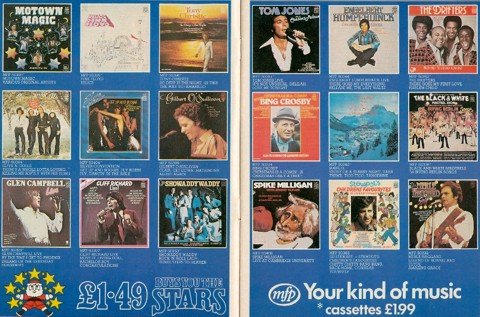
In-store Pickwick's great rival was EMI's budget division, which had a spectacular catalogue of both pop ("Music for Pleasure") and classical ("Classics for Pleasure"). Their list of artists read like a who's who of popular music, boasting everyone from The Beatles to the legendary Tom Jones, along with many kids classics. Store Managers were often amused to see Pickwick representatives 'tidying' their rival's display, code for moving the poor titles to the front and hiding the megastars out of sight. The Managers bit back, alerting the Pickwick Rep. to upcoming, fictitious price promotions by MFP, and thereby securing a price cut on Pickwick for their shoppers!
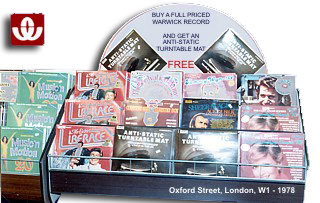
To secure a foothold in-store, reps from Multiple Sounds Distributors, the supplier of Warwick titles, Tempo Storybook Tapes and the exclusive Chevron brand, made up signs on demand, promoting one of a never-ending variety of free offer gimmicks. Store Managers observed that the freebies generated lots of sales. It was a mystery how their simple, round pieces of felt were "anti-static mats", but customers loved them. In August 1979 the simple promotion shown racked up sales of over 1,000 albums in a week in London's Oxford Street.
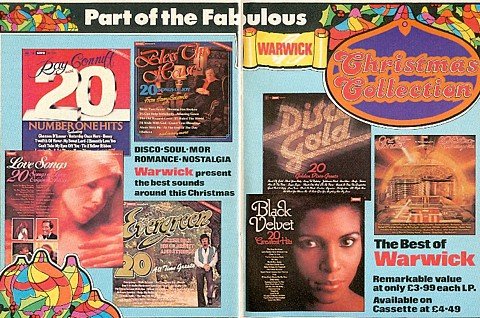
The Warwick Albums were contemporary and sometimes offered a cheap way of buying titles that were still in the British singles chart. Many were themed, for example love songs, number ones or Disco Gold. A similar concept later emerged in a series of more expensive CDs with titles like "The Best Seventies Album in the World Ever" and in budget compilations offered as part of a WorthIt! range of CDs from 2008.
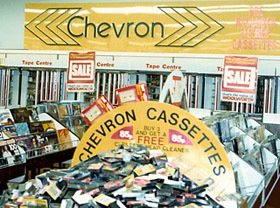
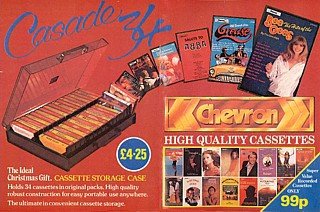
By 1980, Woolworth was the budget market-leader. With something for everyone, its prices stretched from 75p to £4.99 for twenty hit songs. Most albums were bought by teenagers, often appearing on mix-tapes for their friends, with the discs kept and prized, some for half-a-lifetime.
Officianados soon worked out that the lower the price tag, the more one-hit-wonders would nestle among the tracks. Conversely the big name labels consistently managed to secure a handful of tracks on their big titles which were still in the chart when shoppers were buying stocking fillers.
Test out the good, the bad and the ugly in our 1970s Juke Box feature
Click this link to have a listen to a Chevron Cassette or LP track.
You may need ear plugs!
Shortcuts to related content
Decimalisation - counting the cost
The Wonder of Woolworth Commercials
View ads from the defining campaign
Brascan's hostile takeover bid in the USA
100 Years in Main Street USA and Canada
Site Navigation