Welcome to the Original Virtual Museum - celebrating Woolworths' century at the heart of British High Street Shopping
 -  -  -  -  -
please click a menu button
please click a menu button Original Virtual Museum Home Page please click a menu button The Woolworth value store concept is born in the USA please click a menu button Laying the foundations as the first British Woolworth store opens in Liverpool in November 1909 please click a menu button Woolworths rapidly open forty-four stores in Britain and Ireland before facing a World War please click a menu button Bigger, brighter and bolder Woolworth stores in the Roaring Twenties please click a menu button Woolworths go to amazing lengths to keep all prices under sixpence in the Thirties please click a menu button Bravery and defiance during World War II in Woolworths' finest hour. We pay tribute to the sacrifices made and look behind the scenes please click a menu button Redefining the Woolworth brand for modern times in the 1950s, as prices go up and stores get bigger and bigger please click a menu button Superstores in and out of town, a new own brand and the opening of overseas Commonwealth stores during the 1960s please click a menu button Woolworth struggles to keep up during the rapid inflation and change of the 1970s please click a menu button Woolworth stores in more recent times, covering the period 1980-2008 please click a menu button
please click a menu button please click a menu button please click a menu button please click a menu button please click a menu button please click a menu button please click a menu button please click a menu button please click a menu button please click a menu button please click a menu button
Background to the Original Virtual Museum and copyright information about the contents Origins of the firm's legendary pic'n'mix and a century of chocolate, candy and confectionery in the High Street A century of music and entertainment in the High Street from sheet music and gramophone records to CDs and blu-ray discs A century of toys, games and fun in the High Street stores of F. W. Woolworth A century of fashion in the High Street, from paper patterns and sixpenny knickers to an extensive range of award-winning Ladybird clothing A century of cards, pens, pads and books from the shelves of F. W. Woolworth stores Pots and pans, paint and brushes, bulbs and compost and even toiletries - all in High Street Woolworth stores for much of the twentieth century Woolworths pioneered Christmas decorations in the 19th century and supplied presents for our parents, grandparents and great grandparents from their High Street stores Working conditions and pay rates at Woolworths over a hundred years and some of the people behind the brand-name Our cinema, quiz and picture gallery features Visit the new look 21st century Woolworths on line, on the site operated by Shop Direct Group
please click a menu button please click a menu button please click a menu button please click a menu button please click a menu button please click a menu button please click a menu button please click a menu button please click a menu button please click a menu button please click a menu button

Preparing for decimalisation "D-Day" on 15 February 1971

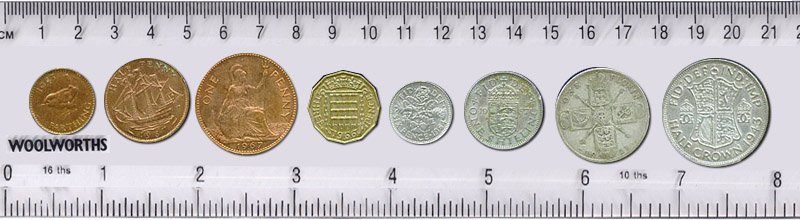
Pounds, shillings and pence - British currency for over 500 years until 1971. Left to right: farthing, halfpenny, penny, threepence, sixpence, shilling, florin and half crown


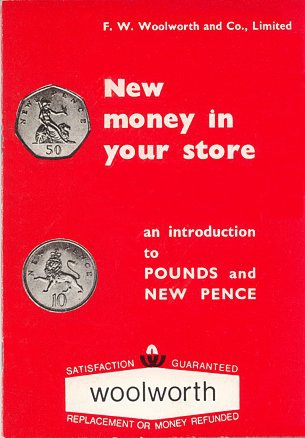
A training booklet explaining the new decimal currency to Woolworths staff - published in 1970 in preparation for "D-Day" the following February


For more than five hundred years Great Britain's currency was based around twelves rather than tens. The 'duo-decimal' currency, consisted of pounds, shillings and pence. There were twelve pennies (abbreviated to "D" for Denarii, the Latin name for penny) in a shilling, and twenty shillings in a pound, meaning that there were 240 old pennies in a pound.

Most other countries had currencies centred around tens - dollars and cents in the USA, francs and centimes in France - but Britain and its Empire worked in twelves. The old currency even got three mentions in the fascias of the early stores.

 

The Spiceal Street (Bull Ring), Birmingham, F.W. Woolworth 3D and 6D store fascia , pictured in 1921


In the 1960s one-by-one Commonwealth countries started to decimalise. By 1965 Rhodesia, Jamaica, New Zealand and Australia had all switched. On 1 March 1966 the British Government announced plans to join the decimal revolution, along with plans for a consultation period with industry. The arrangements were finalised in February 1968. It was announced that Britain would switch to pounds and pence on 15 February 1971. Banks were closed for four days before the switchover.


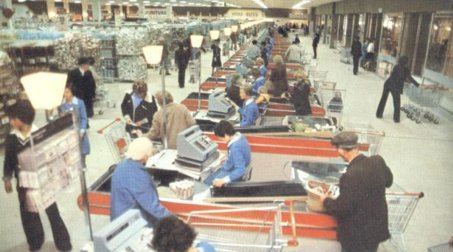
The Woolco hypermarket in Newtonards, Country Antrim, Northern Ireland had checkouts as far as the eye could seeThe decision heralded one of the biggest and most expensive changes that the F.W. Woolworth chain had ever seen. The firm had not anticipated decimalisation and, unlike other retailers, had not mitigated its impact by converting its stores to self-service during the 1960s.

When the Government announced the switch, 1,000 out of 1,100 Woolworth stores still had tills at every counter. The chain operated a remarkable 20,000 cash registers and had 60,000 staff. The provisional project plan showed that it would cost an average of £200 to convert each till and that each staff member would need at least three hours of training. This prompted the Board to consider alternatives. They concluded that every store needed to convert to self-service and that they should try to complete as many as possible before 'D' Day.


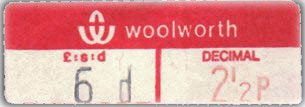
This Woolworth price label from 1971 shows both duo-decimal and decimal prices. These labels were used from August 1970 to August 1971

Self-service would tackle the number of registers and reduce the number of till operators, but left a problem with product pricing. More than 20,000 stamping machines had to be replaced. The chain chose a model which could show both the old and new prices, and dual-priced every item from August 1970. Tickets and signs also showed dual prices for twelve months, up to until August 1971.


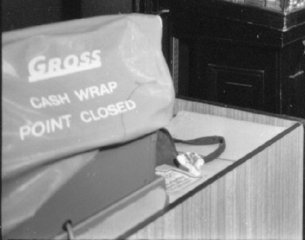
A Gross cash register under a dust cover, pictured in the F. W. Woolworth stroe in Stone, Staffordshire, UK in 1973


In the final reckoning the decimalisation cost £5 million, taking into account the conversion of the cash registers, staff training and the establishment of a basic self-service operation in the stores.

At the time the chain turned over £320m and generated annual profits of £18m. After paying dividends of £13m, this left only £5m of discretionary capital expenditure each year. For four years from 1969 to 1973 virtually all other investment was placed on hold. The Board was also forced to face up to a longstanding issue and tackle their loss-making stores.


Decimalisation forced Woolworth executives to face-up to a longstanding problem. Twenty-five of their stores were loss-making and had been kept trading for old time's sake. These were closed and sold to avoid making a bad situation worse. Where possible the staff were redeployed to other branches nearby.


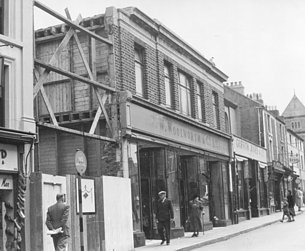
A root and branch review revealed that twenty-five stores were trading at a loss. Generally these were the original shops in large towns and cities that had been superceded by a more recent outlet closer to the main shopping area. They had been kept open for old time's sake, in support of a company adage that "only Mr Hitler had ever closed a British Woolworth store".

Executives concluded that it would be wrong to pour good money after bad into these stores, as additional capital expenditure would accentuate the losses. Instead they decided to sacrifice them, selling the freeholds to top up the reserves. A special effort was made to find alternative work for all those employees who wanted to transfer to another branch nearby.


A snapshot of the Woolworths salesfloor at Stone, Staffordshire, UK in the 1975. This was one of the last personal service stores with tills at each counter and is pictured immediately before it closed for modernisation.


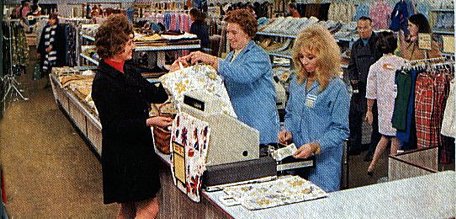
The new Woolworths store in Basingstoke, which relocated into the town's new shopping centre in 1971, was pictured to celebrate "D" day (decimalisation) in February 1971. This picture shows the cash wrap desk on the Upper Floor adjacent to the Clothing Department.


By 'D' Day more than half of the 1,075 stores had converted to self-service. The number of cash registers in the remaining personal service stores was reduced to minimise the cost of decimalisation work. After the big day the pace of conversion was reduced, with 100 stores completed each year from 1971 to 1975. Overall the move to self-service took twenty years, starting in Chobham, Surrey in 1956 and finishing in Stone, Staffordshire in 1975.
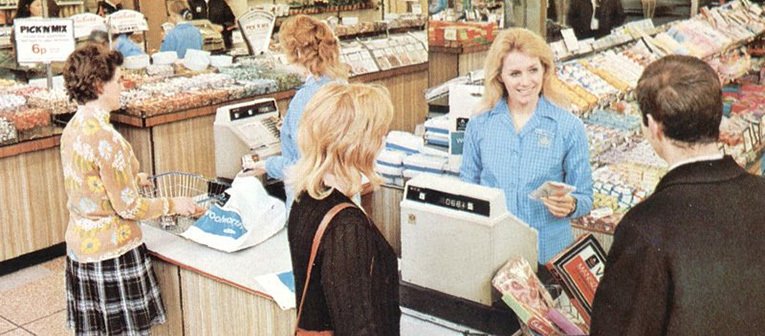
 

A cash wrap point on the ground salesfloor at the relocated Basingstoke, Hampshire, UK Woolworth store, which opened in February 1971.


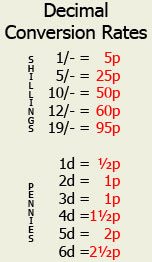
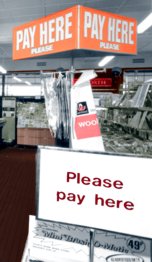
"Please pay here" a new sign that appeared in over 1,000 British Woolworths stores as they converted to self-service between 1970 and 1976Conversion rates from pounds, shillings and pence to decimal currency Decimalisation consumed much of Woolworth's investment capital during the first half of the 1970s. The situation was compounded by a major fire at the firm's national Distribution Centre in Castleton, Rochdale. Profits started to slip as the chain fell behind competitors who had shown more foresight. During the same period the firm's debt burden rose rapidly. Sales and profits were no longer sufficient to fund major projects. Borrowing was required. New initiatives would be required to restore sales volumes and set the chain back on track.

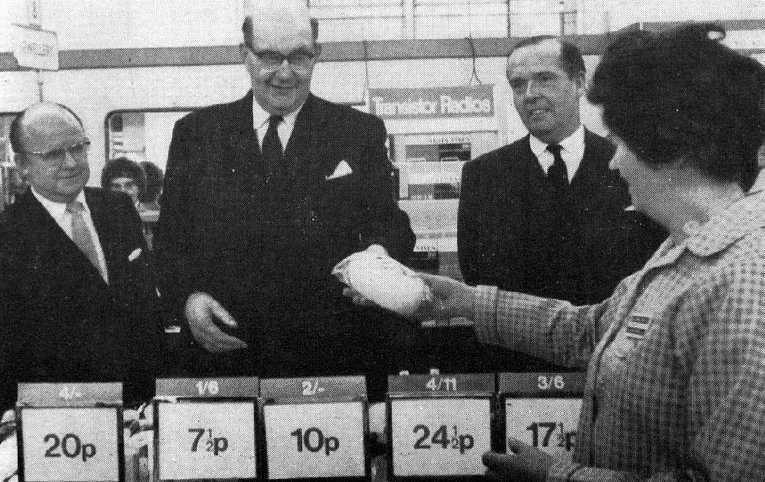
But, despite the pain, the decimalisation itself was delivered on time in a highly professional project which received plaudits from observers. The crowning glory was a front page story the morning after 'D' Day in the respected London Times Newspaper of 16 February 1971. It showed Lord Fiske, the Chairman of the government-backed Decimal Currency Board, making the first decimal purchase in the Woolworh Store in The Strand, WC2. He was accompanied by Woolworth Administration Director Mr. J.C. Williams and Project Manager Peter Nicholls, who had already made a name for himself opening the first Woolworths in Jamaica. Lord Fiske commented "the girls certainly knew what they were doing"!


Lord Fiske, Chairman of the Decimal Currency Board, makes an inaugural decimal purchase in the Woolworth store in The Strand, London, WC2. This picture appeared in the London Times the day after decimalisation, 16 February 1971.


If you have enjoyed our Virtual Museum website, why not check out our complete history of Woolworths in a 194 page, richly illustrated paperback book?  A Sixpenny Romance is just £10.99, with free delivery in our on-line shop.
The special DVD, the Wonder of Advertising, is now available in our on-line shop for £7.50 with free delivery. A fully illustrated 194 page history of Woolworths, or a selection of professionally authored DVDs in our on-line shop