The first Woolworth Building
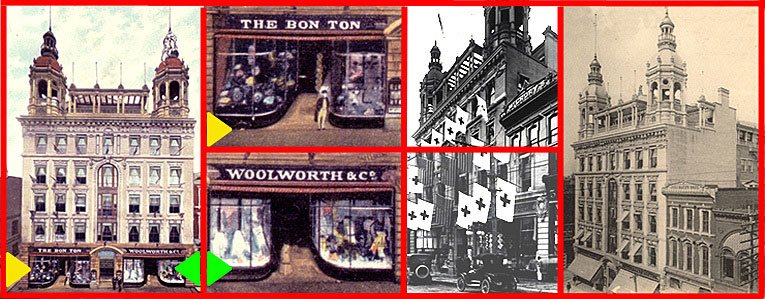
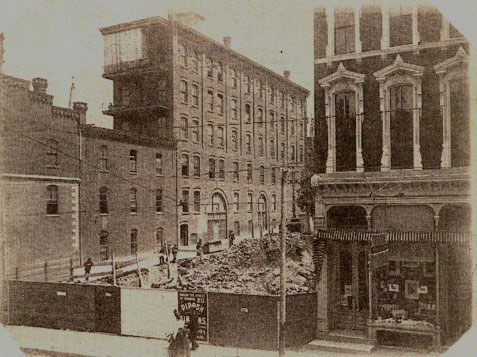
By 1900 the 5 & 10¢ had become a great success. Frank Woolworth had established a syndicate of Friendly Rivals who all stocked his merchandise.
He devoted much of his time to Buying. He travelled to Europe in search of novelties and luxuries twice a year. His schedule allowed time to spot trends, taking in theatres, galleries, museums, landmarks and all the best restaurants!
His commercial success brought little recognition. People thought Buying was easy - a shopkeper's stock-in-trade - because wholesalers did the hard work. Few appreciated that Frank was both the retailer and the wholesaler, dealing directly with factories around the globe. This set him apart.
Frank noticed that real-estate developers seemed to achieve more recognition than either shopkeepers or major wholesalers. Many of their schemes were also very lucrative, prompting him to dream up one of his own. This would show his Syndicate, Suppliers and Competitors that he was a force to be reckoned with, and a man of means. He pinpointed Lancaster, Pennsylvania as the ideal location for his "skyscraper", which would be an elegant, six story structure with every modern comfort. It would include two large two-floor retail shops with basement storage below, three floors of offices and a roof-top garden and a theatre. He set about shaping and marketing the plan.
For some time he had mused about enlarging his store in North Queen Street, Lancaster. The branch enjoyed a special place in his heart as his 'ground zero'. Rather than expanding into adjacent premises, he systematically bought up property along the road in a run-down spot which local people considered to be the wrong side of the street. He kept his plans a secret to avoid inflating the price. When he had acquired the whole block, he revealed spectacular plans for a 'skyscraper', which would consist of two well-appointed retail stores, with offices above, capped by a beautiful garden and modern theatre with panoramic views for miles around. The proposal was well received and work started without delays. The opening was a resounding success and the 'Woolworth Building' quickly established itself at the heart of the local community.
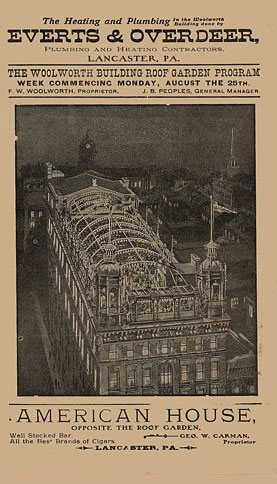 Some days the theatre was used by Woolworth's, as a venue for Store Managers' and Stockholders Meetings (see below), but at least two or three days per week Frank and his Building Manager Jno. B. Peoples (District Manager for the North Western Mutual Life Insurance Company, one of his tenants) would lay on spectacular entertainment with refreshments. Many shows were a sell out. The clever design of the building made it a suntrap on bright summer evenings, that could be enclosed and heated as the nights drew in. Among the coming attractions noted in our programme were:
- Charley Grapewin & Co. "Above the Limit"
- Dick and Alice McAvoy
- Mansfield and Wilbur
- Johnson and Wells
- George C. Davis
- Hugh Stanton and Florence Modena
- Lizzie Evans and Harry Mills
- Edmund Hayes and Co.
- Hill and Whittaker
- The Demuths
- The Five Nosses
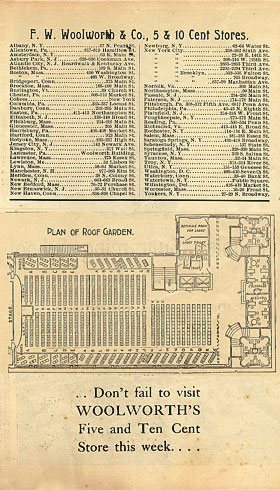
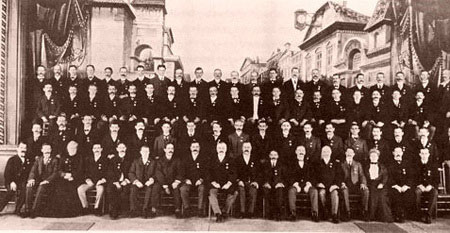
The roof top theatre was a big hit with the people of Lancaster, attracting visitors from far and wide. It was famous for its spectacular sets, visible in the picture below as the backdrop for a team photo of the Five-and-Ten's Store and Office Management, which was taken in 1901. American associates were impressed by the theatre. Some noted that it was one of only a few places where their Frank Woolworth really let his hair down.
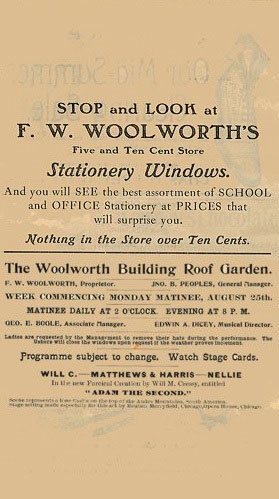
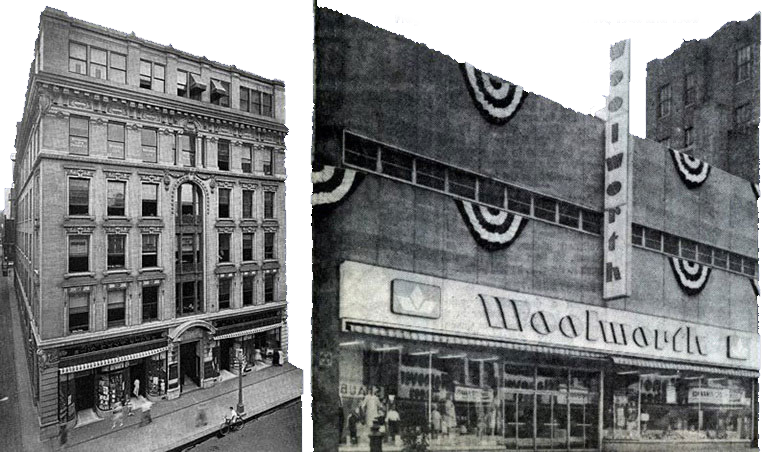
In many ways the Lancaster Skyscraper was a dress rehearsal for the Woolworth Building, commissioned just a decade later. It paid its way, thanks to a marketing campaign that was initiated before the first brick was laid. It was opulent, with gargoyles and turrets on the outside and the finest interior fittings throughout.
But unlike the Broadway Place building in New York, the Lancaster edifice has not been preserved. Shortly after World War II the F. W. Woolworth Co. applied for permission to pull it down and replace it with a bulk-standard concrete and glass superstore. This stood on the site until the late 1990s. Today even that building is gone, replaced by an extension to a neighbouring bank.
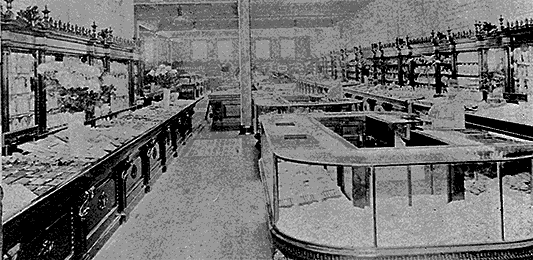
The photograph on the right above shows the well-appointed salesfloor in the Lancaster skyscraper shortly before the First World War. The layout includes many of the features first pioneered by Charles Sumner Woolworth in his flagship store in Scranton, including well-appointed mahogany counters, wide gangways and bright electric lighting.
Shortcuts to related content
1900s Gallery
US Expansion:
Founder Biographies
UK beginnings
Financing and setting up the Company
Join us on opening day in Liverpool