The Syndicate masters America's big cities
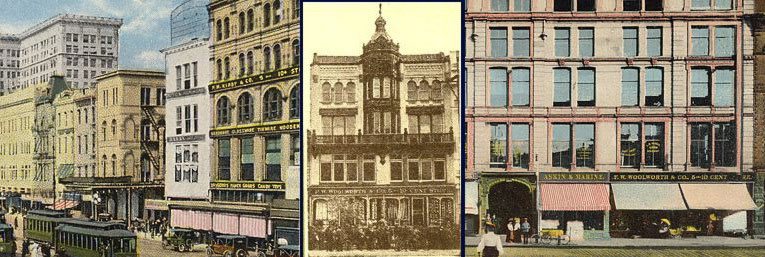
Initially Frank Woolworth had hoped to open 5 & 10¢ Stores in cities, but each time he had tried, he had failed. All of his most successful branches were in rural areas and small towns. As his Buying Syndicate grew in confidence, members repeatedly took the plunge in cities, hoping that the growing popularity of the five-and-ten would carry the day. The publicity machine put out stories of success, with press releases stating new openings were 'our largest ever' or had recorded 'our highest ever opening day sales'. For example in 1891 Frank Woolworth gave interviews about his huge, new store in Rochester, New York, declaring that its first week was the best ever, with $5,217 passing through the tills. The bravado glossed over the fact that annual rental alone was $20,000, and that he had been forced to pay extra wages to attract the right clerks. The store would have to match its first week's volume every week to match the profits generated by its country cousins.
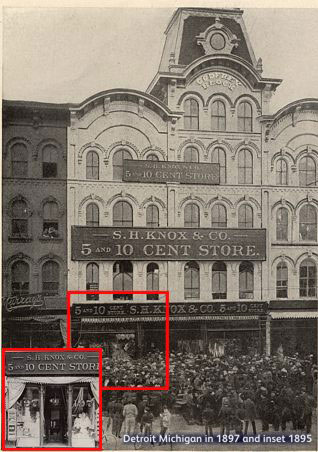
In 1895 Seymour Knox proved a better way at a new store in Detriot, Michigan. He invested in a much smarter shopfit, creating a department store look He used wider aisles, improved fixtures, brighter lighting and more attentive service. He extended the displays of items that he believed would suit city dwellers, trimming the more rural lines. He included plenty of five cent items, ordering his manager not to overdo the 10¢ selection. The re-think worked; sales were far higher from day one.
Within two years the small Detroit branch had expanded to take over the whole city block, and was still crowded throughout the day. Knox's publication Views of Detroit and Vicinity described his 5 & 10¢ as "the most favorite spot in Detroit". What's more he had the sales to prove it!
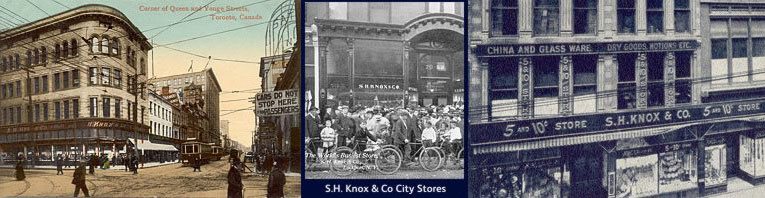
Knox's next megastore in State Street, Chicago also excelled, followed by a Canadian equivalent at Queen and Young Street in Toronto. Seymour shared news of his success with the Syndicate. They eagerly adopted his ideas. Charlton responded with spectacular openings in Los Angeles and San Francisco, California. Frank Woolworth applied his cousin's learnings during 1895. The Woolworth's in Fulton Street, Brooklyn, NY was the first of a new breed when it opened on 16 November. It was a step change from the flagship he had opened in Washington, DC just ninety days earlier.
Sumner Woolworth applied the upgrade to all of his stores, large and small. His approach to the 5 & 10¢ business was very different from brother Frank. He chose quality over quantity, generating much higher sales and profit per foot in every store rather than dashing to open as many branches as possible. Each outlet was carefully crafted, and looked resplendent in the finest mahogany, with brightly polished floors and windows. Fred Kirby was also more cautious, preferring to see the others bed in the formula while continuing to open smaller branches. When he was ready, he tested a revised layout in Fall River when he relocated his flagship to South Main Street in 1908 and perfected it in his iconic 5 & 10¢ in Canal Street, New Orleans, Louisiana, when it opened in 1910. It was one of the finest in the Syndicate, and is fondly remembered to this day.
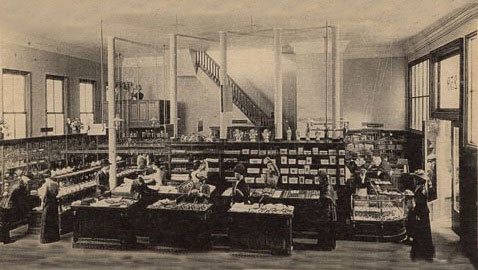 Frank's stores in Washington DC, Philadelphia, Boston, and New York City were a far cry from his first ramshackle displays in 1879. They had fine mahogany counters and showcases, bright electric lighting and a glass tube payment system that raced payments to the office and returned receipts at lightening speed.
In 1917 the 1000th store was his most radical yet. Snubbing convention, he pitched a 5 & 10¢ in Fifth Avenue, New York. It was constructed in marble and portland stone, had escalators and smart lifts, three restaurants and even a reading room, aping Selfridges in London. Despite the million dollar look, not a single item on any of its four huge floors cost more than 10¢!
Shortcuts to related content
1900s Gallery
US Expansion:
Founder Biographies
UK beginnings
Financing and setting up the Company
Join us on opening day in Liverpool