Embassy Records: The Cover Story
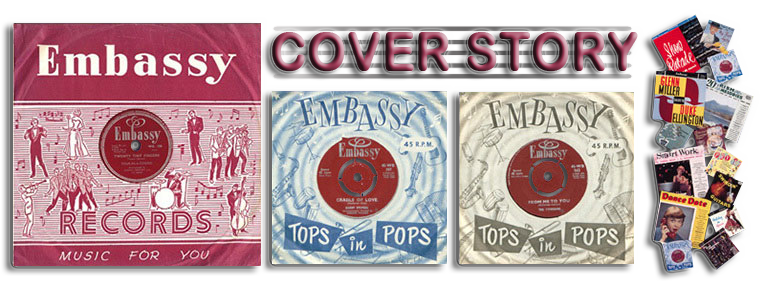
Woolworth's enjoyed phenomenal success in the early Fifties. It had become Britain and Ireland's predominant retailer, and appeared to have the golden touch when it came to new ideas. Competitors and commentators kept a keen eye on new developments.
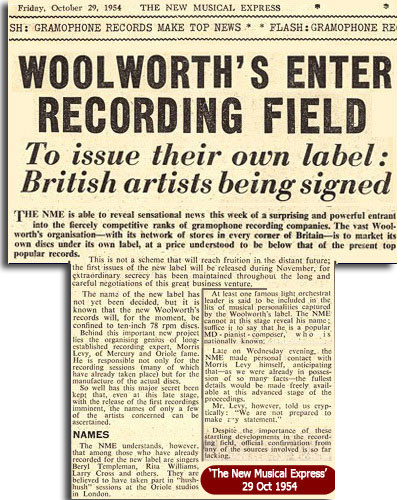
Very few of the Board's decisions surprised more observers, or proved more controversial, than the introduction of Embassy Records. The concept had been developed in great secrecy, but word leaked to the industry paper, The New Musical Express . They broke the story on 29 October 1954.
Not only did Woolworth intend to sell records, but it also would use sound-alike artists to create cheap alternative versions of hit songs as they were released.
A 78rpm special record of Teddy Johnson's In a golden coach had sold very well for the Queen's Coronation in 1953.
Shoppers had suggested selling records again, remembering Crown Records which had been dropped before the war because of price inflation.
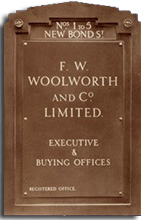
Executives liked the idea, but believed that the Thirties selection of dance bands, military music and humourous records would be too dated. In the pages of the house journal The New Bond they could see that the younger staff were showing a growing interest in the new phenomenon of pop stars. Features about the latest personalities had proved popular and the editor had responded by giving a 'Music Box' feature a double-page spread in each issue. Woolworth hoped to capitalise on this kind of interest and establish a budget record label that would appeal to cash-strapped 'youngsters'. At the time rival stores sold hit records for nine shillings (45p), which the Buyer thought was too high a proportion of manual worker's wage of £4 to £10 per week. He suggested a Woolworth label price of four shillings and sixpence (22½p). Major record companies were invited to produce proposals. They were given an open brief to suggest an approach.
 Most commentators expected that Woolworth would select Planet at the end of the tendering process. Word on the street was that Planet had invested heavily to make sure that they won, and believed they had it in the bag. But to everyone's surprise the chain chose the rival bidder, Levy Recording Studios, who were the name behind the popular Oriole label.
It is said that the two bids were evenly matched. Levy was chosen principally because his studios were at 73 New Bond Street, just yards from the Woolworth's Mayfair HQ. The Managing Partner, Morris Levy, had offered to meet the Buyer each Thursday to pick the next week's songs and to get them on sale by Monday.
Levy proposed the name Embassy Records. It would be a Woolworth exclusive in the United Kingdom and Ireland, but Oriole would be free to market the label's output in Continental Europe, either through independents or by signing up another big retailer. By splitting his overhead he promised to increase the margin paid to Woolworth's. Planet Records folded shortly after hearing that their tender had not been selected.
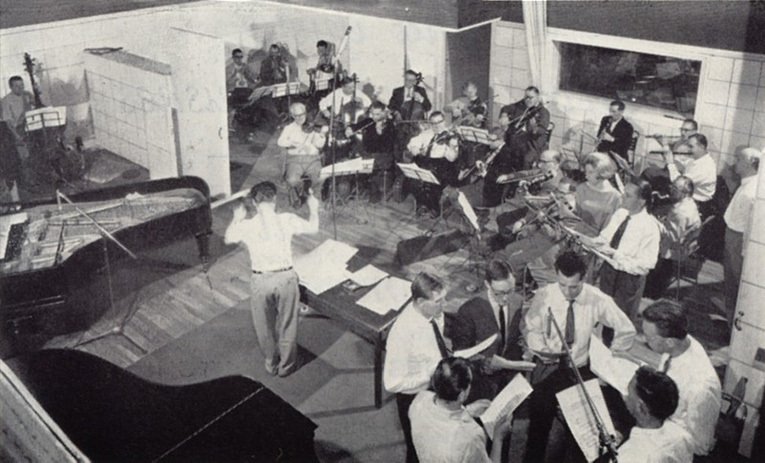
The studios at 73 New Bond Street, Mayfair, London, W1 were on the upper floor above a ladies fashion store. Until Levy took over in the early 1950s the rooms were used a ballroom and dancing school. Very little of the fabric of the building was changed as the acoustics were ideal for recording. The key change was to install the latest state-of-the-art recording equipment and to establish a team of directors and sound engineers who could turn around new recordings really quickly. Levy worked his network, hiring technicians from HMV and other major labels to help fulfil the contract.
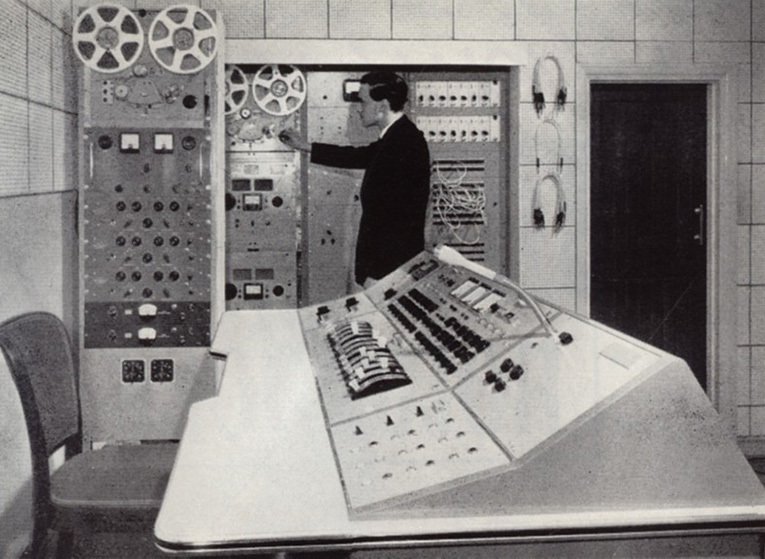
A purpose built 14-way mixer received the signals from the different sound sources, including AKG, Neumann and ST&C, applied compresson, echo and limiting, laying down the sound to master tape. The tape was passed to the cutting room where the finest lathes cut the grooves into a master disc. Master discs were sent to the pressing plant in Aylesbury for records to be produced.
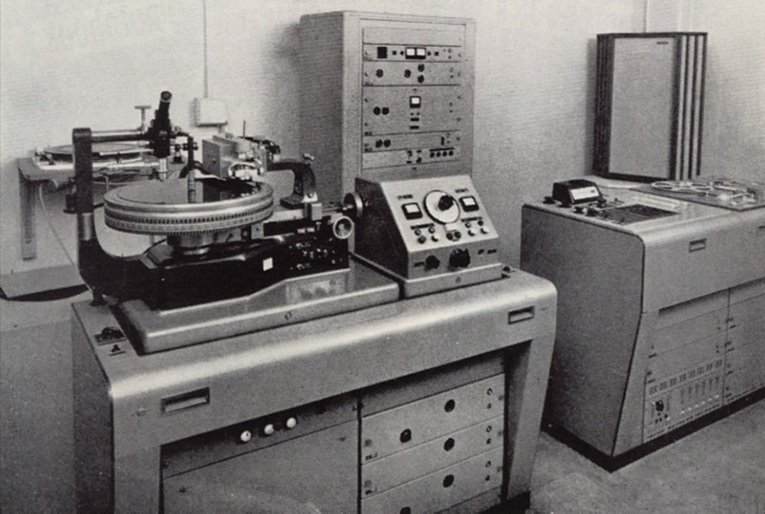
The stereo disc cutting room at New Bond Street was equipped with a Neumann Master disc cutting lathe which incorporated automatic variable pitch and depth control. There was an automatic track spacing device capable of handling up to ten tracks and varying the space duration between tracks from -5 to +5 seconds. The actual cutting sequence was started by pressing one button where the machine took over and cut the quard groove at the beginning, the music tracks, the scrolls between tracks, the run-out and the closing groove - it then lifted the cutting head from the disc automatically. Bass and treble equalisation were built-in for tone control. But the proof of the pudding for a record company comes not only in the sound quality but also in the quality of the artists and the material produced.
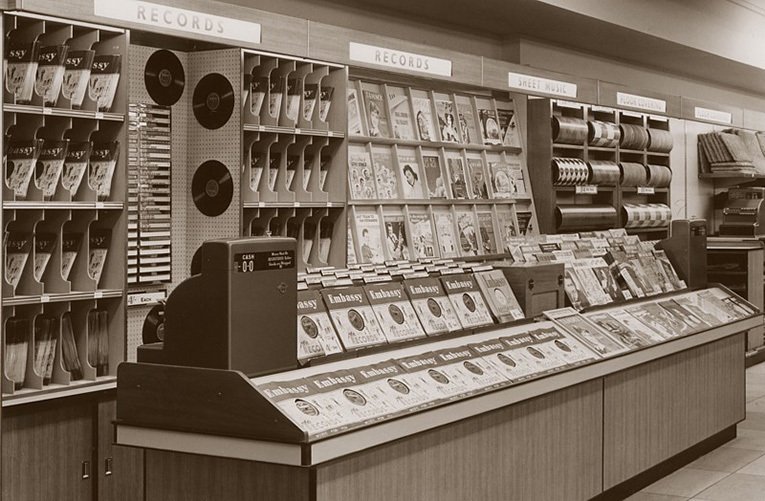
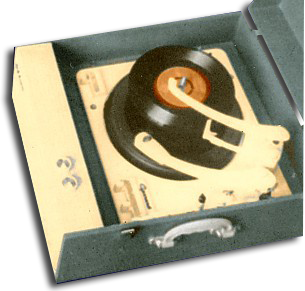
Some stores cleared a space near their feature of sheet music and displayed the records between glass dividers on existing mahogany counters. But as soon as the range started to prove its worth, the company started to install specialist fixtures to show the records to advantage. The largest stores were also given gramophones in wooden cases and listening booths, where shoppers could preview a song by listening under an acoustic hood before deciding whether to buy it.
 It annoyed the industrry when some of Levy's orchestrations proved more popular than the hit they were supposed to cover. Stupid Cupid by Embassy's Maureen Evans outsold the official release by Connie Francis. Evans went on to enjoy a string of hits until Embassy was banned from the charts. She had to switch to Levy's Oriole Label.
Levy later coaxed Evans back to the label for one very special song. She recorded a cover of the Peter Sellers and Sophia Loren smash 'Goodness, gracious me' with Brian Matthew, later a much-loved voice on the BBC. The label credited the disc to 'Linda Joyce and Matt Bryant'. It became one of the most sought-after in the series.
According to tall tales that circulated in the 1960s, Tommy Steele recorded his own covers for the label, which were later criticised as being nothing like the real thing. It seems that the legendary George Harrison believed one urban myth; he told a reporter that even Woolworth Embassy Records had turned down The Beatles.
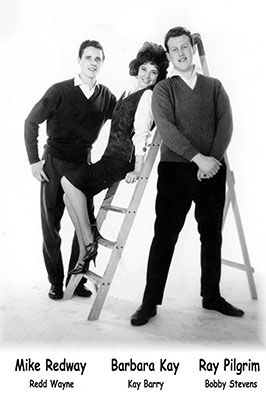
While working on this feature we were able to track down a number of the original artists, who contributed to the programme 'The Wonderful Sound of Woolies', which was broadcast on BBC Radio 2 on 28 December 2008. According to the programme almost every one of Embassy's session musicians was a 'Typhoon' on one occasion or another. But after transmission we were delighted to hear from another of the artists, Ray Pilgrim (pictured, far right). It transpired that as a young man paying his way through college, he had recorded more than a hundred songs for the label as Ray Pilgrim, Bobby Stevens and a Typhoon. After College Pilgrim joined a giant, world-famous IT company and rose to become a Director. Visit his great website.
To this day the Embassy content remains controversial - some customers loved it, some were bitterly disappointed when relatives and friends bought them the cover version rather than the real thing. Truth to tell, some of the output was good, a bit was great and some was ... terrible! But don't take our word for it. Form your own judgement in our 1950s or 1960s jukebox. They feature some of our favourites. Every single is at least four shillings and sixpence (22½p) cheaper than it was between 1954 and 1964!
Shortcuts to related content
1950s Gallery
H.M. Queen Elizabeth II's Coronation
Fiftieth birthday celebrations
Museum Navigation