Ramping up the pace in the Twenties
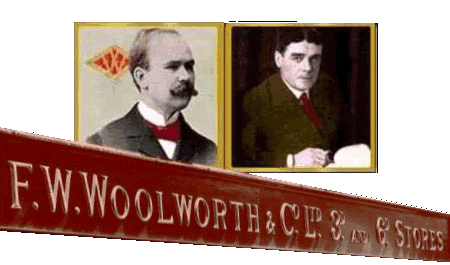 Fred Moore Woolworth, Frank's second cousin, was the founding MD in Britain. He had extensive experience of managing stores and the reshipping warehouse in the USA, and had inherited some of his mentor's bravado.
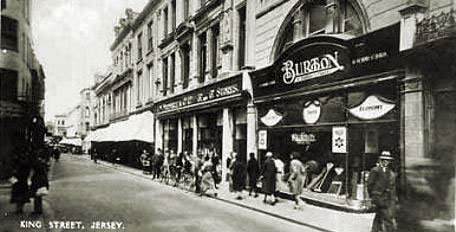
Under his leadership the formula took hold more quickly than it had in North America. He successfully anglicized the brand, giving the new-born a distinct personality. Openings had continued, albeit at a slower pace, though the World War. The pace accelerated after the Armistice. The hundredth store opened in Mansfield in July 1921. By then Woolworth spanned the length of the British Isles, even including a store in St Helier, Jersey in the Channel Islands.
Fred led from the front, spending much of his time in-store. Like his cousin, he got involved with suppliers and reviewed contractual matters personally. He rarely missed a Board Meeting. But he was also cautious and risk-averse.
Success brought financial rewards and high society status. To the media he was the "Mr Woolworth". Indeed his son Norman Bailey Woolworth Pauline later married the society belle Pauline Stanbury at Westminster Abbey, The event featured in one of British Pathé's early cinema newsreels.
But success came at a price to Fred's health. In the summer of 1922 he suffered a stroke on a dash home to the USA to visit his mother, who had been taken ill. Not allowing himself time to recouperate he hurried back to the UK, but for the first time in fifteen years was too ill to attend Board Meetings. His health rallied briefly in December, allowing him to chair the firm's post-Christmas review, before suffering a fatal stroke on 27 January 1923. The stores were instructed to close. Most of the staff knew their MD personally and were so shocked that they needed time to absorb the news.
To everyone's relief the American parent company picked an insider to be Fred's successor. William Stephenson was a popular choice. He had been the sole British member of the founding team. The Yorkshireman had made a name for himself both for his kindly manner and his sharp commercial instinct. Stores knew him as both friendly and demanding and considered him firm but fair. Buyers and fellow Directors respected Stephenson and understood exactly why the Founder had sought him out to join the team.
Stephenson had privately harboured concerns that his boss had become too conservative as the company grew. As the formula had taken hold it had generated such large profits that Fred Woolworth had been unwilling to make changes to the ranges or the store environment. The new MD knew the store must evolve to stay on top, and the Board would need to take risks to maximise the potential. Under his leadership the pace of openings accelerated rapidly helping profits to rocket. By the time Stephenson retired after World War II, the chain had grown to 770 stores and had become the country's most successful retailer. Its shares topped the market. In a retirement address he put the success down to luck, and the solid foundations that Fred Woolworth had laid.
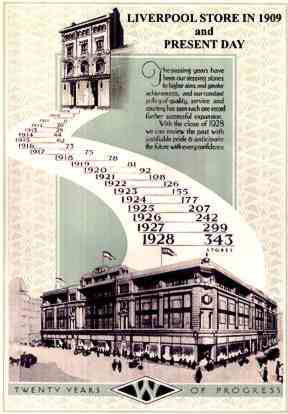
The key changes that Stephenson introduced in the 1920s were:
- a switch to open freehold rather than rented stores
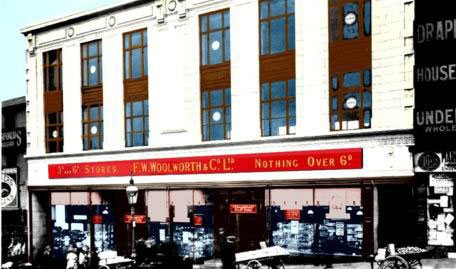
- larger premises for the original branches
- 336 new stores added, compared to 97 in the 1910s
- a fashionable new headquarters in Mayfair, London
- new ranges, including gramophone records
During the same decade two new Woolworth companies opened their doors:
- A canny group of Australians launched a copycat company in 1924
- F.W. Woolworth Co USA opened a subsidiary in Weimar Germany in 1927
Both still trade today.
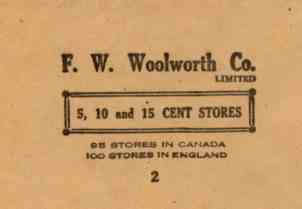
The envelope shows how the Canadian stores emphasized their links to the UK rather than the USA in the Twenties.
Shortcuts to related content
1920s Gallery
"The Girl from Woolworths" movie
Down under and the sincerest form of flattery
Site navigation