Welcome to the Original Virtual Museum - celebrating Woolworths' century at the heart of British High Street Shopping
 -  -  -  -  -
please click a menu button
please click a menu button Original Virtual Museum Home Page please click a menu button The Woolworth value store concept is born in the USA please click a menu button Laying the foundations as the first British Woolworth store opens in Liverpool in November 1909 please click a menu button Woolworths rapidly open forty-four stores in Britain and Ireland before facing a World War please click a menu button Bigger, brighter and bolder Woolworth stores in the Roaring Twenties please click a menu button Woolworths go to amazing lengths to keep all prices under sixpence in the Thirties please click a menu button Bravery and defiance during World War II in Woolworths' finest hour. We pay tribute to the sacrifices made and look behind the scenes please click a menu button Redefining the Woolworth brand for modern times in the 1950s, as prices go up and stores get bigger and bigger please click a menu button Superstores in and out of town, a new own brand and the opening of overseas Commonwealth stores during the 1960s please click a menu button Woolworth struggles to keep up during the rapid inflation and change of the 1970s please click a menu button Woolworth stores in more recent times, covering the period 1980-2008 please click a menu button
please click a menu button please click a menu button please click a menu button please click a menu button please click a menu button please click a menu button please click a menu button please click a menu button please click a menu button please click a menu button please click a menu button
Background to the Original Virtual Museum and copyright information about the contents Origins of the firm's legendary pic'n'mix and a century of chocolate, candy and confectionery in the High Street A century of music and entertainment in the High Street from sheet music and gramophone records to CDs and blu-ray discs A century of toys, games and fun in the High Street stores of F. W. Woolworth A century of fashion in the High Street, from paper patterns and sixpenny knickers to an extensive range of award-winning Ladybird clothing A century of cards, pens, pads and books from the shelves of F. W. Woolworth stores Pots and pans, paint and brushes, bulbs and compost and even toiletries - all in High Street Woolworth stores for much of the twentieth century Woolworths pioneered Christmas decorations in the 19th century and supplied presents for our parents, grandparents and great grandparents from their High Street stores Working conditions and pay rates at Woolworths over a hundred years and some of the people behind the brand-name Our cinema, quiz and picture gallery features Visit the new look 21st century Woolworths on line, on the site operated by Shop Direct Group
please click a menu button please click a menu button please click a menu button please click a menu button please click a menu button please click a menu button please click a menu button please click a menu button please click a menu button please click a menu button please click a menu button

Food for thought

The extensive food department in the F. W. Woolworth store in Bath, Avon, UK,  pictured in 1962. The product selection included fresh fruit and vegetables, delicatessen, butchery, bread and cakes and tinned and packet groceries.


Woolworth obtained permission to stock fresh fruit and vegetables from the Board of Trade in 1956. They were among the first variety stores to break through legal barriers which prevented non-specialists from mounting a full offer of food in-store. Over the next decade a vegetables and fresh fruit were introduced into more than 700 branches as part of a food. Despite the rapid roll-out the effort was often half-hearted as executives dithered about the role of groceries and whether they were prepared to accept the lower margins.
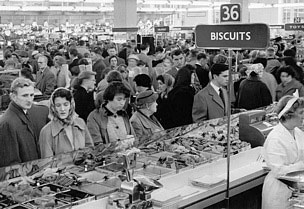
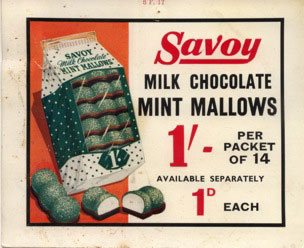
 

Weigh-out biscuits were very popular at Woolworth from the 1920s until the early 1980s. The picture shows the selection in the flagship Scottish store in Princes Street, Edinburgh at Christmas, 1959.Savoy Biscuits were a particular favourite for 1960s Woolworth customers - at 1 shilling (5p) for 14 biscuitsWeigh-out biscuits were first sold at Woolworth in 1920. They were an instant hit. Stores a 'perfect' range cheaply and 'broken biscuits' at an unbeatable price.

Broken biscuits were dropped in the Seventies after it was decided they were too down market. The packet Winfield selection vanished in 1983.


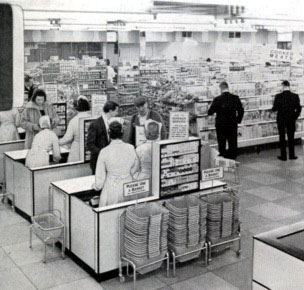
Checkouts in the food hall at the flag ship Birmingham Bull Ring F. W. Woolworth store in 1963.

A tinned goods department had been introduced in 1937, bizzarely taking the place previously occupied by gramophone records towards the front of the shop. A selection of tinned fruit and canned cream had proved very popular. During the war tinned snook and whale meat had been altogether less appealing.

In the early 1950s the chain had started to toy with a more comprehensive grocery offer. Early results were pleasing. During the 1960s they had to decide whether to extend the idea more widely across the store estate. For a brief moment the firm had the chance to become one of Britain's first modern supermarkets. Such self-service grocery stores were proving popular in North America.

Executives dithered. Research suggested that 'daily products' would encourage customers to visit the stores every day or two, rather than just once a week. But food had lower margins and would force them to switch to a self-service operation, which company bosses felt would be unpopular with customers.


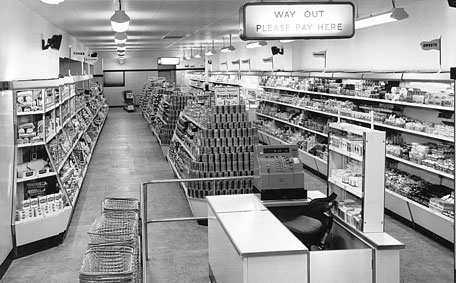
Self-service food halls were progressively added to city centre Woolworth stores in the 1960s. This example is from Gloucester.


In the end a compromise solution was found, where the food section was separated from the rest of the store and marked "Welcome to Woolworths Self Service, please take a basket".

As a result many Woolworth Food Halls were located at the rear of the salesfloor or on an upper or lower floor. This encouraged customers to browse the traditional ranges en-route for the supermarket section.
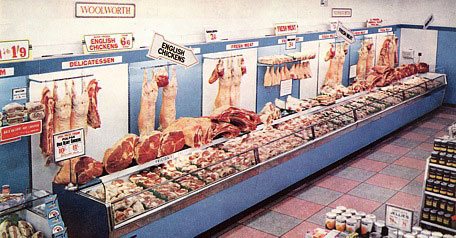
 

A handful of Woolworth High Street stores experimented with butcheries, copying the layout from their larger out-of-town cousins at Woolco. The picture is from 1963.


Separate plans to develop out-of-town shopping at Woolco provided access to new ranges of butchery and fresh fish. These were introduced into selected City Centre stores to help improve the chain's economy of scale.
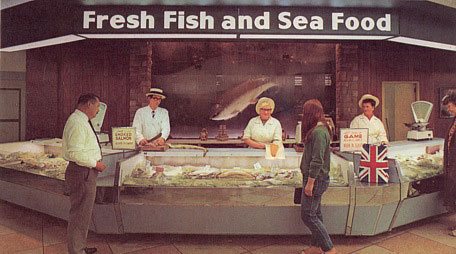


The Woolworth store in the Mander Centre, Wolverhampton, was the first City Centre branch to offer a full range of Fresh Fish and Sea Food when it was extended in 1968. The Fish Counter only made it to a handful more stores before being dropped.


A major extension of the branch in Wolverhampton to join the City's Mander Centre was used to test the Fresh Fish and Sea Food counter concept. The look would not be out of place in a supermarket in the twenty-first century, over forty years after the picture was taken. Sales were good and shoppers responded positively to the new range, but the pay-back was considered too low to justify a widespread roll-out.
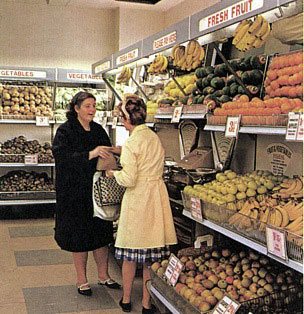
 

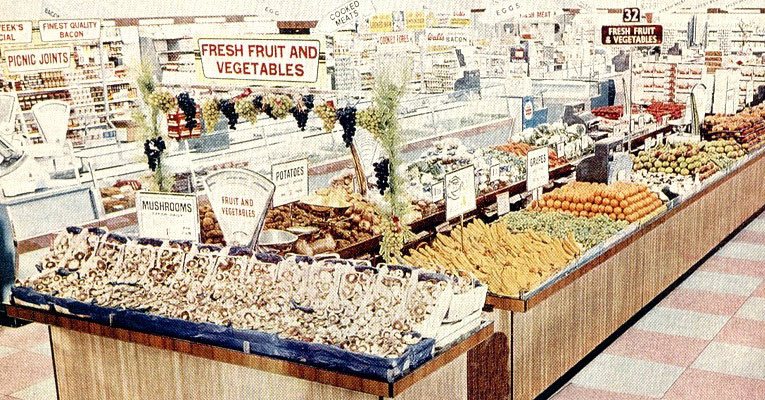
A personal service display of fresh fruit and vegetables was one of the new ideas introduced into the Woolworth store in Harlow New Town, Essex when it moved into much larger premises in 1967.  After a big push in the Sixties the Board concluded that sales were insufficient and scaled back the offer from 1971 onwards, ultimately restricting it to Woolco stores only.


The Woolworth management spent much of the Sixties pushing the sale of greengrocery across the stores, before unceremoniously dropping the idea from 1971. Measurement work had shown that the labour costs to manage the range and serve on the department were much higher than they had anticipated. The economics only worked in the largest Food Halls and at Woolco out-of-town.

Across the other side of the globe, another chain called F. W. Woolworth in Australia and New Zealand (which was unrelated) pursued the same strategy with much more resolve. Today Woolworths has become Australia's largest supermarket. By contrast, in Britain the dalliance with groceries ended abruptly in 1985, before making a half-baked return at Woolworths General Store and Big W from 2000-2003. Food for thought?


If you have enjoyed our Virtual Museum website, why not check out our complete history of Woolworths in a 194 page, richly illustrated paperback book?  A Sixpenny Romance is just £10.99, with free delivery in our on-line shop.
The special DVD, the Wonder of Advertising, is now available in our on-line shop for £7.50 with free delivery. A fully illustrated 194 page history of Woolworths, or a selection of professionally authored DVDs in our on-line shop